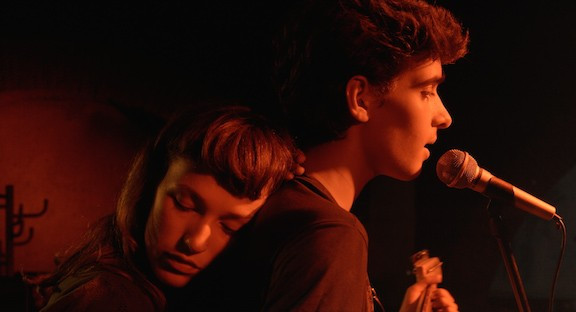
One evening, teenager Martha (Alice Albergaria Borges) asks her unemployed father (João Pedro Vaz) where her mother (Beatriz Batarda) is, and dad replies that she will probably never return. Her father goes outside. But after a while, her mother does return, explaining that she has got an additional job. They are going through an economic crisis. Her father is jobless, and her mother takes multiple small jobs to run the family. But even that is not sufficient for them to pay electric bills. At times, her father disappears without saying anything. Martha makes friends with a pregnant girl in high school. She observes the outside world through her window. She spends time wandering at a beach. Her mother is so occupied with many jobs that we can’t get a look at her psyche. The first hour consists mostly of mundane routines and interactions between these three. All of them try to understand each other but, in the end, they don’t quite understand. Random incidents are described without much context. Characters drift along, showing little certainty in what they do. Whether young or old, the people in Colorado don’t quite understand what’s happening to them. The most attractive aspect of the film is its striking visual design. Both indoor and outdoor spaces, as well as the characters’ relation to them, are presented with great care. The natural world offers little solace in Colo, but it does suggest a yearning for a simpler, easier state of things. Despite suffering from economic crises, the characters maintain their humanity.
Mother appears to be a male of the family while her father doesn’t shy away from crying. Mother acts as a protector of the family. Artificial and natural lighting helps to create an impressive visual control of mood. Other strengths include a delicate, sparing, use of classical pieces by Schumann and Shostakovich. This is my first film by Teresa Villaverde. She showed immense control throughout the film. I would like to explore all of her works.
 debarshithecinemaniac