Un coeur en hiver (Heart in the Winter)


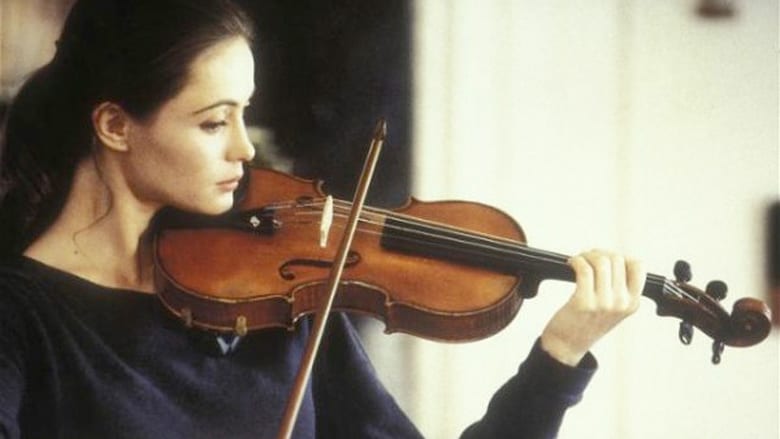
In the opening sequence, Stephane (Daniel Auteuil) says more about himself than he says in the entire film. He is an expert repairer of violins, and he is so good at his craft that the top violinists all over the world come to his studio. He works for Maxime, who is the owner of the business. Maxime treats him as his friend, but it’s not quite clear if Stephane feels the same or not. One day, Maxime tells Stephane that he is ready to leave his wife as he is in love with a woman named Camille (Emmanuelle Béart). Camille is a young violinist who comes to their workshop for some advice.  Camille and Stephane have a conversation about her playing.  When she plays violin, Stephane listens to it with the utmost attention. One thing becomes evident that Camille falls in love with Stephane. His presence creates discomfort for Camille. Sensing that, Stephane leaves the room quietly.  One day, Camille tells Maxime that she is ready to leave him as she is in love with Stephane.  But Stephane tells her that he is not in love with her.  His denial makes her devastated.  Claude Sautet makes a very delicate and nuanced observation of love. It is quite clear that Stephane is in love with her, but he is the kind of guy who loves to hide his feelings. One day, when Camille asks him about his relationship with Maxime, Stephane tells her that he treats him as his partner, not as a friend.  It seems that Stephane loves to lead a quiet, isolated life.   But then in one scene, he tells one woman that he is getting old.  After his encounter with Camille, things do not remain the same anymore. But he is so obsessed with his isolation that he is unable to move on.  He is a very romantic person, but he fears commitment and relationships. Emmanuelle Béart is so wonderful.   Her performances with her violin are so breathtakingly engrossing that one cannot take his/her eyes from her.  But, this film belongs to Auteuil . He plays a character who doesn’t tell much about himself throughout the film.  He is the kind of person who hides his feelings, controls his desires. Auteuil plays it with the utmost sophistication.    This is the kind of film which will grow on you over time. 


Mesrine Part 1: Killer Instinct

mesrine part 1Directed by : Jean-François Richet
Stars: Vincent Cassel, Gerard Depardieu, Cecile De France.
Imdb link:  https://www.imdb.com/title/tt1259014/

Jacques Mesrine used to be public enemy number 1 in France during the 60s and 70s.  The film starts with Jacques (Vincent Cassel) torturing some Algerian activists in prison. Jacques returns to Paris, and soon he gets bored.  He accepts a friend’s offer of bank robbery.  Soon he is introduced to Guido (Gérard Depardieu),, big mafia of the French underworld. Later, Jacques marries a Spanish woman named Sofia. Due to circumstances, he gets divorced, but that doesn’t stop him from committing more crimes. Later, he meets a woman named Jeanne Schneider (Cecile De France) and they quickly fall in love.  Jeanne is into crime, and together they commit bank robberies. Jacques is a gangster, but he has some principles as well. He doesn’t kill unarmed people. He steals only from banks because there is enough money. Vincent Cassel is perfect as the main lead of this film.  He has that perfect aura to depict the role of a gangster-like Jacques. Jacques was very cautious about his celebrity status as well. When he got caught in Canada, he gave some sound bytes to their press. Gérard Depardieu is a seasoned actor. Guido is a responsible person, yet he can be menacing when it is needed. Depardieu does that very well.  The film has some great scenes, such as the one in which Mesrine meets Depardieu and the two become colleagues after threatening to kill one another. The bank robbery scenes and the jailbreak scene were tense. In the first part, director Jean-Francois Richet tried to capture the person as much as he could. My only grouse is that the film could have spent some time showing his youth days.

Le Professionel

Le Professionel 1


French secret agent Joss Baumont (Jean-Paul Belmondo) is sent to kill an African president named Njala. When he reaches there, the political situation changes and instead of bringing him back, the French secret service turns him to African authorities. With the help of a friend, he manages to escape the prison and he returns to France.  He is determined to take revenge against the French secret service. He deliberately informs his chief that he wants to kill Njala who is coming to France for an official visit. But his biggest nemesis turns out to be Inspector Rosen (Robert Hossein). Belmondo’s character is partly influenced by James Bond’s character.  He is good with women.  He has a certain star charisma. But there is a certain kind of French treatment as well.  The lead character suffers from loneliness. We do see that his wife and one of his mistresses care for him yet we are not sure of their intentions. The film features one of the topmost car chase sequences on-screen. It will remind you about the iconic sequence of the French connection. The film features a spectacular score with a famous theme tune (entitled “Chi Mai”) by Ennio Morricone. That theme tune will be repeated at the key moments of the film.  Inspector Rosen is a creepy character. He instructs his female secretary to sexually assault women for the purpose of extracting information out of them.  Belmondo pulls up his role quite convincingly. He looks good in physical comedy as well as in intense action scenes. Robert  Hossein is excellent as an antagonist. He easily fits into the role of a maniac police officer. The duel between these two keeps the film going. It is a well-made French action film with a touch of melancholy.

Revenge

Revenge

The film opens with Jen (Matilda Lutz) lazily sucking on a lollipop, having been taken away by helicopter to a remote desert location by her millionaire boyfriend Richard. Richard is a married man but he cheats his wife and he commits an affair with the mistress.  Jen is hot and she is satisfied with her body. In the next day, Richard is joined by two of his friends . They are his hunting buddies. When all of them are having a party in that night, Jen starts dancing with Stan. But Stan feels that it’s an indication of sex.
In the next morning, when Richard is away, Stan tries to woo Jen but Jen clearly rejects him. Insecure  Stan feels powerless and he ends up raping her. His friend covers for him. Richard comes back and  hearing this, he hits Stan hard. Jen wants to go back to her house but Richard tells her to stay there. In a heated argument, Richard slaps Jen. Scared Jen escapes from the house but all three of them chase her. Richard pretends to call his pilot to take Jen home, then pushes her off a cliff. She falls unconscious and is left for dead by the three men. But Jen wakes up. The horror doesn’t come from the rapist but it comes from her most trustworthy partner.
That is the masterstroke of this film.  Fargeat makes an interesting debut with her film. From the title,one can guess what this film is about. The treatment is different. Female sexuality is focal point of this film. Here, bodies become the main subject. The men are divided into parts and she reclaims her sexuality through her revenge.  She only grows more powerful as she is attacked more. The lead actress Matilda Lutz looks perfect for the role. Actresses don’t need to build muscles to perform actions. It is all about the body language. She looks shaky yet determined. I don’t know if its feminist film or not. Feminists can tell it better. That is not much of my concern either.
I loved the fact that a woman director made a genre film by keeping female sexuality at the centre. To be a female director, one doesn’t always need to make a film outside mainstream territory.


Stolen Kisses ( Baisers volés)

stolen kisses 1

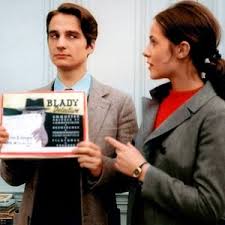
Baisers volés is the third installment in François Truffaut’s wonderful cycle of films concerning his cinematic alter ego, Antoine Doinel. Played memorably by Jean-Pierre Léaud, Antoine remains one of film history’s most enduring characters, a hopeless romantic who longs for perfection in his affairs with women and work, while finding it difficult to balance both.  Here, he gets discharged from the army, and then he takes a few other jobs before finally getting settled in as a private detective. The character of Antoine Doinel is an autobiographical extension of Truffaut. When Antoine Doinel gets discharged from the army, he laughs in the face of the commanding officers. It is based on Truffaut’s own disastrous military experiences in the 1950s when he was jailed as a deserter and eventually thrown out of the army.  Doinel celebrates his freedom by running immediately to a bordello. He tries to woo a young woman (Jade) who is initially indifferent to him but warms up when he shows signs of losing interest. He takes the job as a private detective of Blady’s, which puts him as a planted spy in Monsieur Tobard’s Shoe Shop. He gets attracted to his wife, Mrs Tobard (Delphine Seyrig). When Antoine loves Fabienne (the shoe shop’s owner’s wife), Christine is in love with Antoine. Every character is immersed in a love triangle.  Mrs Tobard also gets attracted to Antoine as well, but for a very short period. She finds her husband unromantic and boring, yet she has sympathy for him.   Antoine likes to fall in love, but he feels awkward in relationships. Like his previous work, this film has remarkable fluid camera movements as he gives us a breathtaking view of the eternal city and the journey Antoine is on in hopes of discovering his place. Léaud is always brilliant, playing the director’s alter ego. He’s very funny, charming, very good-looking.  Delphine Seyrig is brilliant in a short but very important role. She has a beautiful, deep voice. During this period, the May 68 revolution took place in Paris. In that situation, Antoine was trying to find his own feet. It is charming in its carefree tempo and disarming in its frankness about whimsical triviality.


Un lac

Un Lac


Philippe Grandrieux’s “Un lac” takes place in a country unknown to us. We know nothing about the place apart from that it is full of snow and dense forests. But before discussing the film, I will like to explain a few things first –
1) The id:- It is the most primitive component of personality. It is not affected by reality, logic, or the external world. It doesn’t change with time or experience. It operates within the unconscious mind.
2) Ego:- It is the decision-making portion of personality. Ideally, it works by reason whereas id is most unreasonable. Similar to id, the ego seeks pleasure and pain but unlike the id, it wants to develop a realistic strategy to achieve it.
3)Superego- It operates as a moral conscience. It develops during childhood. It is learned through parents and society. Superego tries to control id’s impulses.

Deep in the middle of nowhere, a young man lives with his sister, a brother, his blind mother, and father. The young man suffers from epileptic disorders. He has an incestuous relationship with his sister but it seems that his sister doesn’t quite enjoy the intercourse process.  One day, a stranger arrives but do things really change?. Grandrieux’s film has a minimal plot but it deals with too many things- the id, ego, superego (as explained above). It shows a bleak world. Most of the cinephiles have seen films depicting the world with hopelessness. However, Grandrieux is different. U will rarely see bodies in their entirety. When u see them arriving, they are usually out of focus. Sometimes, the characters are appearing from the dark. It is shot on an unnerving handheld camera, regularly capturing claustrophobic close-ups of the actors. U will hear every breathing of the characters. They live in such isolation that incest is not a taboo for them. Grandriuex aims to involve all the senses of the viewer, not only his sight. That is why the focus is on the heavy breathing of the characters. You aren’t going to feel for any character. None of them appears as good or bad or grey. We are watching a bleak world but we aren’t feeling the pain. The film is made in French but most of the actors are from Czech or Russia. This is the cinema of the highest order.

Le charme discret de la bourgeoisie ( The Discreet Charm of the Bourgeoisie )

discreet charme


“The Discreet Charm of the Bourgeoisie” remains Bunuel’s most successful film. It made more money than his famous “Belle de Jour” and it did manage to win Oscar as best Foreign language film. It was released in a year when Vietnam war was going in full form and the upper middle class was an obvious target of disdain.  Bunuel worked in Mexico,Hollywood,Spain before again returning to Spain. He spent years in political, financial and artistic exile, and many of his Mexican films were done for hire, but he always managed to make them his own. His characters are often selfish and self-centered, willing to compromise any principle to get their job done.
From the first shots of “Discreet Charm,” we are aware of the way his characters carry themselves. Fernando Rey stars as Don Rafael, the drug-dealing ambassador of a fictional Latin American country who lives in constant fear that one day he will be kidnapped and murdered by the guerilla terrorists outside his embassy. His friends repeatedly convene at the home of Monsieur Senechal (Jean-Pierre Cassel) and his wife, Alice (Stéphan Audran), whose dinners are constantly interrupted. The most amusing thing is that they never manage to dine properly. When the guests arrive for the dinner party, the hosts were having sex backyard. When the guests arrive at a restora to have dinner,they do hear that the owner is dead. Hearing this, they refuse to dine there and soon they leave the place. Elegant ladies sit down for an afternoon tea, only to be told by their waiter that the restaurant has run out of water.

Much of the film takes place in the nightmares of its characters. The protagonists seem to know what they want but they never reach their goal. They have all kinds of knowledge about manners and gestures, but they cannot sit down and eat. In Bunuel’s films, the clothes not only make the man, but are the man. Consider the bishop (Julien Bertheau), who arrives at the door in gardener’s clothes and is scornfully turned away, only to reappear in his clerical avatar to “explain himself,” and be accepted. Meanwhile, the narrative cuts in and out of dream sequences; at one point, one character’s dream turns out to be embedded in another’s. The text falls apart, so we find ourselves focused on the subtext. For all it’s symbols and destructing narrative, it is never a difficult film. Buñuel’s emphasis on the implacable dream logic that drives the film’s forking-paths storyline isn’t what you would call unprecedented. His films have often incorporated dream imagery, leaving even the most melodramatic material with outbursts of oneiric intensity. For the first-time Bunuel was provided with a video-playback monitor. The film employs meandering, unobtrusive camerawork and odd crane shots. There’s an elaborate tracking shot that follows one of the persons across the living room, up the staircase, and along the hallway. All of the performances were wonderful.
Even in the most dramatic scenes,they were never out of line. Special mention goes to Fernando Rey who was effortless throughout.

Manon Des Sources

manon Des source


It is the sequel to Jean de Florette. It won an award in 1989 as the best french film. Time has passed, and Manon (Emmanuelle Beart) is now a beautiful young woman. Galinette (Auteuil) and his uncle Cesar (Montard) have greatly prospered from the fresh spring water and their carnations grow well.  Galinette begins to turn towards ideas of love and steadily falls for the distant Manon. One day, Manon overhears the conversation of two locals about the vile action of Ugolin and Cesar and she plots revenge against the two men blocking the spring of the whole town. The film is an excellent travelogue of Provence, and it is slow, deliberate pacing enables you to envelop yourself in a story that unveils itself in its own sweet time. The film binds all the people in town in a wonderfully spun loop of love, hate, crime, guilt, vengeance, repentance, and the possibility of forgiveness. Both Montand and Auteuil gave unforgettable performances.  Emmanuelle Beart was stunning as Manon. When this film ends, you will be devastated – and haunted forever by it.

Jean De Florette

Gerard_Depardieu_in_Jean_de_Florette

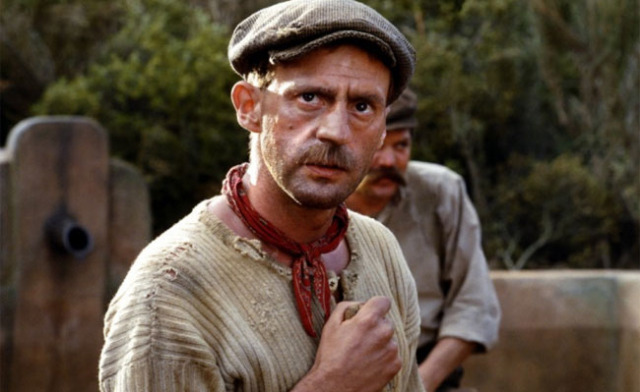
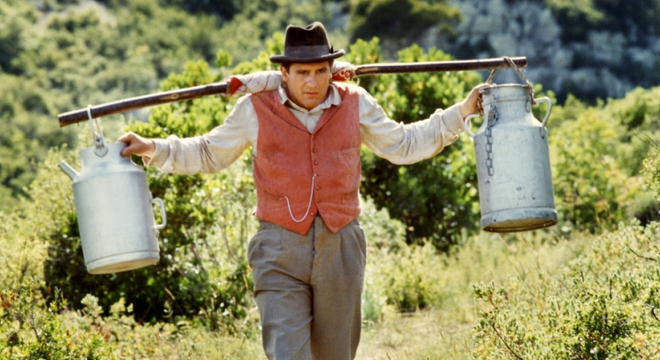
It is a 1986 French period drama film written and directed by Claude Berri, based on a novel by Marcel Pagnol.  The film takes place in rural France, where two local farmers plot to trick a newcomer out of his newly inherited property. The socially awkward Ugolin Soubeyran (Daniel Auteuil) returns from military service to his family home halfway up a green mountainside near his uncle César’s house.
Ugolin looks to César (Yves Montand), whom he calls “Papet,” for guidance as to how to carry on the family name, particularly since he is the family’s last member. Ugolin decides to grow carnations, which he hopes will make him rich. Although initially dubious about the scheme,  Papet changes his mind when he considers purchasing land from his neighbor.  After accidentally killing the man, Papet and Ugolin block up a spring on the property with a scheme to buy the land cheap.  However, the plot goes wrong when ownership of the land shifts to the recently deceased Florette de Berengere, whose hunchback son Jean (Gerard Depardieu) moves back to his ancestral home with his wife and young daughter Manon. A recently retired tax collector, Jean is a well-read man with a fine strategy to plant a farm and a rabbit-breeding facility that will provide for his family until his death. As the film progresses, our attention narrowly focuses on the principal characters and their evolution. We are not distracted by outside events. At the same time, we are torn between the two conflicting wishes for the success of two conflicting projects.
Director Claude Berri’s epic period-drama masterpiece of French cinema features impeccable performances by renowned French actors- Yves Montand, Gerard Depardieu, Daniel Auteuil. Their brilliant ensemble work here highlights the rich history of French Cinema. The high-budget picture elegantly captures the natural setting, social customs, and personal prejudices of French villagers whose source of spring water is manipulated at different times by manipulative individuals.
http://www.imdb.com/title/tt0091288/

La nuit américaine (Day For Night)

Day for night


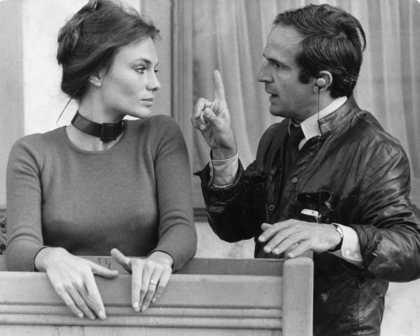
“Shooting a movie is like a stagecoach trip. At first, you hope for a nice ride. Then you just hope to reach your destination.” Early in the film, director Ferrand, played by François Truffaut, says this in a voice-over of ‘Day for Night’. A lot of the film illustrates this point. We are on the set of ‘Meet Pamela’.  ‘Meet Pamela’ is a love and revenge story, about a man falling in love with daughter-in-law. We get to know the cast and crew of ‘Meet Pamela’.  Julie Baker(Jacqueline Bisset), a second-generation Hollywood star whose nervous breakdown she’s recovering from causes insurance problems; Alphonse (Jean-Pierre Léaud),a very jealous, very neurotic French actor who’s so madly in love with a girl he organizes the job of the script for her just to have her near; Alexandre(Jean-Pierre Aumont), a veteran actor who played many lovers in his life, but is actually a closet homosexual;  Severine (Valentina Cortese), an Italian actress with an alcohol problem who used to play opposite Alexandre frequently in her career, but hasn’t talked to him in years.
It is a film about making a film. It is also one of Truffaut’s most personal films. Day for Night” is Truffaut’s fondest, most compassionate film, and although it is packed with references to films and film people (Welles, Vigo, Fellini, Buñuel, among others), it’s not a particularly inside film. Bisset as Julie gives the film a bit of real heart as the one character who has something of life beyond movies. Cortese is a treat, with both her sweetness and her lighter moments. Jean-Pierre Léaud is outstanding as selfish, spoiled Alphonse. Truffaut himself played the role of the director with a lot of confidence. “Day for Night” is an ensemble movie, showing how the many kinds of people on a film set surmount the many minor crises inherent in film-making.