Saint Maud

“Forgive my impatience, but I hope you will reveal your plan for me soon. I can’t shake the feeling that you must have saved me for something greater than this.” This is how Maud (Morfydd Clark), a home nurse living in the seashore town of Scarborough, talks to God. She feels that God has given her the task of saving a soul. At the beginning of the film, we witness her failing to save the life of a patient in her care. After a few years, she had converted herself into a dedicated Roman Catholic. She is assigned to care for Amanda (Jennifer Ehle), a dancer and choreographer from the U.S. who is terminally ill with stage four lymphoma. Amanda surrounds herself with evidence of her old glory: posters of her dance recitals, her costumes and makeup. She’s in the middle of one final romantic relationship, with Carol, a young woman she met online (Lily Frazer). Maud felt worried. “Saint Maud” feels like it is about a power struggle between Maud and Carol for the heart of Amanda. But “Saint Maud” takes a turn. This story is not about Maud and Amanda, not really. It is about Maud alone, and when Amanda rejects conversation with her publicly, her deterioration is rapid. This is not an anti-religious film either. Religion is just a tool here. Something bad happened to Maud when a patient died under her in the past. Later, she became god-lover for her comfort.
When she started taking care of Amanda, she felt that she had a chance to rectify her past mistakes. But after Amanda rejected her, all hopes were shattered. It’s exciting when newcomers like Glass arrive with a new vision, particularly when the vision is eccentric, difficult, and strange. This story has been told before. It’s a continuum of stories of religious mortification, obsession, and torment. By keeping the film a character study—as opposed to a plot-driven story of an avenging angel/demon—”Saint Maud” is less about religion and more about Maud’s existential loneliness. Clark’s performance is central. Maud is most alarming when she is trying to be “normal,” when she attempts to be social. Nothing “comes off” right?

Black Narcissus

Black Narcissus

British nun sister Clodagh (Deborah Kerr) is chosen by her superior to establish a school and dispensary in the Himalayas. Her companions being Sister Briony (Judith Furse), Sister Phillipa (Flora Robson) and Sister Ruth ( Kathleen Byron). Her superior believes that she is too young to take such responsibility in a strange place still she wishes her well.  When they arrive in the place, they are stunned to discover that the wind is blowing hard all the time and their building used to be a harem. Mr Dean (David Farrar), an Englishman who serves as the ruler’s agent warns the sisters that it will be difficult for them to have much impact on local people who have their own traditions and customs. His confidence and charm are noted by both sister Clodgah and sister Ruth.  The exotic place and the constant wind lead Sister Clodagh to remember her past as a young woman of privilege in Ireland. Meanwhile, Sister Ruth plunges even further into her sexual fantasy by convincing herself that she loves Mr. Dean, even though he has barely talked to her. Black Narcissus is a digitally restored 1947 classic English film directed by Michael Powell and Emeric Pressburger. Powell called it an erotic film, and so it is on many levels. There is the sexual arousal of Sister Ruth who gets rid of her habit and puts on a red dress and thick red lipstick in her bid for Mr. Dean’s affections.
There is little surface action in Pressburger’s script. Characters come and go, including an impossibly beautiful Jean Simmons, as a 17-year-old bride who has been rejected by her husband. Despite its dazzling visual sweep, not one frame of Black Narcissus was filmed on location. The shots were taken inside studio. The mountains and the castle are the creations of production designer Alfred Junge, and the magnificent color photography, surely among the finest work ever produced for the medium, is the contribution of Jack Cardiff.  Powell builds Black Narcissus as a series of moods created through space and color. He contrasts the boxy interiors and blank walls of the British colonial offices with the curved, multi-leveled chambers of the old palace. Deborah Kerr gave a stunning performance and Kathleen Byron was convincing as crazy, possessive woman.

The man who knew too much (1934)

man-who-knew-too-much-1934

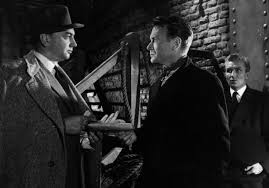
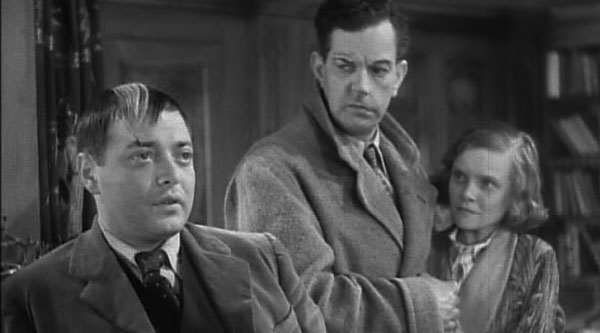
The Man Who Knew Too Much is a 1934 British thriller film directed by Alfred Hitchcock. Later Hitchcock remade the film after 20 years with James Stewart as the male lead. Both versions have been brilliant for different reasons. The plot of both films is roughly the same: holidaying overseas, the father of a young girl stumbles upon a secret of international importance. In order to keep him quiet, some foreign agents kidnap the child and ship her back to London, where the father and his long-suffering wife pick up the trail and try to find out their child.  Edna Best and Leslie Banks star as Jill and Bob Lawrence, a couple on holiday in the Swiss Alps with their teenage daughter Betty (Nova Pilbeam). When their friend Louis Bernard (Pierre Fresnay) is shot while dancing with Jill, he tells Bob of an assassination about to take place in London. Fearing that their plot will be revealed, the assassins, led by vicious Abbott (Peter Lorre), kidnap the daughter in order to keep her father quiet. From the very start, we notice that it’s Jill who is taking the more active hero role, by virtue of the fact that she’s participating in a sharpshooting competition. Bob, on the other hand, is left to spend time with his daughter. Most of Jill’s scenes are with other men, while Bob spends the majority of the film separated from her – on the hunt for his kid or in the custody of the villains.
The performances by the actors are of high quality, with Leslie Banks leading the cast with his charming presence and very British wit. His ability to mix drama with comedy makes his character a very real and likable person. Edna Best is spectacular as a tough and charming woman. But the real star of the film is the fantastic Peter Lorre as the leader of the conspirators. In his first work in English, Lorre shows off his enormous talent and steals every single scene he appears in the film. The Man Who Knew Too Much” is probably the first of his movies that truly can be considered as representative Hitchcock film, as his style is finally shaped in this film. Visually, the movie is a joy, as with the excellent work by cinematographer Curt Courant, Hitchcock shows the influence of German expressionism in his work and creates wonderful images of striking contrast between light and shadows. His mastery of suspense shines in many scenes of the film, particularly in an impressive sequence that serves as the climax of the film. The remake was equally brilliant with the great James Stewart as lead. I will write my next review about it.

The Long Memory

the-long-memory

The Long Memory is a black and white 1953 British noir film directed by Robert Hamer. John Mills plays Philip Davidson, just released from an eight-year stretch in prison for murder. But Philip has a mission. He wants to track down the people responsible for his imprisonment—Captain Driver (Fred Johnson), his daughter Fay (Elizabeth Sellers), and Tim Pewsie (John Slater)—who stitched him up for the murder of the criminal Boyd (John Chandos) to hide their own involvement in Boyd’s crimes. Boyd had actually clubbed one of his customers over the head in a fight over payment, and then seemed to drown when Driver’s boat caught fire and sank. After his release, Phillip finds that Captain Driver drank himself to death, Fay has married the detective on the case, Bob Lowther (John McCallum), and become a middle-class housewife, and Pewsey, a middle-aged man, has recently left his own wife (Thora Hird) for a younger mistress (Mary Mackenzie).

Mills is excellent as an ordinary, decent man who’s life is turned upside down and because of that becomes frustrated and obsessed. Eva Bergh is excellent as a young waitress at a café who befriends Davidson and ends up falling in love with him. Sellars is good as the woman who only cares about herself and doesn’t realise until much later just what her accusations cost Davidson. The great works of British film noir are far less well known than the American, but it was one of the few genres that thrived for the British film industry after World war 2. Like many true noir films, The Long Memory is about people trying to cling to existence and their humanity; crime is a negative expression of their desires. The Long Memory portrays Britain as it was then—depressed, hungry, worn out by war, and full of the poor, deprived, transient, and criminal.

The 39 Steps

the-39-steps

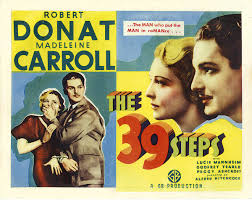
The 39 Steps has the classic Hitchcockian theme of an average, innocent man caught up in extraordinary events which are quite beyond his control. Over a span of four days, the smart and unflappable protagonist, Richard Hannay (Robert Donat) is involved in a circular journey to prove his innocence and expose the hive of intrigue. The opening of the film, the first three shots do not show him above his neck. With his back to the camera, he is followed down the aisle to his seat. He is then assumed to be lost in the crowd. This gives the audience the feeling that he could be anybody. During a music hall brawl, Hannay agrees when a mysterious woman asks if she can go home with him. He takes her to his flat.   There, she tells him that she is a spy, being chased by assassins. Later that night she gets murdered and the man stands accused. En route, he has many adventures as he flees across the South Scotland landscapes, including being handcuffed to a woman (Madeline Carroll) who happens to think he is guilty of the murder. Donat is a charming lead and he plays it well. Carroll is well used as the traditional blonde cast by Hitchcock, she is a little disorganized but she is a match for Donat in early scenes. The 39 Steps stands out because it was one of the Master of Suspense’s first “talkies”; like any artist trying something new, his strokes are at once nervous and brash, and his motifs wonderfully contradictory.  It was made at a time when film-makers were experimenting with sound, yet Hitchcock uses silence to heighten the tension.


Ratcatcher

ratcatcher 2

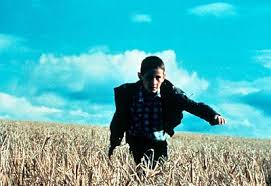
It begins with a boy named Ryan spinning while wrapped in his mother’s curtains, and the scene shifts from slow motion to real time as his mother pulls him out of the fabric. Ryan meets James at the canal and suddenly he is drowned, clearly with James bearing much of the blame for not having raised the alarm. The film follows the sensitive James (William Eadie) as he tries to come to terms with his guilt.

Ratcatcher, written and directed by Lynne Ramsay, is a really stunning feature debut.  It takes place during the Glasgow garbage strike of 1973.  James lives with his father (Tommy Flanagan), mother (Mandy Matthews) and two sisters in a poor neighborhood in Glasgow 1973 where the working class is influenced by the garbage streak that over-floods the streets with trash and rats. James isolates himself from his family and makes friendship with the weird neighbor boy Kenny and with the slightly older unrestrained Margaret Anne. Ramsey evokes some breathtaking images and poetry with her incredible editing. Her film is mainly concerned with the subjective experience of childhood and its relation to death.  
 

Dead Man’s Shoes

                                                              dead man's shoes

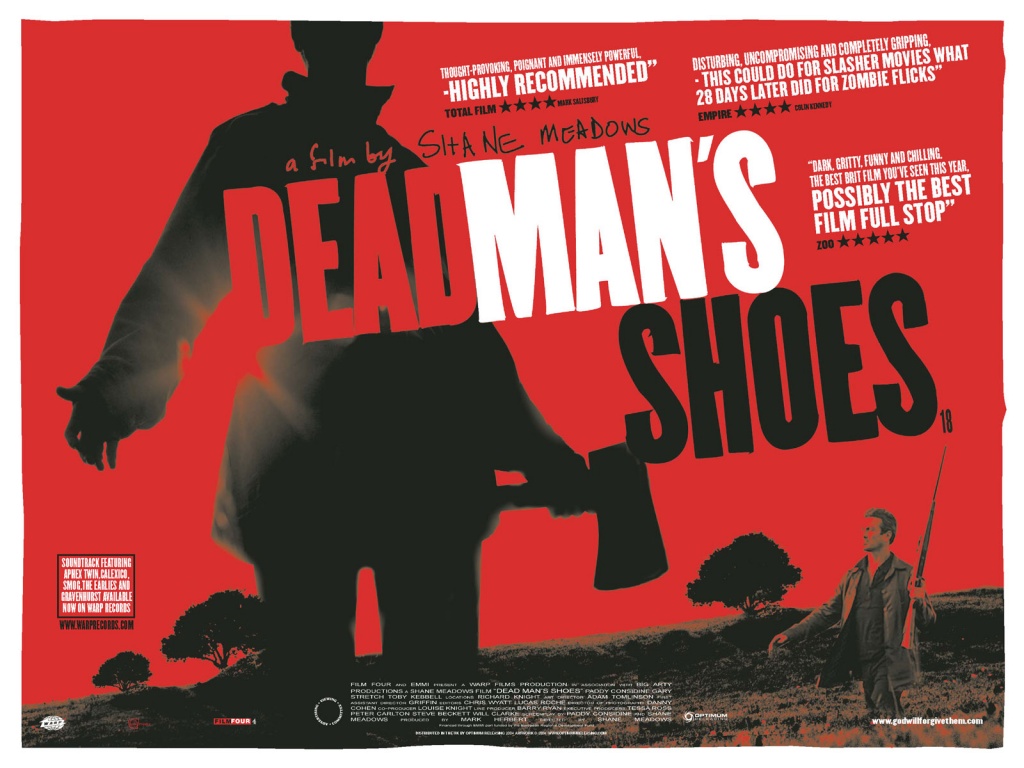
Dead Man’s Shoes is a 2004 British psychological thriller film directed by Shane Meadows. Richard (Paddy Considine) returns to his hometown after serving in the British army. Flashbacks reveal his younger brother Anthony’s abuse by a group of drug dealers in the town. Richard vows to take revenge. Richard has been in the army for several years and is trained as a mercenary, but he plays mind games as much as he resorts to violence. Considine delivers an absolutely convincing depiction of a man struggling to balance his desire for revenge and redemption.

Considine’s Richard is an utterly frightening anti-hero who performs his acts of vengeance without a pause and gives a large satisfied smile with every act. There’s a ruthless logic to our anti-hero’s vengeance that makes it all the more chilling. The villains in this story will feel familiar. They are bullies, no more, no less. They pick on Anthony, coerce him into taking drugs, sexually molest him, mess with his mind in cruel ways. This is a revenge tale, yes , but a complex one.

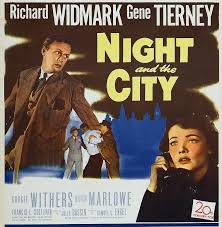
Night and The City

                                                          night and the city

Jules Dassin’s 1950 masterpiece was his first movie after being exiled from America for alleged communist politics , and the unpleasant ordeal seems to have infused his work with a newfound bitterness and pessimism .  The film begins with Harry Fabian , a cheap American born scam artist running through the desolate streets of London. Fabian is a nobody who wants to be somebody out for his own big score and unconcerned about the bodies left behind.  Widmark once said in an interview , what he remembers most about this film is that he did a lot of running. Richard Widmark as Harry Fabian gives us his most definitive role. Night and the city is one of the strongest examples of film noir expressionism and it presents London as an urban hell-a world of dark shadows, desperate individuals etc.  This is one of the toughest ,bleakest films ever produced by a major Hollywood studio.  When Dassin returned to the United status for post-production work on Night And The city, he was prevented from entering into the studio due to his left-wing past.