Chalachal

Chalachal.jpg


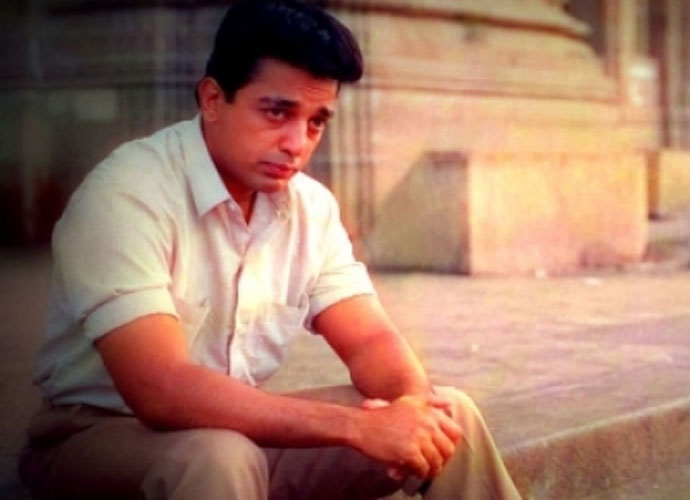
Sarama Banerjee (Arundhati Devi), an exemplary student of medical science faced the crisis of poverty.  Avinash (Nirmal Kumar), a classmate of Sarama liked her a lot. Due to recommendations by his teacher Chandra Saheb ( Pahari Sanyal),  Sarama did manage to get a private tuition.  Avinash used to suffer very frequently.  He left his studies and worked as a freelance artist.  In the meantime, Bipin (AsitBaran) came into the life of Sarama.  He was the elder brother of Montu, the student of Sarama. Avinash sacrificed his love and Bipin got married to Sarama. Slowly Bipin started to doubt his wife. She is caught between her love for the sensitive but ailing artist Avinash and her loving husband Bipin.  None of the two men understand Sarama’s heart truly and Sen brilliantly captures the lone woman’s solitary struggle. The strength of Asit Sen lay in his ability to balance the script and handle complex characters with a certain level of maturity that makes them connect directly with the audience.  Asit Sen was a master of the low-angle shots. He used his camera to root his characters and highlight their emotions.  Nirmal Kumar was inconsistent while Arundhati Devi,  AsitBaran did full justice to their roles.  This film was a good example of Asit Sen’s characteristic style to keep the movement happening as the script raced through, the characters conversing with each other in a perfect reflection of our daily lives.
Pakeezah

pakeezah 1

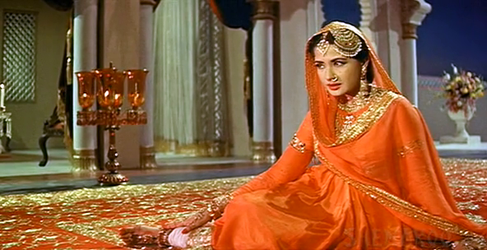
Some films want to buy classic status with massive budgets and crumple under the pressure of their own spectacle. Pakeezah is lavish in its treatment of a courtesan’s turbulent story, but its splendor fills the eye, stirs the senses.  The story begins with the elopement of a tawaif,  Nargis (Meena Kumari)  with her lover,  the Nawab Shahabuddin (Ashok Kumar).  Shahabuddin takes Nargis to his household,  where she is rejected by his honorable family.  Nargis flees to a graveyard, where she spends the next 10 months of her life, giving birth to a daughter in the interim.   Nargis dies in the graveyard, and her older sister Nawabjaan (Veena), on receiving this news, reaches there and takes the baby away. 17 years later Sahabuddin has received a letter written by Nargis on her deathbed. He comes to know about his daughter through this letter.  Shahabuddin rushes to Nawabjaan’s Kotha and asks for his daughter Sahibjaan (Meena Kumari). A furious Nawabjaan tells him to come tomorrow morning.  Nawabjaan takes her to some other place.  They travel overnight by train and while both of them are asleep in their compartment, a fellow passenger climbs into their compartment by mistake. He is Salim (Raj Kumar).  Enchanted by her feet, he leaves a note “Aap ke paon dekhe, bahut haseen hai. Inhe zameen par mat utariyega — maile ho jayenge”.

There is grandeur in Amrohi’s filmmaking – an epic magnitude of treatment.  The evocative songs and the background music create the right period mood and Amrohi’s eye for details brings great depth to the lavish sets.  The film’s main merit in spite of its flaws, its at times disjointed flow, its stock situations and an overextended plot,  lies in its euphoric romanticism. Pakeezah is filled with symbols.  There is, for instance, the oft-used symbol of the bird in a cage.  Trains themselves form an important motif throughout the film.   A train is where Sahibjaan’s and Salim’s paths first cross, and ever after, trains continue to haunt  Sahibjaan.   Kamal Amrohi uses actions, expressions, little details to convey far more than dialogues do, and often in much less time.  The script is memorable in the hands of Meena, Ashok, Raaj Kumar, Veena etc to name a few.  Personally, I was most impressed by the regal-looking Kamal Kapoor. Meena Kumari lives the tragedy of Nargis and Sahib Jaan like her own. Coupled, with a captivating screenplay is a beautiful musical score, enhanced by the protagonist displaying notable command of classical Indian dance  (kathak).

Bu San ( Goodbye, Dragon Inn )

Goodbye dragon inn

We talk about cinemagoing as a communal experience, where we tend to bond with others over the images in front of us. When groups of us gather in a hall, we may be seeing the same images, but we are never seeing the same film.  Other ways of watching films-on a computer and even on a phone- have come to the fore, and, as a result, new ways of living with cinemas have emerged. They are no less important, but they are different psychologically.  For their final show, the theatre has programmed King Hu’s 1966 martial-arts classic, Dragon Inn. Entering the auditorium, the young man notices a handful of other people. There are also several middle-aged men who seem far more interested in one another than in the film.Meanwhile, a crippled ticket taker is eating dinner in her small booth. She sets aside half of her food to take to the projectionist. The film becomes hypnotically addicting if you adjust urself to its languid pace. Tsai captures the simple pleasure of going into a cinema for a couple of hours, as well as the voyeurism that can accompany watching a film with a crowd of unknown people. Camera shows us desolate corridors and cluttered storage rooms, a lobby lined with brightly colored posters that might look garish if they weren’t so inviting. Everywhere Tsai takes us, the theater is thrumming with near-silent life.

Hell or High Water

Hell or High water 1

The 2016 feature by David Mackenzie tells the story of 2 brothers who will stop at nothing to save the land of their deceased mother, the last link to their childhood, and the riches that the oil under her land will promise. Marcus (Jeff Bridges) is a Texas lawman weeks before a forced retirement, training Alberto (Gil Birmingham) to be able to take his place. Just when it seems like it will be a quiet couple of weeks before his retirement, a rash of bank robberies occur and Marcus and Alberto take the responsibility to solve the case.  After their mother passed away, Tanner (Ben Foster) and Toby (Chris Pine) were faced with the realization that the land on which she lived was being seized by the bank. Toby has a former wife and a child to think about while Tanner is constantly on the run, in and out of jail. All of the performers in this film, right down to the bit players, are quite good, but Bridges shows yet again that he is one of the finest actors in America.
Bridges takes over the film every time he’s on-screen. He doesn’t want to give up his job because, we feel, he wants to hold on to a West that no longer exists. Pine, who usually chooses action hero type roles, makes us question whether he might not be a better character actor. He’s excellent here in part because the weight of the movie isn’t resting on his back.  Ben Foster does a pretty mean impression of a man who looks like he’s spent a week living in a gutter.  One character, a half-Comanche, puts it in perspective when he matter-of-fact observes that, 150 years ago, all this land belonged to his people. Hell or High Water is more of a drama than a thriller, although there are “thriller-type” elements in place. Mackenzie prefers extended takes and tracking shots that lift the film to great cinematic heights. Mackenzie takes great pains to provide a compelling, credible motive for Toby and Tanner and to illustrate the strengths and weaknesses of the men pursuing them. In the superbly tense Hell or High Water, New Mexico stands in for Texas and the heist film stands in for a bleak present-day western.

Esthappan

ESTHAPPAN

Esthappan is a 1980 Malayalam film written and directed by G. Aravindan. Esthappan is a fisherman, who lives in a seashore colony. He, who was once a fisherman now does no work other than helping people. He is concerned more about getting into the hearts of people where lay the real problem. His story unfolds through narrations by other fishermen about his miraculous acts. For some, he is a seer and healer, for others a thief, or a crook. He is the medium through which they explain and understand the ambiguities and injustices of life. Esthappan, who turns into a mythical figure in the minds of the local people, and weaves into itself local myths and legends.
There is something about him-his waywardness or maybe the look in his eyes which gives rise to stories. The stories about Esthappan contradict one another. The film makes creative use of the episodic cartoon format.  Arivandan draws parallels with the Biblical story of Christ.  Shaji’s camera captures soft contrasts of light, faint rubbings of the gold in the dark hall of the catholic church, the hazy blackness of a cave following upon the grain of sandstone walls.

Body Double

Body Double

“Body Double” is an exhilarating exercise in pure filmmaking, a thriller in the             Hitchcock tradition in which there’s no particular point except that the hero is flawed and we identify with him completely.  The film gives more emphasis on visual storytelling rather than dialogue. Jake Scully (Craig Wasson) is a struggling actor who has lost his role as a vampire in a low-budget horror film.  At a method acting class, he meets Sam (Gregg Henry) who offers Scully a place to stay.  Sam points out all the sights including a shapely neighbor (Deborah Shelton) who does a nightly striptease dance in front of her open window.  For two nights, he uses a telescope to watch the striptease.  He also begins to suspect that the woman may be in danger. Since the plot is so important in “Body Double,” I won’t reveal very much more of the story. It is a genuinely terrifying thriller. De Palma is at home in this genre. We see some fairly mild porno scenes in this film.  The film opens with a satire on vampire movies, includes a Hitchcockian cat-and-mouse sequence, and even borrows some of the clichés of 1940s film-noirs.   Technically, it’s a marvel of film technique.  Wasson’s claustrophobic attacks are effectively conveyed to the viewer. The infamous drill murder is a terrific setpiece.  Craig Wasson is good as confused and creepy Scully and Deborah Shelton has a remoteness that fits in well with the dreaminess of some of her scenes.

The Lobster

The LObster

The Lobster, the first English-language feature by the daring Greek director Yorgos Lanthimos.  Absurd and surreal don’t seem sufficient words to describe what transpires in The Lobster.  In the new world, citizens can’t be single. There’s a law against it.  Security will harass you and demand to see your license of coupledom.
If you don’t have it, you’re off to a strange hotel, where singles have 45 days to search around for a suitable bachelor.  Failing that, one has the option of being transformed into the animal of his/her choice. It stars Colin Farell as a newly-single man trying to find someone so he can remain human. The dog accompanying David is his brother.
David chooses to become a lobster, due to their life cycle.  David makes friendships with Robert(John C Reilly), a man with a lisp and John, a man with a limp.  David’s day-to-day activities at the hotel – meals, seminars, and dances, are narrated by a nameless woman, played by Rachel Weisz.  She is a loner living in the forest. In the film’s second half, she and David start a romantic relationship. But Lanthimos keeps the audience guessing about their ultimate ends right up to the final shot, and beyond.  The Lobster deals with extremes of human emotion by factoring most of the emotion out of the equation. Through that premise and Farrell’s deadpan performance, Lanthimos dissects the superficial things we do for love. Rachel Weisz was spectacular.  The Lobster remains strangely romantic throughout, an absurdist take on the notion that great love stories don’t always end in a positive note.

Sairat

Sairat

Sairat means zeal, passion or ardor.  A guy from lower strata of the caste system falls for a rich upper-class girl.  It is a story about their love, resistance, struggle, and survival. In the first part of the film love blossoms between Archana and Parshya and romantic chemistry is portrayed.  The second half of the movie gives a radical departure from the first part where the love story takes an ugly turn leading to a social drama.  The second part of this film is more important. The lead characters, the hero (Akash) and the heroine (Rinku) stand out among the whole cast.  Even the supporting characters like the friends’ circle of the leads like Salya, Balya, Mangya convey a lot of finesse and depth to the film.  Suraj Pawar as Prince has a brief  but significant role.  He played the most cruel character in this film.  Which Indian film showed the love between castes? One needs to go back to Bimal Roy’s Sujata where Nutan played a Dalit woman character.   But in Sairat, caste equations are woven into a love story.   Director Nagraj Manjule does a commendable job. The director has touched upon gender roles reversal. He is well-versed with the household chores, she isn’t.  She can’t cook or clean and he happily does it for her till she learns. The film’s only fault is that it borders on too-much social-realism in 2nd half.

Nayagan

nayagan

Earlier I watched the Hindi version of this film. But one has to watch the Tamil version to understand the beauty of this film. The film starring Kamal Hassan as Sakthivelu Naiker is loosely based on the life of famed gangster ‘Varadarajan Mudaliar.’  The film starts with a scene where a union leader’s son Sakthivel was captured by the police in order to find him.  They play a trick on him by making them believe that they are on his side. The police kill his father.  Sakthivel stabs the inspector and runs to Mumbai. In Mumbai, he was raised by a smuggler named Hussain, who treated him like a son. Later Hussain was arrested by police where the inspector ended up killing him.  Knowing the truth he kills the inspector but being a kind-hearted soul he takes care of the inspector’s son. Instantly becoming the hero protector of his poor Mumbai neighborhood, he becomes known as Velu Nayakan.  Hassan portrays the roughness, emotions, power and all those things needed in his character of Sakthivel.  Apart from the marvelous performance of Kamal Hassan, other supporting cast did a commendable job. The complex relationships between the various characters are brilliantly depicted like the relationship between Velu and his daughter or the relation between Tinnu Anand and Velu.
The most noteworthy subplot is that of the bond shared between Velu and his daughter. Cinematographer P C Sriram rightly captures the gritty tone of this film, the way it was intended to be by Mani Ratnam. Art director Thota Tharani has done a wonderful job of creating the slums of Mumbai which looks straight out of life.

wolf

Director Christophe Gans has given us an exhilarating ride with this stylish period thriller. The story involves the Beast of Gevaudan, which in 1764, terrorized a remote district of France, killing more than 100 people and tearing out their hearts and vitals.
As the film opens, the king has dispatched eminent scientist Gregoire de Fronsac (played by Samuel le Bihan), along with a muscle-bound Iroquois blood brother named Mani ( Mark Dacascos), to investigate. The creature responsible is reportedly a monstrous wolf, but as the pair investigate, they discover that several of the locals may know more about the affair than they’re admitting.  Why is aristocrat Jean-Francois de Morangias ( Vincent Cassel) so indecisive towards the duo and is the prostitute Sylvia ( Monica Bellucci) just a little too savvy and sophisticated for someone who earns their living from dusk till dawn?  There’s also the small matter of Marianne (Dequenne), Jean-Francois’ virginal sister who fascinates Grégoire and then drives him into the arms of Sylvia.

Brotherhood of the Wolf encompasses every genre of film; martial arts, action, romance, thriller, horror, drama, everything.  There is the strikingly elegant and almost hypnotic courtesan Monica Bellucci, playing her role of seductress with ice-cold professionalism.  In complete contrast, there is the innocent, fragile, and astonishingly beautiful, Emilie Dequenne, younger sister to the protective Jean Francois.
The two leads are fantastic and share a chemistry reminiscent of the relationship between Butch and Sundance.  Then there is Vincent Cassel who is suitably creepy as the immoral ‘Morangias”.  Atmosphere and suspense are strong throughout, and definite care is taken with the sound editing, whether it be the ceaseless patter of the driving rainfall or the heaving atmosphere of a noisy brothel.  The horror or ‘attack’ sequences are artfully played out, quietly refusing to reveal the identity of the creature; but when at last it is shown, the special effects do not disappoint.