Stolen Kisses ( Baisers volés)

stolen kisses 1

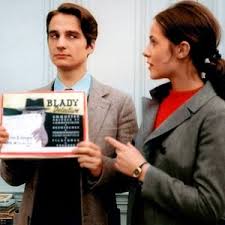
Baisers volés is the third installment in François Truffaut’s wonderful cycle of films concerning his cinematic alter ego, Antoine Doinel. Played memorably by Jean-Pierre Léaud, Antoine remains one of film history’s most enduring characters, a hopeless romantic who longs for perfection in his affairs with women and work, while finding it difficult to balance both.  Here, he gets discharged from the army, and then he takes a few other jobs before finally getting settled in as a private detective. The character of Antoine Doinel is an autobiographical extension of Truffaut. When Antoine Doinel gets discharged from the army, he laughs in the face of the commanding officers. It is based on Truffaut’s own disastrous military experiences in the 1950s when he was jailed as a deserter and eventually thrown out of the army.  Doinel celebrates his freedom by running immediately to a bordello. He tries to woo a young woman (Jade) who is initially indifferent to him but warms up when he shows signs of losing interest. He takes the job as a private detective of Blady’s, which puts him as a planted spy in Monsieur Tobard’s Shoe Shop. He gets attracted to his wife, Mrs Tobard (Delphine Seyrig). When Antoine loves Fabienne (the shoe shop’s owner’s wife), Christine is in love with Antoine. Every character is immersed in a love triangle.  Mrs Tobard also gets attracted to Antoine as well, but for a very short period. She finds her husband unromantic and boring, yet she has sympathy for him.   Antoine likes to fall in love, but he feels awkward in relationships. Like his previous work, this film has remarkable fluid camera movements as he gives us a breathtaking view of the eternal city and the journey Antoine is on in hopes of discovering his place. Léaud is always brilliant, playing the director’s alter ego. He’s very funny, charming, very good-looking.  Delphine Seyrig is brilliant in a short but very important role. She has a beautiful, deep voice. During this period, the May 68 revolution took place in Paris. In that situation, Antoine was trying to find his own feet. It is charming in its carefree tempo and disarming in its frankness about whimsical triviality.



In the Fade (Aus dem Nichts )

In the Fade 1

In a prologue, we see blonde Katja (Diane Kruger) marrying jailed drug dealer Nuri Şekerci (Numan Acar). After returning from jail, Nuri corrected himself and he did set up a business. They had a happy family with a son. One day, Katja goes to a spa with her friend. While returning, she finds police barricades and learns that a bomb killed her loved ones. She is devastated totally. She tries to get back to her normal life but she couldn’t.  From the investigation, it is learned that a neo-nazi group is involved in this murder. Since last few years, neo-nazi groups are creating terror in Germany. They are mostly violent towards Muslims. Katja’s friend Danilo Fava (Denis Moschitto) is prosecuting attorney, pitted against nasty defense lawyer Haberbeck (Johannes Krisch). Kruger convincingly conveys Katja’s anguish, fragility and fierce determination as a woman who has lost everything yet single-minded in a pursuit of justice that eventually turns to vengeance. The first half of the film deals with the tragedy of Katja. 2nd half deals with the court procedures. In the 3rd half, we witness the rage of a woman. The film just doesn’t focus on the terrorism issue. It also deals with the rage of a woman. Beside that, it deals with the grief of survivors. Court scenes were cleverly shot. We felt bored while watching that part. But that is how justice system works. The film cleverly used silence in crucial moments. One might hope for some action, but that is not going to happen.

Dance Of The Wind

dance of the wind 1

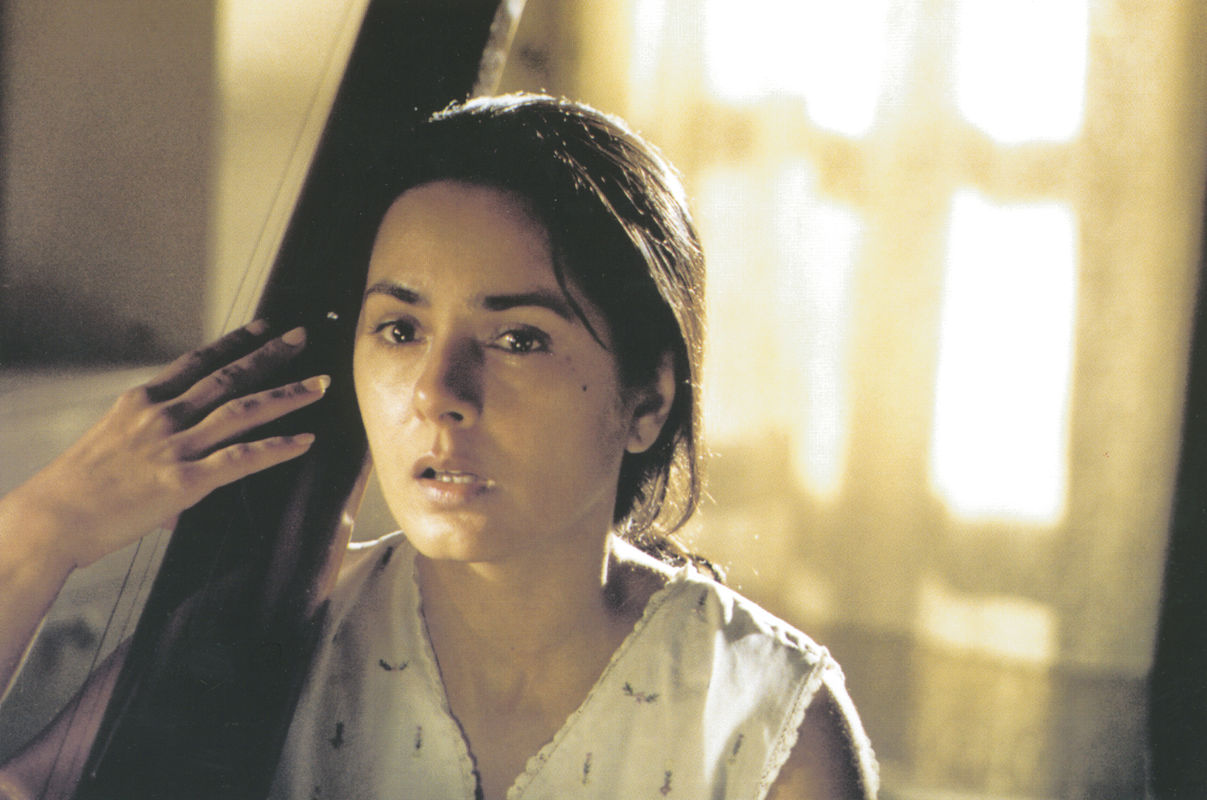
Pallavi (Kitu Gidwani) , a successful classical singer trains with her mother to carry forward the Hindustani musical tradition. She is good but not as much skilled as her mother is.  Her mother Karuna took training from an old man. He never performed on stage but used to give lessons to his students. When Karuna started to perform on stage , he cut off all contacts with her.  He detested glamour world. The trauma of Karuna’s death, announced by the appearance of the old man and a little girl, causes  Pallavi’s voice to disappear. Slowly her relationship with her husband (Bhaveen Gosain) becomes strained.  She slowly loses her students and her career takes a backseat.  Retreating into solitude, she finds the little girl Tara (Roshan Bano) again. Much of the music was composed by Shubha Mudgal, a classical singer who studied in the guru-disciple tradition.  Director Rajan Khosa used music in crucial points to capture the essence and mood of the film. The film is spiritual but it is extremely honest in it’s approach. In other words,it located in Indian culture.  Khosa didn’t opt for any dishonest trick to make it global.
Yet, it has an universal appeal. He is aided by fine technical work all around,  from Piyush Shah’s soft-hued lensing to Amardeep Behl’s quietly refined production design. I always liked to watch KItu Gidwani.  She has been an extremely talented actress. Instinct affects her acting more than anything else.  Bhaveen Gosain is known in theatre circuits. He just did this film only.  Here, he gives a very convincing performance as a caring husband.  Vinod Nagpal shines in a very short role.

The Border

jack 5


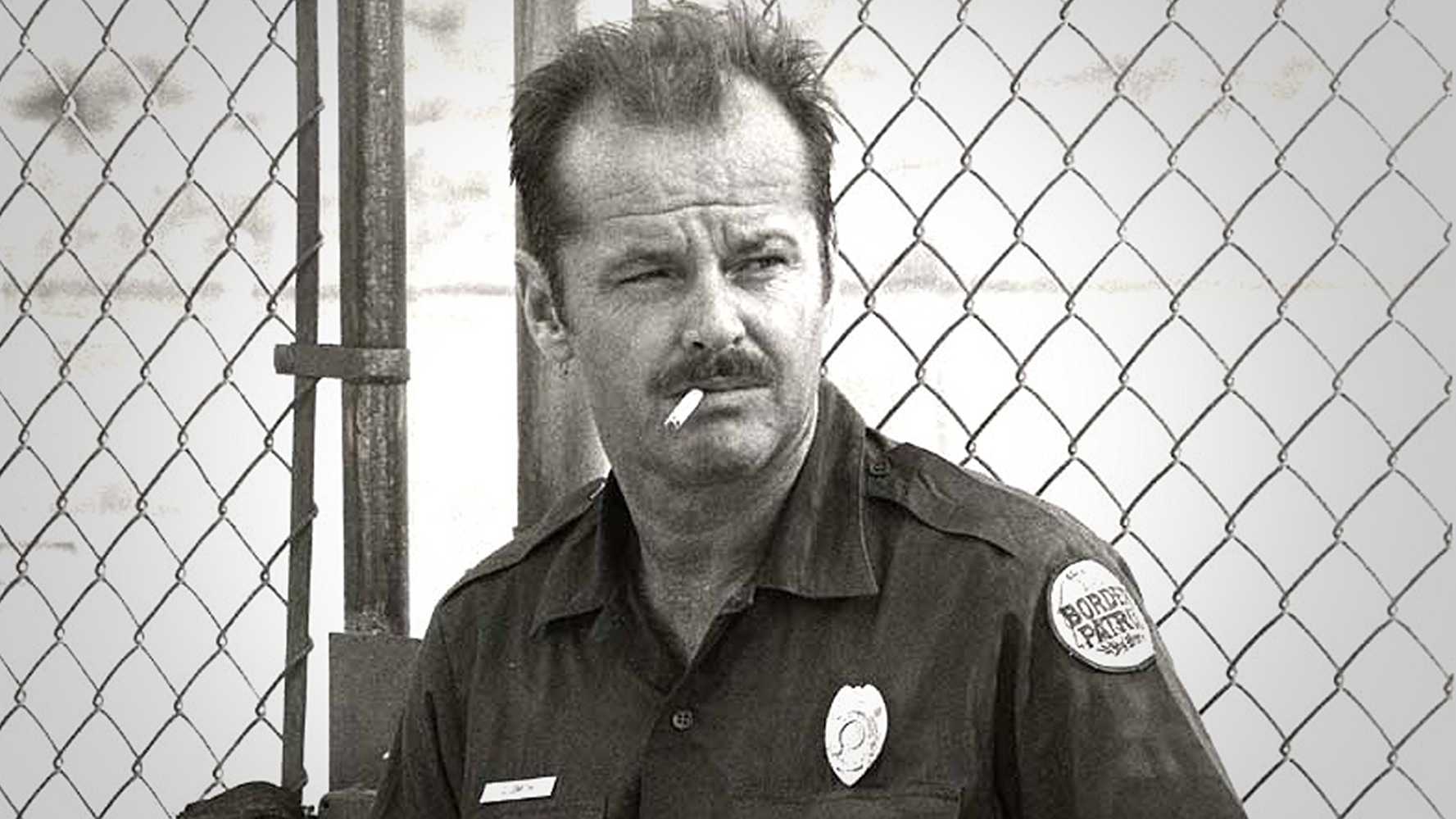
Immigration enforcement agent Charlie Smith (Jack Nicholson) lives with his wife in California in a small house. She forces him to move to a duplex in El Paso shared by border agent Cat (Harvey Keitel). Marcy wants to live a rich life and Charlie’s current wages won’t cover it. Cat gives him an offer to join him in a shady business. He introduces Charlie to the human smuggling operation he runs with their supervisor Red.
He uses this partnership to help a young Mexican woman, Maria, get across the Tex-Mex border along with her younger brother and her baby. Nicholson is constantly at odds with his bimbo wife (Perrine, perfectly annoying) and his morally corrupt partner (Keitel as always menacing). This is one of the few films which dealt with the issue of the USA-Mexican border. It handles the human smuggling issue in detail. After Charlie decides to join hands with Cat, the drama increases. While Cat is a perfect bad guy, Charlie still has some morals. It was never clear if Charlie loved his wife or not.
But the kind of guy is , he will never cheat her. With time, he develops a special feeling towards Maria but that is only limited to feelings. Jack Nicholson here plays a totally subdued character and he plays it with elan. Valerie Perrine is superb as the annoying wife while  Elpidia Carrillo does her job by slightly changing her facial expressions.
Harvey Keitel is always dependable. The direction by Tony Richardson, is at times inspired and artistic, and at other times as ordinary as dishwater. Still, as a snapshot of poor Mexican immigrants (and would-be immigrants) as they clash with the border patrol culture twenty-some years ago, The Border is definitely worth a look.

Debshishu

debsishu

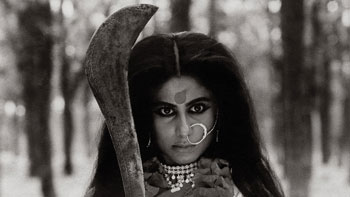
In the 70s and 80s, plenty of Indian directors made socially-realistic films. Some of the notable directors were Shyam Benegal, Govind Nihalani, Nabyendu Chatterjee and Utpalendu Chakraborty.  Utpalendu Chakrabarty made very few films in his career. His last film was 25 years ago.  Even then, not all of his films are available. But if one watches Chokh and Debshishu, he/she will be convinced of his great skills and mastery over the medium. In the opening scene, we see a middle-aged guy announcing the arrival of a debshishu (child god) in a remote village.  The child god fulfills the wishes of people. A couple, Raghubir and Seeta (Sadhu Meher and Smita Patil), arrive in the village with their only child. They have lost everything in the flood. Seeta came to stay at her brother’s house for a few days. However, the brother’s wife (Rohini Hattagandi) turns out to be very cruel and insensitive towards them. Still, they manage to get a room in their house.  Raghubir realizes that he can’t stay here for long. Soon, he has to find a job and a house of his own. One day, while going to the market, he hears about debshishu (child-god). He visits there hoping that his wishes will be fulfilled. There he sees a magician (Om Puri). He remembers him showing magic in his village. When Raghubir and Seeta’s deformed baby was born, he went to his house to ask for help. The villagers warn Raghubir that if his baby is not killed, they will force them to leave the village. According to them, the baby would bring bad luck to the village. The magician told him to sell the baby to them, and he would compensate for that by giving him good money in return.  Raghubir follows his orders.  Raghubir realizes that the child god is his deformed baby. 

Let me tell you, this film is much different in content and form than other good social-realist films belonging to that particular period. The cast system, poverty, religion are all mixed here in a bizarre (important word) way. While I do like most social-realist films of that period, very few of them did display the complexity of oppression. It isn’t just limited to homeowners or wealthy, powerful people oppressing others. The reality is bizarre and that is what this film is. The film highlighted how gods are born and how poor people are forced to believe in their existence more. Sadhu Meher has been exceptional. Smita Patil and Om Puri are dependable.  Utpalendu was a gem of a director and to me one of the most important ones, along with Shyam Benegal and Govind Nihalani. He used two flashbacks in the film. One of them was done in black and white to capture the image of the rain more realistically. Another one was in color when Sadhu Meher visited Om Puri’s house.


Jiban Trishna

Jiban Trishna 1


Sophisticated millionaire Rajnath Samanta (Uttam Kumar) tries to woo the self-respecting, independent artist Shakuntala (Suchitra Sen). At first, she avoids him, but slowly she develops a feeling towards him. The relationship between Rajnath’s parents, Dr Samanta (Pahari Sanyal), and his second wife, the ethical Sudeshna (Chandravati Devi), is based on the need for care and understanding.  Sudeshna keeps her real identity hidden from Rajanth to maintain the prestige of the family. The third relationship is the most interesting one. It develops between the dignified widow Sabita (Deepti Roy) and her neighbor Debkamal (Bikash Roy). Debkamal has a hidden past.  Asit Sen, with complete mastery over his medium, could handle a six-edged storyline with such finesse. All the characters are equally powerful and all of them get equal space.  It is no mean task. The forte of Asit Sen lay in his ability to balance the script and handle complex characters in such a manner that makes them connect with the audience.  Asit Sen was a cameraperson himself, so cinematography used to be a highlight in all of his films.  Each camera angle is well-thought-out and the low-angle shots of Uttam Kumar and Suchitra sen were excellent. Uttam Kumar delivers a very good performance. This is not one of his best performances, but in certain scenes, he shows his spark. Especially during the scene where he confronts Suchitra in his room. Suchitra mostly matches Uttam, though in certain sequences, she goes overboard. Overall, she still does a very good job.  In Asit Sen and Ajoy Kar’s films, Suchitra really did a good job as an actor. The best performances came from Bikash Roy and Deepti Roy.  Bikash Roy masterfully portrayed vulnerable shades of his character. Deepti Roy was attracted to Bikash, but she never expressed it in an explicit manner. Her nuanced acting did manage to maintain the balance. One of Bhupen Hazarika’s earliest hits, “Sagar sangame’, is featured in this film. Unfortunately, in Angle’s video, the song is cut from the film. However, one can watch this song on YouTube. It is a brilliant depiction of murmuring to oneself as one gets ready for the day.

Colo

One evening, teenager Martha (Alice Albergaria Borges) asks her unemployed father (João Pedro Vaz) where her mother (Beatriz Batarda) is, and dad replies that she will probably never return. Her father goes outside. But after a while, her mother does return, explaining that she has got an additional job. They are going through an economic crisis. Her father is jobless, and her mother takes multiple small jobs to run the family.  But even that is not sufficient for them to pay electric bills. At times, her father disappears without saying anything. Martha makes friends with a pregnant girl in high school. She observes the outside world through her window. She spends time wandering at a beach. Her mother is so occupied with many jobs that we can’t get a look at her psyche. The first hour consists mostly of mundane routines and interactions between these three. All of them try to understand each other but, in the end, they don’t quite understand.  Random incidents are described without much context. Characters drift along, showing little certainty in what they do. Whether young or old, the people in Colorado don’t quite understand what’s happening to them. The most attractive aspect of the film is its striking visual design. Both indoor and outdoor spaces, as well as the characters’ relation to them, are presented with great care. The natural world offers little solace in Colo, but it does suggest a yearning for a simpler, easier state of things. Despite suffering from economic crises, the characters maintain their humanity. 
 Mother appears to be a male of the family while her father doesn’t shy away from crying. Mother acts as a protector of the family. Artificial and natural lighting helps to create an impressive visual control of mood. Other strengths include a delicate, sparing, use of classical pieces by Schumann and Shostakovich. This is my first film by Teresa Villaverde. She showed immense control throughout the film. I would like to explore all of her works.

Footpath (1953)

footpath


Nashu (Dilip Kumar) is an idealist young man who works for a small newspaper run by Ghosh babu. He lives with his brother Bani (Romesh Thapar) and sister-in-law Meena (Achla Sachdev). Nashu loves Mala (Meena Kumari) who lives nearby his house.   Times change and slowly it becomes difficult for Nashu to sustain his living by working in that small newspaper. Though his brother Bani cares for him, his sister-in-law does not. In the home, he had to bear a lot of humiliation from her.  Out of desperation, he enters the world of black-marketing. From here, the story takes a dramatic twist. He becomes the most trusted associate of Ram Babu (Anwar Hussain). Being aware of this, Mala maintains a safe distance from him. At the same time, his elder brother suffers from poverty. His comfort-loving wife Meena deserts him. The entire film looks into the psyche of a man who failed to earn money by honest means.

The problem with the film is that it does make the point by repeating it often. On the positive side, the film gives a glimpse of the black-market world. Also, the mood of the film is extremely dark. This mood wasn’t common in Hindi films back then. Director Zia Sarhadi showed a lot of promise and eye for detail. The sequences shot indoors as well as in the black-marketing den shot in natural light by N. Raiaram are really convincing. However, keeping with the trend during that period, the villains look unconvincing. On the whole, the music score of the film leaves a lot more to be desired, considering that the film carries the Khayyam stamp. However, the film boasts of one of the most memorable Talat Mehmood songs “Shaam-e-Gham Ki Kasam”.It is clear that Zia Sarhadi was heavily influenced by neo-realism. Dilip Kumar does well in the lead role. Low pitched modulated dialogue delivery and great use of right arm were his acting hallmarks. However, at times, his low pitched delivery looks unconvincing. He did well but this is not among his best works.  Meena kumari gives a very restrained performance. In this film, she is shown taking a bath. Such a scene was uncommon back then.


Get Out

get out

Jordan Peele’s directorial debut will make you think about your own privileges. In the opening sequence, we see a young black guy walking down a suburban street. While talking on his phone, he gets attacked by some random white people. White Rose Armitage (Allison Williams) wants to take her black boyfriend, Chris (Daniel Kaluuya), to meet her parents. While Chris was initially anxious, later he agrees to meet her parents. Her parents, Dean (Bradley Whitford) and Missy (Catherine Keener), welcome him in grand fashion. They were very supportive of him initially. At times, it seems that they are behaving too well. The body language all seems perfectly above board. Why is their basement locked? Why are their two black employees – a housemaid and groundsman – both black appear to be controlled by some unseen force?
 What’s the deal with old white people showing up to a party scheduled for his visit? Get Out is tense, thrilling, and gorgeous. If anything, the film becomes darker and more soul-chilling once the secret is revealed. Get Out is very direct and unapologetic about what it wants to convey.  There was an unsettling vibe throughout the film. Chris’s friend Rod warned him not to visit white people’s houses. While all this was going on, his girlfriend Rose was completely supportive of him. One can find references to many films here, starting from Halloween to Rosemary’s Baby.  Peele has effectively kept audiences on edge from the beginning, sending occasional jolts through the crowd. During Obama’s era, racism was under the carpet. White people were happy to pretend as liberals. In Trump’s era, white people are concerned about racism again. Get out shows racism within progressive whites and it is done by genre-mixing.  Daniel Kaluuya was very good as the main protagonist, but the surprise came from Allison Williams. Watch the film to get to know the reason.

Lady Bird

lady bird


“Anybody who talks about California hedonism has never spent a Christmas in Sacramento.”- Joan Didion. Hedonism refers to the idea that pleasure is the ultimate aim of human life. Sacramento has a charm of old world Americana. It is very much different from rest of California. Interestingly the director of Lady Bird, Greta Gerwig was born in the same place.  The film starts with the famous quote made by Didion. It centers on Christine McPherson ( Saoirse Ronan), a high-schooler who likes to live life on her own terms and conditions. She insists that she be called by her “given” name of  Lady Bird . She wants to spread her wings. She dreams of bigger things and feels weighed down by her circumstances.  More than anything, she wants to break free from Sacramento . She wants to go to a place where culture is omnipresent. Its not that she has great idea about culture itself. She is an average student in school. She doesn’t seem to be an intellectual from any angle. She wants to go to New York as it is famous for culture. Her mother strongly disagrees. Her mother is pragmatic while her daughter likes to live in her own world.
Her father is jobless. They don’t have enough money to recruit her in any college of New York. So, Lady Bird decides to apply for scholarships to east coast colleges with the help from her father. New York is at the core of Lady Bird. New York is the city of Lady Bird’s dreams, but her reality is Sacramento. The film, loosely inspired by Gerwig’s formative years, is a love letter to the city of her childhood. That is why the film is set in 2002-2003. Lady bird not only wants her mother to love her, she also expects that her mother likes her. Lady bird thinks that her mother doesn’t care for her. While her mother thinks that her daughter doesn’t love her. In reality,both of them love each other. Some of the sequences are extremely funny while some are very serious. Calling it a coming-of-age story doesn’t do much justice to the film.  The film also questions parenthood as much as it does on adolescence. While her mother fails to understand her daughter well-enough, her father is over-protective of her daughter. Lady bird thinks that she is an atheist. In reality,it seems that she is confused. It doesn’t glorify or condemn religion. In one of the most important scenes,it acted as a trigger which connects Lady bird to her mother as well as to her hometown. Saoirse Ronan is fantastic in the film and brings such heart to the character of Lady Bird. Metcalf is brilliant as the constrained mother that’s trying her best to keep the family afloat during tough times.