Tabarana Kathe


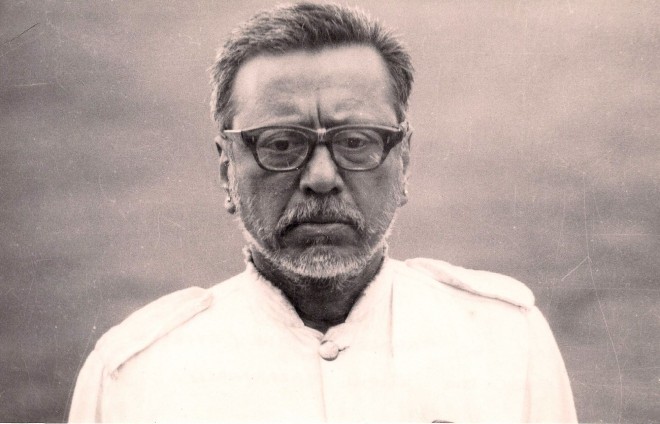
The film starts with Tabara Shetty looking at the sky and telling herself” I wonder… Is the sun rising or setting? “.  Tabara Shetty has gone mad and most of her neighbors see it as a relief. They feel that since he has gone mad, he will go to the asylum, and therefore he is not going to cause any further disturbance. Tabara used to work as a guard in the coffee depot. Tabara was an honest, dedicated person. Some workers wanted tax exemption but, according to the rule, Tabara denied their appeal. From that incident, authorities have seen him as a threat. Tabara worked honestly till her retirement. Problems did arise when he started looking for his pension.  Matters got worse when his wife and only companion fell sick with diabetes. A politician offered to help him in return for Tabara’s aid in getting him votes from his area. Slowly Tabara started to lose her sanity. Tabara did hold the view that the system was better under the British Raj. The director didn’t want to justify Tabara’s point of view, but he wanted to show that for many ordinary people, independence didn’t make much sense. Also, for some people like Tabara, situations get worse in a post-independent government. His case became a mere file number in a bureaucratic office. Kasaravalli’s film attacked the indifferent attitude of bureaucracy. The lead actor, Charu Hasan (splendid acting) as Tabara, is a personification of a typical common person. When Tabara failed to manage his wife’s operation, he went to a local butcher and asked if he would amputate his wife’s leg. That was a very intense scene. 

Un coeur en hiver (Heart in the Winter)


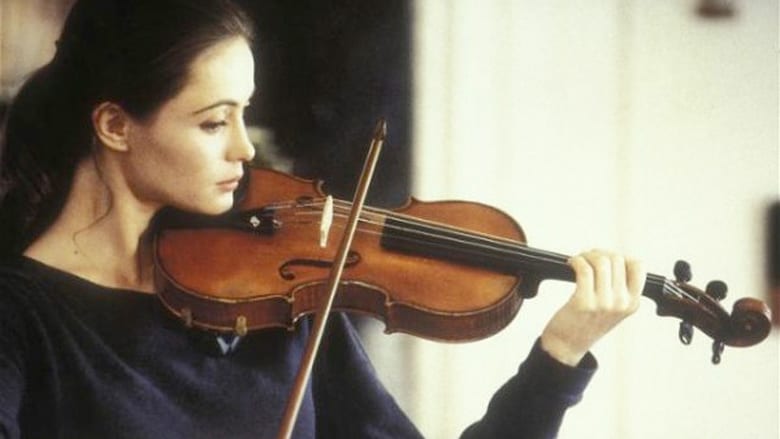
In the opening sequence, Stephane (Daniel Auteuil) says more about himself than he says in the entire film. He is an expert repairer of violins, and he is so good at his craft that the top violinists all over the world come to his studio. He works for Maxime, who is the owner of the business. Maxime treats him as his friend, but it’s not quite clear if Stephane feels the same or not. One day, Maxime tells Stephane that he is ready to leave his wife as he is in love with a woman named Camille (Emmanuelle Béart). Camille is a young violinist who comes to their workshop for some advice.  Camille and Stephane have a conversation about her playing.  When she plays violin, Stephane listens to it with the utmost attention. One thing becomes evident that Camille falls in love with Stephane. His presence creates discomfort for Camille. Sensing that, Stephane leaves the room quietly.  One day, Camille tells Maxime that she is ready to leave him as she is in love with Stephane.  But Stephane tells her that he is not in love with her.  His denial makes her devastated.  Claude Sautet makes a very delicate and nuanced observation of love. It is quite clear that Stephane is in love with her, but he is the kind of guy who loves to hide his feelings. One day, when Camille asks him about his relationship with Maxime, Stephane tells her that he treats him as his partner, not as a friend.  It seems that Stephane loves to lead a quiet, isolated life.   But then in one scene, he tells one woman that he is getting old.  After his encounter with Camille, things do not remain the same anymore. But he is so obsessed with his isolation that he is unable to move on.  He is a very romantic person, but he fears commitment and relationships. Emmanuelle Béart is so wonderful.   Her performances with her violin are so breathtakingly engrossing that one cannot take his/her eyes from her.  But, this film belongs to Auteuil . He plays a character who doesn’t tell much about himself throughout the film.  He is the kind of person who hides his feelings, controls his desires. Auteuil plays it with the utmost sophistication.    This is the kind of film which will grow on you over time. 


Mesrine Part 1: Killer Instinct

mesrine part 1Directed by : Jean-François Richet

Stars: Vincent Cassel, Gerard Depardieu, Cecile De France.
Imdb link:  https://www.imdb.com/title/tt1259014/

Jacques Mesrine used to be public enemy number 1 in France during the 60s and 70s.  The film starts with Jacques (Vincent Cassel) torturing some Algerian activists in prison. Jacques returns to Paris, and soon he gets bored.  He accepts a friend’s offer of bank robbery.  Soon he is introduced to Guido (Gérard Depardieu),, big mafia of the French underworld. Later, Jacques marries a Spanish woman named Sofia. Due to circumstances, he gets divorced, but that doesn’t stop him from committing more crimes. Later, he meets a woman named Jeanne Schneider (Cecile De France) and they quickly fall in love.  Jeanne is into crime, and together they commit bank robberies. Jacques is a gangster, but he has some principles as well. He doesn’t kill unarmed people. He steals only from banks because there is enough money. Vincent Cassel is perfect as the main lead of this film.  He has that perfect aura to depict the role of a gangster-like Jacques. Jacques was very cautious about his celebrity status as well. When he got caught in Canada, he gave some sound bytes to their press. Gérard Depardieu is a seasoned actor. Guido is a responsible person, yet he can be menacing when it is needed. Depardieu does that very well.  The film has some great scenes, such as the one in which Mesrine meets Depardieu and the two become colleagues after threatening to kill one another. The bank robbery scenes and the jailbreak scene were tense. In the first part, director Jean-Francois Richet tried to capture the person as much as he could. My only grouse is that the film could have spent some time showing his youth days.

Dogman

“Dogman” is what the leading hero calls the little dog-grooming parlor he owns in a small town in Italy.  His name is Marcello (Marcello Fonte) and he seems to be gentle and loving before anything else.   His daughter lives with his ex-wife. At times, he takes his daughter scuba-diving.  But Marcello is also a minor-league drug dealer, who sells cocaine to an annoying, troublesome customer named Simone.  Simone is a bully who terrorizes the town like a mad dog on the loose.  The connection between these two unlikely people forms the film’s core.  One day, Simone forces him to take part in a robbery.  The police come the next day and take Marcello away. They know that Simone is behind this mess, and they tell Marcello to sign a paper accusing Simone. If he does that, he’ll go free, otherwise he will have to spend a year in jail.  Surprisingly, Marcello decides to spend a year in jail. When he returns to his home, he notices that he has become an outsider in his own community. 

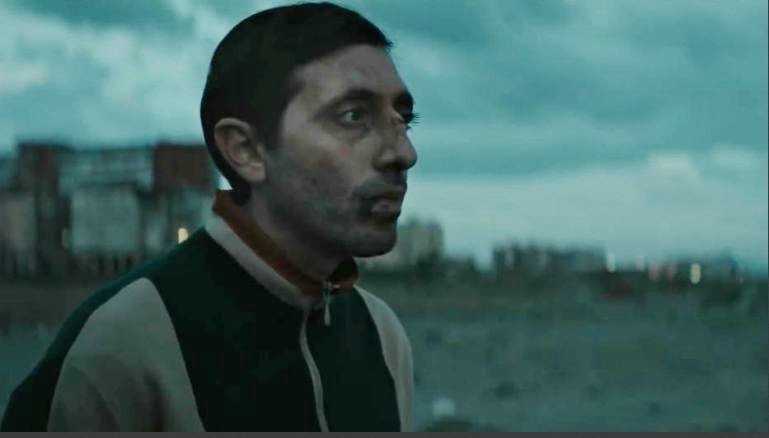
The cinematography by Nicolai Bruel reflects the film’s bitter tone.   The saturated colors over each scene enhance the uncanny qualities of this film.  It presents a doomed world where no one is quite clean or blameless.  Director and co-writer Matteo Garrone presents us with a grim world. Marcello Fonte delivers a solid performance in the leading role. We are not quite sure why he likes to get dominated by Simone.   Is it his lust for power? Or fear? Fonte’s performance keeps us guessing about it till the end.   Dogman is actually a character study that digs deep into the human dilemmas of the violence hidden inside each one of us.

The Turin Horse

After making this film, Bela Tarr announced that he was retiring from making films. Though after 8 years, he is making a comeback with a documentary titled “Missing People”. Turin Horse begins with an unseen narrator telling us, that in 1889 Friedrich Nietzsche went suddenly insane after throwing his arms around an abused horse in Turin. After this incident, the philosopher remained in such a state until his death. Nobody knows what happened to the horse.  Next, we see a monochrome film about six chapters of life on a remote, impoverished farm occupied by an elderly man, his daughter, and their unfit horse. In one sequence, we get to know that the name of the old man is Ohlsdorfer.  Every day, the daughter goes to the well and brings the water. She dresses her father as his right arm is paralyzed. But each day things get worse. The wind doesn’t decline, the horse won’t drink or pull a cart. One day, a man comes to their house to get some amount of brandy.   He tells the old man humans and God are responsible for suffering in the world. The old man ignores his vision, saying that all of those are rubbish. There lies the point of the film. It is about the “heaviness of human existence”. The film is in black and white and consists of merely thirty long takes. As it is with Tarr’s films, he uses the environment as the main ‘characters’ – the buildings, the landscape. This gives a tremendous sense of grandeur to simple images. Mihaly Vig once again delivers an incredible score, a funereal song that shares the soundtrack with the endless howling wind.  Previously in Tarr’s films, we have seen that people do always suffer. But we have also found a glimmer of hope in Werckmeister Harmonies. There was a particular scene where a mob would attack the hospital, but they would stop vandalizing once they find a helpless person inside a bathroom. But in “Turin Horse”, it seems that he feels that there is only a horse to human suffering.

Le Professionel

Le Professionel 1


French secret agent Joss Baumont (Jean-Paul Belmondo) is sent to kill an African president named Njala. When he reaches there, the political situation changes and instead of bringing him back, the French secret service turns him to African authorities. With the help of a friend, he manages to escape the prison and he returns to France.  He is determined to take revenge against the French secret service. He deliberately informs his chief that he wants to kill Njala who is coming to France for an official visit. But his biggest nemesis turns out to be Inspector Rosen (Robert Hossein). Belmondo’s character is partly influenced by James Bond’s character.  He is good with women.  He has a certain star charisma. But there is a certain kind of French treatment as well.  The lead character suffers from loneliness. We do see that his wife and one of his mistresses care for him yet we are not sure of their intentions. The film features one of the topmost car chase sequences on-screen. It will remind you about the iconic sequence of the French connection. The film features a spectacular score with a famous theme tune (entitled “Chi Mai”) by Ennio Morricone. That theme tune will be repeated at the key moments of the film.  Inspector Rosen is a creepy character. He instructs his female secretary to sexually assault women for the purpose of extracting information out of them.  Belmondo pulls up his role quite convincingly. He looks good in physical comedy as well as in intense action scenes. Robert  Hossein is excellent as an antagonist. He easily fits into the role of a maniac police officer. The duel between these two keeps the film going. It is a well-made French action film with a touch of melancholy.

Midnight Cowboy

midnight cowboy 1


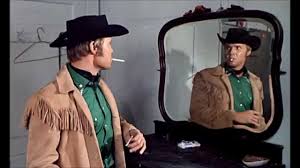
Joe Buck (Jon Voight), dresses in new cowboy clothing and quits his job. He wants to go to New York to work there as a male prostitute. Through broken flashbacks, we get to know that his mother and grandmother both used to be hookers.  He had an affair with an unstable girl and that ended in a tragic note. His flamboyant grandmother often let him share her bed or become acquainted with her lovers. In Newyork, he had sex with a rich woman but when he asks for money, she takes advantage of him. Instead, she gets paid for her sexual favors. Quickly, he becomes disillusioned, down on his luck, and low on money after being conned. Back on the street and at a tacky bar, he meets another hustler named Enrico “Ratso” Rizzo (Dustin Hoffman). The Party sequence will be much discussed. It is openly a burlesque Andy Warhol who, of course, is burlesque to start with. It is more like a secret society where closet homosexuals come to have sex, housewives come to have casual sex with male hustlers. The narrative of this film is very interesting. It uses broken flashbacks to depict the past of Joe and at-times flashbacks happen too fast.
The whole film is well photographed in DeLuxe Color by Adam Holender and professionalism in all technical areas is obvious. There are electronic, harmonica and a lot of country type of music. Dustin Hoffman delivered a fabulous performance as a crippled man. We don’t know much about his past but it is evident from his actions that he didn’t lead a happy life.  Jon Voight was no less as well. He imagined himself as a cowboy and he did dream of a great life in a big city only to see that his hopes were shattered. Voight captures all of those little details through his eyes. It is an outstanding film and it is a must-watch for any film lovers.

Namkeen

namkeen 1


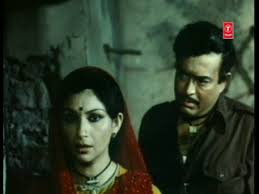
Perhaps my most favourite Gulzar film is Namkeen. It is a very simple story actually. A mother and her three sisters are caught in the simple troubles of life. These are poor people and their daily concern is winning bread. The oldest daughter Nimki (Sharmila Tagore) takes care of the most household activities . Voiceless Mitthu (Shabana Azmi) expresses her words in poetry while their mother Jyoti (Waheeda Rehman) is at work all day. Gerulal (Sanjeev Kumar) brings a pleasant change to their lives. Or does he? It has a lyrical feel to it and the landscape (Darjeeling of 80s) is breathtaking. The way Gulzar uses nature to depict the complexities of relationships is extraordinary. The story is simple yet the nature of relationships are not. Gerulal loved Nimki while Mitthu loved Gerulal yet there is no sibling rivalry between them to get their desired man. Well, the film is not without it’s flaws. They were missing a male figure in their family.  Gerulal fulfilled that position. In a way,it is implied that women need a better male figure in their lives. However the positive aspects (nuances of relationships,psychology of female characters) overshadow the flaws. And if one pays more attention, there is a spiritual angle as well. Sanjeev Kumar never needed to act. He just became the characters he played. Namkeen is no exception either. Even in a female-dominated film ,his performance scores over others. Sharmila always did well in Gulzar’s films. As expected, Waheeda and Shabana don’t disappoint in their roles. But most importantly, it is the touch of Gulzar which makes this film so special to me. The song “Phir se aiyo badra bidesi” where Mithu romances the mists of  Darjeeling  is so dreamlike and misty it moves us into a world where pain, anger, frustration and bitterness take a backseat.  The song  “Raah Pe Rahte Hai” aptly captures the pain and anguish of the lead character Gerulal when he leaves the village.

Dead Calm

Dead Calm


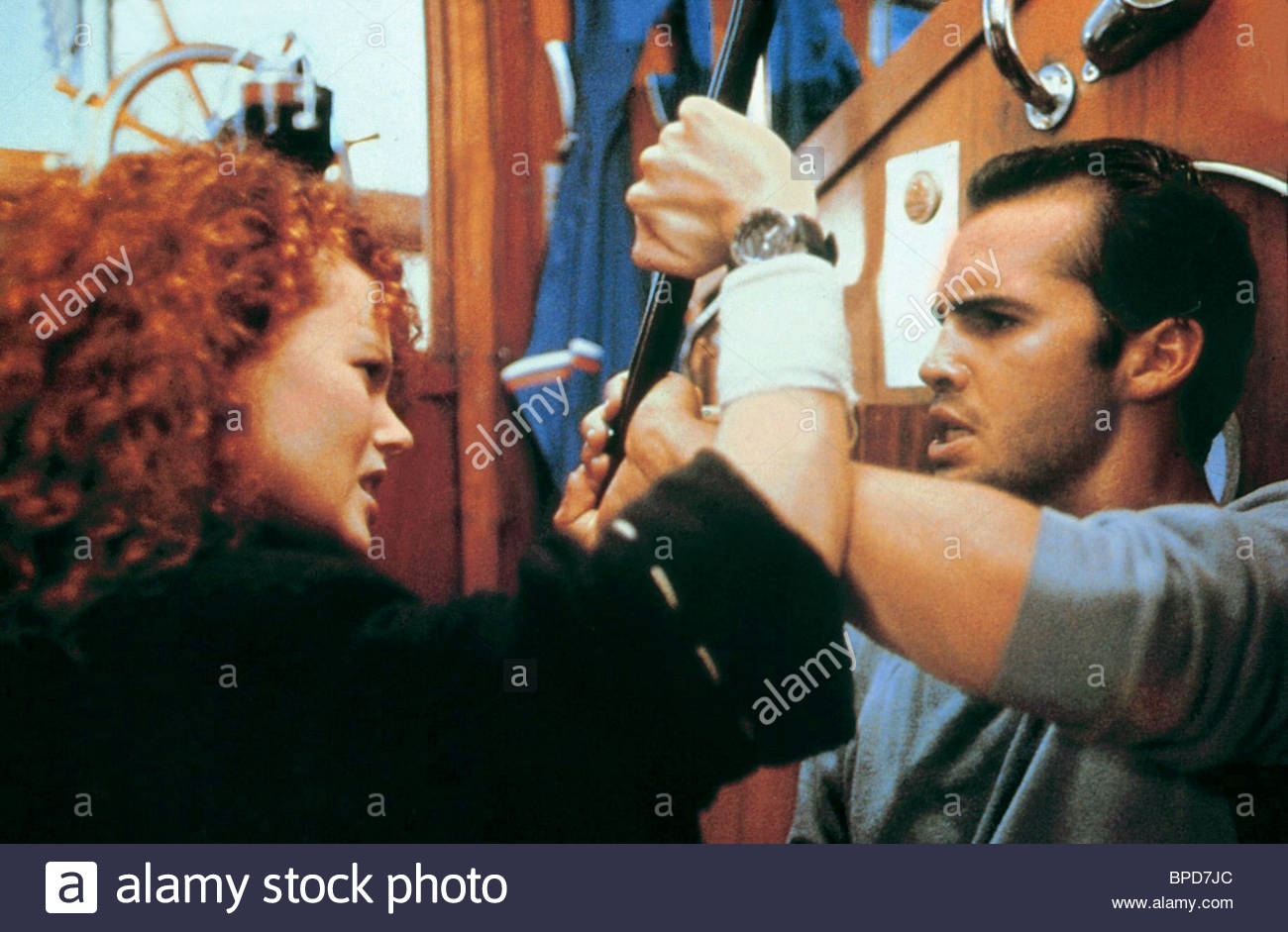
The entire film involves three characters in a violent game of psychological strategy. Rae (Nicole Kidman) is involved in a car crash which results in the death of her son. Her husband John (Sam Neil) suggests her to go on vacation so that it will help them to overcome the grief.  One day, they encounter a drifting boat that seems to be taking on water. A man, Hughie Warriner (Billy Zane), rows over to their boat for help. He claims that all of his friends died as his boat was sinking. John doesn’t believe his story completely. He secretly visits the other boat and finds that all of his friends are killed by Hughie.  When Kidman’s son was killed in an accident, Sam was not with her. They were detached then. Later, Sam went to the other boat and his wife is left with the madman. They have detached again. The key image of “Dead Calm” is of two ships drawing near each other in the middle of a vast, empty expanse of ocean. This scene indicates that help is not going to come from anywhere and that the characters will have to settle their own destinies. Hughie is a naive psychopath. He trusts Rae as long as Rae acts well with him. Even when the trust breaks, he doesn’t try to kill her. He is violent but lacks intelligence. That is why Rae outsmarts him at-times. But it isn’t easy as the actions take place entirely within a boat and there is no help available from outside. Dead calm generates genuine tension with minimum sound-effects. It doesn’t have many dialogues either.  Billy Zane does well as the villain. It isn’t easy playing the role as it has every chance of looking similar to a cartoon kind of character.  Kidman is excellent as the emotionally distraught wife who is doing everything she can to keep it together while desperately trying to outsmart the stranger. Kidman does most of her job through her eyes. Sam Neil was ok. The atmosphere in Dead Calm is very haunting and incredibly restrained. The twist at the ending was not required.


Revenge

Revenge

The film opens with Jen (Matilda Lutz) lazily sucking on a lollipop, having been taken away by helicopter to a remote desert location by her millionaire boyfriend Richard. Richard is a married man but he cheats his wife and he commits an affair with the mistress.  Jen is hot and she is satisfied with her body. In the next day, Richard is joined by two of his friends . They are his hunting buddies. When all of them are having a party in that night, Jen starts dancing with Stan. But Stan feels that it’s an indication of sex.
In the next morning, when Richard is away, Stan tries to woo Jen but Jen clearly rejects him. Insecure  Stan feels powerless and he ends up raping her. His friend covers for him. Richard comes back and  hearing this, he hits Stan hard. Jen wants to go back to her house but Richard tells her to stay there. In a heated argument, Richard slaps Jen. Scared Jen escapes from the house but all three of them chase her. Richard pretends to call his pilot to take Jen home, then pushes her off a cliff. She falls unconscious and is left for dead by the three men. But Jen wakes up. The horror doesn’t come from the rapist but it comes from her most trustworthy partner.
That is the masterstroke of this film.  Fargeat makes an interesting debut with her film. From the title,one can guess what this film is about. The treatment is different. Female sexuality is focal point of this film. Here, bodies become the main subject. The men are divided into parts and she reclaims her sexuality through her revenge.  She only grows more powerful as she is attacked more. The lead actress Matilda Lutz looks perfect for the role. Actresses don’t need to build muscles to perform actions. It is all about the body language. She looks shaky yet determined. I don’t know if its feminist film or not. Feminists can tell it better. That is not much of my concern either.
I loved the fact that a woman director made a genre film by keeping female sexuality at the centre. To be a female director, one doesn’t always need to make a film outside mainstream territory.