A Touch of Sin

                                                                zia jhang ke

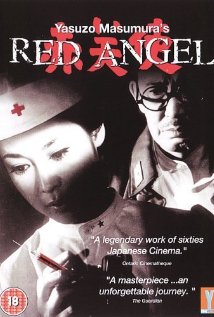
Set in four provinces, “A Touch of Sin” is a humanist critique of the country’s turn to capitalism. Dahai, like a Wuxia hero, seeks to right wrongs and fight for righteousness goes on a rampage against the people of his village.  It also tells the story of a migrant worker who returns home for his mom’s 70th birthday, a young kid from the provinces who can only find work in an exploitative factory or a brothel, and a massage parlor receptionist (played by Zhao Tao, the director’s real-life wife). His four characters resort to impulsive violence as a remedy: the coal miner fires a shotgun, a bandit makes his living with a pistol, the receptionist defends herself with a knife, and a young man exits the workforce by self-destruction. A Touch of Sin paints a bleak and violent picture of a contemporary China in which corruption is endemic.

The Collector


a William Wyler The Collector DVD Review PDVD_013


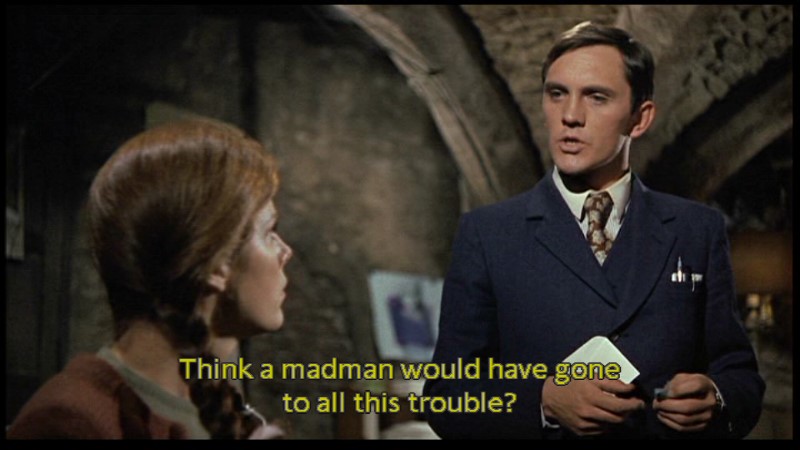
Freddie Clegg (Terence Stamp) is a butterfly collector. One-day he kidnaps and chloroforms Miranda (Samantha Eggar). Wyler focuses the entire film on just the two characters and their psychological toyings with one another. The Collector focuses on the obsessions of a young man whose need for a woman’s affection leads him to desperate measures at the expense of his object of desire. Freddie is shy , poor and utterly obsessed with her.  When he wins a fortune in the football pools, he devises the perfect use for his newfound wealth. He buys a remote house and converts the basement into a comfortable prison for Miranda. Samantha strikes a deal with him, promising to stay a month. Freddie agrees, confident that she will soon love him. Samantha later realizes that there is no way of escaping as he “collected” her but Freddie never behaves like a monster. This intense creepy film features a superb performance from Terence Stamp in the title role as the “collector” of beauty. Stamp’s sociopathic brooding is fantastic, creating a vibe throughout the entire film that doesn’t waver in the slightest. This isn’t an exploitative, blatantly cruel film. It’s a disturbing love story, even if it’s a love that isn’t reciprocated.

Cure (1997)

cure 2

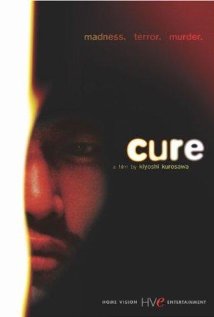
The story concerns a number of murders in which all the victims have died from a very peculiar knife wound: a large x has been carved into their flesh, across the throat and chest.  Each of the murders is committed by a different person and all of them are found near the scene of the crime and most interestingly-none of them knows why they committed crime.  “It seemed like the most normal thing to do,” is their answer. Police inspector Takabe (the always brilliant Koji Yakusho) starts investigating the cases and he gets a strange link. He learns that each of the unwitting killers came into contact with a young drifter just before the crime took place. His name is Mamiya, a formal medical student who is suffering from amnesia. Takabe’s questions meet with more questions, and he begins to lose control. Takabe firstly is not the most stable guy, to begin with- he suffers hallucinations, such as seeing his wife hanging from a noose in their kitchen.

Cure is an unnerving and unsettling film. Director Kiyoshi Kurosawa proves to be an absolute master at creating a bleak atmosphere that chills the viewer to the very bone. Cure is more than just a thriller though-the normal urban settings look mysterious throughout. In other words-its the very normality that Kurosawa questions.

Kathapurushan

Image

 Kathapurushan is a journey exploring the recent history of the state of Kerala. Adoor has described it as “an emotional journey through time and history”.  The film begins with the protagonist Kunjunni’s birth and ends with the publication of his first novel, The Hard Consonants. Born in a feudal family, Kunjunni’s parents were separated leaving him deprived of paternal care and affection.  He grew up receiving love and affection from his mother , grandmother and his friend Meenakshi-the domestic worker’s daughter. Kunjunni gets drawn towards leftist ideology during his college period. He believes that communism is the answer to healing all social hardships and inequalities. He joins an extremist Maoist group, providing it with intellectual leadership. After an attack at a police station, Kunjunni is arrested but later acquitted of all charges. In the course of his life, he realizes that regardless of ideologies the nature of the people in power remains the same. In this period he also discovers his courage and his own voice to speak the truth. The film is made interesting by the use of a storyteller which sets the atmosphere of the film and gives it a folkloric, fantasy feel. The film is notable for its decision to keep the camera static for long periods of time, often on close up shots and usually without dialogue. The film is epic in scale but intimate in tone, covering nearly forty-five years of Kerala’s history.

Mystery Train

Image


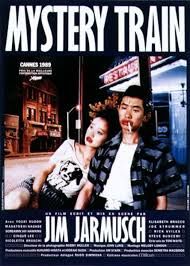
The film consists of three stories that take place on the same night in downtown Memphis. Youki Kudoh and Masatoshi Nagashe play two Japanese youth who have come from Yokohama to visit Sun studios and Graceland. They are completely different- she is outgoing, he’s quiet; she loves Elvis, he prefers Carl Perkins. The second story is about an Italian widow who is at the airport making arrangements to ship her husband’s body back to Rome. The final story introduces Johnny who is upset after losing his job and his girlfriend. The three stories are linked together by the Arcade hotel and Elvis. Cinematographer Robby Muller captures Memphis in such a manner that u will never forget the city.  John Lurie contributes a piercing Sun Studio-style guitar score and the cast makes a near-perfect ensemble. “Mystery Train” concerns the intertwining stories of foreigners in a quintessential American city. The main theme here is the tragic, drastic juxtaposition of Elvis’ magic spell, and the reality of what Memphis looks like years after his absence. It clings to his image , but seems incapable of moving forward, of producing any new commodities.

Pale Rider

Image

The film bears a striking similarity to the classic western Shane. In a small California town ,some independent miners have staked a claim to a promising lode.  The town is ruled by a cabal of evil men , revolving around Lahood and the marshal ,who is his hired gun. Suddenly a mysterious stranger (Clint Eastwood) arrives in the mining community. His presence compels the main characters to become united and helps them to fight against evil. He may indeed be the pale rider suggested in the title, whose name was death, but he may also be an avenging spirit, come back from the grave to take revenge. He is known as preacher. In this ,Eastwood becomes an avatar of divine punishment and holy retribution. The Marshal Stockburn confesses that he recognizes the preacher , but is confused because the man is supposed to be dead.
As the film’s director, Eastwood has done some interesting things with his vision of the West. The sources of light are almost all from the outside. Interiors are dark and gloomy, and the sun is blinding in its intensity. Clint Eastwood as both director and protagonist once again proves himself to be a master of stylized drama.

A Wife Confesses

Image

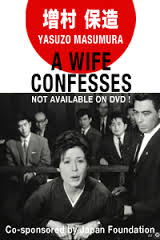
Young widow Ayako Takigawa (Ayako Wakao) goes on trial for the murder of her husband in a mountaineering accident. She stands to gain five million yen from his life insurance—that is, if she is cleared of the charge. Did Ayako cut the rope to get rid of her husband or this was her only way to survive? Is this young man who was with them at the time really her lover?Tied to a mountain between her  spouse and her secret lover, disaster strikes. To prevent all three from  their deaths, the woman is forced to choose between cutting her husband’s rope or that of her lover.  Masumura masterfully moves through the ambiguity of human behaviour , along the thin line that separates rational justification from subconscious motivation.  Ayako Wakao,  portrayed simultaneously a sympathetic victim and one of the most sophisticated femme fatales ever  in cinema. 

Inside Llewyn Davis

Image

Inside Llewyn Davis, Joel and his brother Ethan’s film about a turbulent period in the life of its title character, a fictional Village folkie, during 1961. The film was partly inspired by the autobiography of folk singer Dave Van Ronk
If we see technically ,then Davis isn’t Van Ronk. He had a gruff , commanding style that was 180 degrees removed from Oscar Isaac’s (the actor who played Davis) resonant balladeering. Yet the film has more than its share of nods to Van Ronk.
Isaac sings three Van Ronk-associated songs, which he learned from one of the late singer’s Village folk buddies. The cover of Davis’s album is a direct nod to Van Ronk’s 1963 LP Inside Dave Van Ronk. Llewyn is so poor he doesn’t even have a winter overcoat. His fellow folk singer Jean Berkey (a foul-mouthed Carey Mulligan), who goes out with his friend Jim (Justin Timberlake), is furious because she is pregnant and thinks he might be the father. “Everything you touch turns to shit, like King Midas’s idiot brother,” she screeches at him. He used to sing with a partner, Mike, who killed himself by jumping off the George Washington Bridge. He performs in a shadowy club, in the glare of a recording studio, at a dinner table, and in a vacant auditorium. And here lies the genius of Coen Brothers. The Coens could have made a film about a superlative talent , just waiting to be dug up like a diamond. 

Llewyn is very good, but he’s not great. The truth, in this instance, is uttered by Bud Grossman ( Superbly played by F. Murray Abraham -the actor from Amadeus) , the owner of the Gate of Horn, who asks Llewyn to play for him, one to one. He gives the verdict after listening to Davis’s song “I don’t see a lot of money here.” Llewyn accepts the verdict, as you should from any god, and leaves.  Oscar Issac gave a splendid performance in this film. The lead hero doesn’t look like lead and that’s exactly what it should be. Bud Grossman, again, gets it right, telling him, “You’re no front man.” There are many humorous moments but the tone is too bleak for this ever simply to seem like comedy. The Coens are dealing with suicide, abortion, and their lead character’s ongoing professional failure.  The film manages the unlikely feat of staying respectful toward the Greenwich Village folk scene of the early 1960s while being gently satirical about folk subculture in general.
 

I Vitelloni

Image


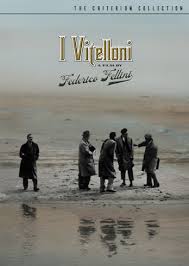
Federico Fellini’s first international success, this 1953 film, based on memories of his youth in Rimini, focuses on five youths in a sleepy seaside town during the winter offseason. The director has said that much of the film is autobiographical and captures those he knew in Rimini.
The film opens with a party, where Sandra Rubini (Leonora Ruffo) is elected Miss Siren of 1953. This is because she is pregnant, via Fausto Moretti (Franco Fabrizi), whose father forces him to marry her, to save the family honor. Throughout the film, we see him flirting with all kinds of women-a married girl at a film theater, his boss’s wife, a girl he picks up at a café and so on. Riccardo (Riccardo Fellini- Federico’s brother) is given the least screen time. He’s a wannabe actor and singer who basically support for the others. Leopoldo (Leopoldo Trieste), is a poet and intellectual who revels in melodrama and clichés. Alberto (Alberto Sordi) lives with his mother and sister, Olga (Claude Farell), who sleeps with married men. And then there is Moraldo (Franco Interlenghi), the most philosophical of their group, is actually aware of their lives as insulated and circumscribed, the only one finally agitated enough to take action.  Moraldo is definitely the consciousness of the film. Martin Scorsese named this film as a huge inspiration for his film “Mean Streets” .I Vitelloni is also an insightful and accurate representation of Italy in the immediate postwar period, full of references to the massive social changes underway.

Red angel

Image
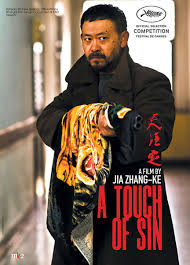
Yasuzo Masumura’s no-bullshit antiwar film tells of an army nurse who falls in love with a drug-addicted surgeon. Sakura Nishi is a Japanese nurse in China during the Sino-Japanese war. One evening after entering the ward she is overpowered by her patients and raped. Then she is sent to field hospital and there she falls in love with doctor Okabe. There she surprisingly comes into contact with the soldier who raped her before. Instead of seeking revenge . she pleads with Okabe to do their best to save him. Shot in hauntingly beautiful black and white, Red Angel has an episodic structure and uses Nishi’s encounters with different patients to explore how the war affects the men and society as a whole in different ways.  One of the film’s strongest assets and statements is showing the unflinching carnage that war creates via its scenes of battle wounded soldiers .