Trumbo

TRUMBO

The film covers nearly three decades in the life of American screenwriter and noted Communist Dalton Trumbo (the 1940s-70s), with the title character played impeccably by Bryan Cranston. But three decades of such a richly lived life is a bigger bite than most 2-hour movies can chew.  Trumbo was one of the Hollywood Ten, artists (mostly writers) connected with the Communist Party in 1947 refused to betray other comrades during the hearings of the Committee on Un-American Activities led by Senator Joseph McCarthy so they had to purge several months in prison and were prevented from working in the industry.   Trumbo’s friend Edward G. Robinson (Michael Stuhlbarg), who supports the cause, sells the Portrait of Père Tanguy to raise money for their legal defense fund. The unexpected death of Justice Wiley Rutledge ruins Trumbo’s plan to appeal to the Supreme Court. In 1950, Trumbo serves 11 months in Texarkana prison, where he meets former HUAC chairman J. Parnell Thomas, who was convicted of tax evasion.
An old-school Hollywood screenwriter who did a fair amount of his best work in the bath, typing with a glass of Scotch in one hand and a lit cigarette in the other, Trumbo (Bryan Cranston) was what they call a “card-carrying member of the Communist Party,” unafraid about his political views — which had earned him acclaim in the literary world as the author of “Johnny Got His Gun.” Trumbo attracted the attention of Los Angeles Times columnist Hedda Hopper, whose idea of patriotism involved abolishing the threat of communism in the industry. On the personal front, there’s wife Cleo (Diane Lane) and three kids — the oldest of whom we watch grow into a confident young woman (Elle Fanning). Then, in the ’50s, we are privileged with scenes of Trumbo’s professional relationship with Frank (John Goodman) and Herman King (Stephen Root), producers of hilariously titled B-movies that provided Dalton with a living undercover. And there are even more characters who come and go, including some famous faces like David James Elliott‘s John Wayne and Christian Berkel‘s Otto Preminger, who are more caricatures than characters, but still undoubtedly memorable.
The film shows the screenwriter’s professional evolution, from blacklisted Hollywood writer and face of the notorious “Hollywood 10,” to a thankless life of writing under fictional names and winning Academy Awards on the couch. McNamara’s screenplay is filled with mighty one-liners, which everyone’s clearly having fun with. Gems like “I’m a screenwriter; if I couldn’t write shit, I’d starve,” or Louis C.K.’s one-of-a-kind delivery of beauts like, “he’s trying to sell his soul, but he can’t find it.” At times, it almost becomes too many good lines too fast (like in most every scene featuring Goodman), which halts the film’s rhythm and leaves little breathing room.  Director Jay Roach knows a thing or three about entertaining audiences. He’s directed “Meet The Parents,” and the “Austin Powers” movies, but “Trumbo” is probably his best film, by virtue of association to the strongest ensemble he’s worked with, and an impeccable script. The film becomes particularly good once we enter the blacklisted segment of Trumbo’s career, when theatricality starts to take a backseat to a deeper insight into the egocentrical and self-righteous side of this man. He’s no longer just a cartoonish figure, chain-smoking in his bathtub, but a father screaming at his daughter on her birthday, a friend ignorant to the pain of others around him, and a husband bullying his wife out of arguments.
 

Iruvar

Iruvar

Iruvar is based on the life of MGR and it focuses on the friendship between MGR (played by Mohanlal) and Karunanidhi (played by Prakash Raj) also. Marudur Gopalamenon Ramachandran, betterknown as MGR greatly influenced the Tamil Film Industry in 1960s and 1970s when he became a popular hero and TN politics in 1980s when he became the Chief Minister of Tamil Nadu.  Anandan(Mohanlal) is an ambitious young actor who wants to make it big in the film industry. He had to face a lot of failures and insults though before getting the much needed breakthrough. He happens to meet Selvam (Prakash Raj) who is a writer. It so happens that Selvam is the dialogue writer for the film in which Anandan is the hero. They become close friends.  Anandan is introduced to Selvam’s political party which is led by Velu Annachi (Nassar). He grows to the party’s ideology as time passes by.  Anandan then marries a village belle Pushpavalli (Aishwarya Rai) while Selvam marries another village girl, Marathagam (Revathy) under the supervision of the party leader. Anandan is a simplistic man who just wants a good paying job so that he can look after his mother, while Selvam is more idealistic and wants to use his words to change the world.

Despite their unpromising beginnings, Anandan rapidly falls in love with Pushpa’s lively innocence and charm, although he leaves her with his mother when he goes back to work. Selvam on the other hand pontificates speeches about equality in marriage on his wedding night while Maragatham is more traditional and superstitious which doesn’t go well for their future together. As their careers progress, Anandan becomes a star, able to draw crowds although he doesn’t appreciate his popularity until it is forcibly shown to him by Selvam . This is demonstrated in an excellent scene where Selvam takes Anandan up onto the roof to show him the hundreds of people waiting for a chance to catch a glimpse of the film star.  Anandan also joins  Selvam’s  political party, although he is looked on with suspicion by the other party members who feel that Anandan is using the party to further his film career, while Anandan feels that his film fame is being exploited by the party to pull crowds. The relationship between these two contrasting protagonists is so unique, so complicated that it defies conventional definition. Poles apart with respect to ideologies, they go beyond that to work together professionally and also become close friends. They view each other with suspicion even when they are partners and then became overt enemies in politics. But throughout their lives, they never lose admiration and respect for each other. The film captures all the dimensions of this complex relationship beautifully.

iruvar 2

Mohanlal has a difficult role as he plays a man still revered by millions. Considering that his character arc makes it clear who he is playing, he doesn’t have to overplay it and employs MGR’s well-known movements – the lift of the hand, the unique skipping run, the shake of the head – only in the song sequences. The rest of the time, he delivers a lesson on how much can be conveyed with downplayed ‘acting’. Whether as the frustrated actor or as the star loved by the people or the politician battling his best friend, he combines his eyes, expressions and body language to play the complicated personality in pitch-perfect fashion.  Prakashraj’s character doesn’t have quite as many nuances but he fits the role perfectly, from the firebrand young politician to the more matured statesman. Aishwarya, in her debut, overdoes the coy, timid bit in her first role (just as she did a few years later in Jeans). She is more at home as the bold, self-assured actress though. Revathi (as Prakashraj’s first wife), Tabu (as Prakashraj’s second wife) and Gauthami (as Mohanlal’s second wife) are underused. The music and songs by A.R. Rahman are of a high quality and vary in style to illustrate the different cinematic eras encompassed by the film, although the time frame is never explicitly stated. These range from the jazzy and more upbeat songs pictured on Kalpana to the more traditional and classically driven song Narumugayie.  At a time when theatres boasted of their colossal cinemascope screens, Ratnam shot his film in a classical 4:3 aspect ratio. Iruvar may not be perfect or even Manirathnam’s finest film but as a chronicle of one of the most important and influential periods in TamilNadu politics, its place in Tamil cinema history is assured.


Salmer fra kjøkkenet (Kitchen Stories)

kitchen stories

In the 1950’s the Swedish government became involved in social engineering as a means of improving the lot in life for its citizens. Bent Hamer was amused after following post-war research books on the efficiency of the Swedish housewife, and pondered on the idea of research being done on men. This led to him making the film Kitchen Stories.  Swedish efficiency researchers come to Norway for a study of Norwegian men, to optimize their use of their kitchen. Folke Nilsson (Tomas Norström) is assigned to study the habits of Isak Bjørvik (Joachim Calmeyer). Folke dutifully rests on his chair in the kitchen and begins his watcher duties, recording Isak’s every move.  Isak, however, is a bit of a rebel and begins to silently do things to annoy his unwanted guest, turning out the lights and, most importantly, cooking in his bedroom to avoid Folke’s watchful eye. Early on, Kitchen Stories is filled with little sight gags and well-timed reaction shots, as Calmeyer keeps checking Norström for small signs of approval of his cooking and cleaning methods.
Later, the film becomes the story of the friendship that develops, as the two begin doing little favors for each other: lending tobacco or salt or coffee, and even doing each other’s work. A film without much dialog and virtually no action, in the traditional sense, should be, by all rights, boring. But, from the start, “Kitchen Stories” captures your attention with its tongue in cheek humor, amusing wit and an amazing amount of chemistry between the main characters, Isak and Folke. The rhythm of their day-to-day existence is slow and relaxed and, as the ice breaks between them, a warm, caring friendship builds. Hamer and his cinematographer Philip Øgaard (“Aberdeen”) have a terrific sense of mise en scene. Colors and shapes are all carefully composed within the frame. Composer Hans Mathisen’s simple, sweet music is the perfect complement to this gently told tale.

Imdb link : http://www.imdb.com/title/tt0323872/ 

Parineeta

PARINEETA

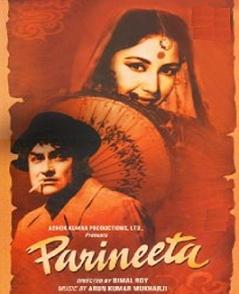
Parineeta is a 1953 Hindi film starring Ashok Kumar and Meena Kumari, based upon the 1914 Bengali novel of the same name by Sharat Chandra Chattopadhyay. The film was directed by Bimal Roy.  Shekhar (Ashok Kumar), the son of a wealthy Brahmin family, discovers that he’s fallen in love with Lalita (Meena Kumari).  Shekhar has known Lalita since she was eight years old and came to live with her uncle Gurucharan and his wife after the death of her parents. The two families live in connecting houses, and Lalita spends as much time in Shekhar’s household as in her own. Shekhar’r father Navin (Badriprasad) has other plans for Shekhar.  He wants to arrange his marriage with the daughter of Choudhary,  another wealthy Brahmin who has promised Navin a huge amount of dowry. The relation between the two families gets affected when Gurucharan is forced to repay his debt and he decides to marry off  Lalita to Girin Babu (Asit Baran).  Meena Kumari and Ashok Kumar are wonderful together.  Ashok’s character is indulged and a bit spoiled, yet he never comes across as impolite. Ashok’s Shekhar is just sheltered from real-life consequences and has an idealistic view of things. A very young and lovely Meena Kumari plays Lalita.  Lalita’s part in the story involves much silent despair. The other characters – Lalita’s uncle played by Nazir Hussain, the rich guest who drops in enacted by Bengal’s Ashit Baran,  Lalita’s cousin – gave solid support to the principal characters.
The most striking element of Bimal Roy’s films, including Parineeta, was his ability to project the Bengali family in a language like Hindi, without losing out on the essence and spirit of the ethnic moods the story and the characters belong to. Lighting has always been an extremely important element in Bimal Roy’s works. Whenever the narration grows nostalgic or reasonates with inner crisis, whether in anguish or in ecstasy, the mood is captured most ably in delicate shadowy patterns of black, grey and dove white by cinematographer Kamal Bose.

Death Wish

Death Wish

Charles Bronson is Paul Kersey, a New York architect whose wife is killed by a group of muggers ransacking their apartment, an attack that also leaves his daughter unconscious. He takes a job working for a land developer in New Mexico to get his mind off his troubles, and while there his long fascination with guns is revived when his client Ames Jainchill (Stuart Margolin) shows off his personal collection and lets him crack some shots off.  He also witnesses a mock gunfight at Old Tucson, a reconstructed Western frontier town used as a movie set. Kersey soon arrives back in New York. But the streets are still filled with thugs, and Kersey knows that Manhattan is not the best place to be at night. He discovers that Jainchill has given him a .32 revolver as a present, and subsequently uses it to kill a man trying to mug him. He begins deliberately to tempt muggers, whether in an alley, on a subway train, or in a park and that he mechanically guns them down.
This made him the ‘avenging angel,’ a true phantom ‘one-man crusade.’ In the eyes of the public, Bronson became a national figure—the vigilante. “Death Wish” was a highly controversial film when initially released. At the time, major cities were facing a deadly crime epidemic, and this film tapped into the fears and unspoken desires of many viewers, giving them a chance to live out their secret fantasies. Yet, it is undeniably compelling; one of these movies that makes you wonder, “what if this happened to me?”  Bronson is highly effective here; while not one of the great actors, he has a very strong screen presence. Vincent Gardenia is effective as the police detective assigned to his case. He unwillingly admires Kersey’s resolve, although he is sworn to put a stop to the killings. Rather than Bronson’s performance Death Wish has its significant themes and screenplay components which were used at almost every action/crime movie later on, thus became clichés of their genre.

Anubhav

anubhav 1971

Anubhav is a 1971 hindi film directed by Basu Bhattacharya, which stars Sanjeev Kumar , Tanuja and Dinesh Thakur as leads. The film was the first part of Basu Battacharya’s introspective trilogy on marital discord in an urban setting, which included Avishkaar (1973) and Griha Pravesh (1979); and went on to win the 1972 National Film Award for Second Best Feature Film . The film centres on the relationship between Amar (played by Sanjeev Kumar) and Mita (Tanuja), a well-to-do Mumbai couple, who, after six years together, find themselves in a dry and sexless track. “Anubhav” is about Meeta, who leads a lonely life in a mansion. Her husband Amar Sen (Sanjeev Kumar) pursues a career of an ambitious editor, a workaholic who is dedicated to his profession at the cost of ignoring his responsibilities at home. Her craving to start a family is conveyed in the opening frames through a child left to fend for itself in a party that strictly involves grown-ups. Meeta’s concern for the weeping child, begging attention, rouses the mother within her to the fore. It is her journey to rediscover herself that makes this a well-crafted film.

tanuja_sanjeev
Kumar and Tanuja make a great couple with a believable and nuanced on-screen rapport. This film is about Tanuja despite the presence of the gigantic Sanjeev Kumar.  Anubhav” was marked by some exceptional songs from Geeta Dutt (“Meri Jaan Na Kaho Meri Jaan” and “Koi Chupke Se Aake) and a soulful solo by Manna Dey (“Phir Kahin Koi Phool Khila”). Music was secondary to the narrative that grows on you in a matured style that was Bhattacharya’s forte. The urban landscape of Bombay is captured stunningly in black and white, the slums and skyscrapers co-existing.   For Meeta, however, the world revolves around the servants at home, her husband leaving home in a rush and returning in an amble, tired from the demands of the office. . Bhattacharya uses simple props as a symbol (e.g. the ticking clock, the radio). Moreover he stays focused on the main story.  

Play Misty For Me

PLay  Misty For me
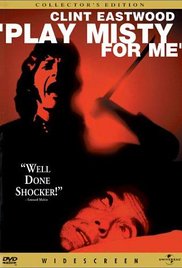
Play Misty for Me is a 1971 American psychological thriller film, directed by and starring Clint Eastwood, in his directorial debut with Jessica Walter and Donna Mills  as co-stars. The story-line was originally set in Los Angeles, but at Eastwood’s insistence, the film was shot in the more comfortable surroundings of the actual  Carmel-by-the-Sea, California.
The girl (Jessica Walter) calls up every night at about the same time and asks the disc jockey to play “Misty” for her. Some nights he does. He’s (Clint Eastwood) the all-night man on a small station in Carmel who plays records, reads poems, and hopes to make it someday in the big city. ” Later, he meets the woman at a bar he goes to often, and they go back to her house together and make love.   The next morning, he leaves, figuring it was just a one-night stand, but when he gets home, the woman, Evelyn Draper (Jessica Walter) shows up with groceries and starts to make herself at home. Dave decides to go with it, and later sees that his old girlfriend, Tobie Williams (Donna Mills), is back in town, and the two become close again. Evelyn begins stalking him through the middle part of the movie but don’t let that keep you away; she pops out when you least expect it. Even Eastwood’s friends and workers are not unsusceptible from her violence. Things get even worse when she damages his house and attacks his cleaning lady with a butcher’s knife. Evelyn’s admitted to a psychiatric hospital and this enables Dave to re-establish his relationship with Tobie Williams (Donna Mills). Tobie, who has recently returned to the Carmel area, is the woman he loves and their relationship develops well until further complications follow when Dave is told that Evelyn has been released from hospital. 


misty 2

 
The acting performances are consistently very good in this movie but Jessica Walter is outstanding in a role that requires her to be ultra scary. Her capacity to fly into a rage at the flick of a switch is astonishingly good and the way in which she portrays the manipulative side of Evelyn’s character also works well. Clint’s smooth, late-night D.J. is powerless in the face of Jessica Walter’s stalker, as she sets out to turn their one night stand into a lasting, meaningful relationship. Eastwood is quoted as saying that he was unsure of how his directing debut would be received. He disguised himself and went to a theatre showing Play Misty For Me, where he was pleased at the audience’s frightened reactions.  With this film, he began a pattern of bringing his pictures in under budget and ahead of schedule. Departing from tradition Eastwood opts out using a musical score in keeping with traditional suspense thrillers. Play Misty for Me’ may feel more dated than the 70’s fashion in some areas, markedly the violent sequences which seem amateur in this day and age, but the excellent foundations in plot, script and acting mean the film remains a good watch some 40 years on.

Holiday

Holiday 1938

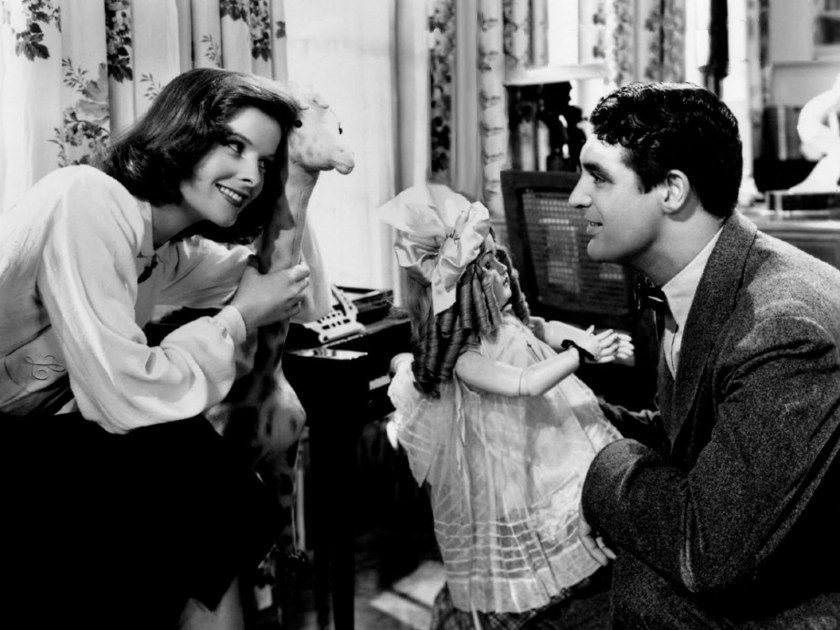
Holiday is a 1938 film directed by George Cukor, a remake of the 1930 film of the same name. Set in New York, it stars Cary Grant as Johnny Case, an emerging businessman who is more concerned about making a career out of something he wants to do, and not what he should do in order to make money.  While he takes a holiday, he meets Julia Seton ( Doris Nolan), the two fall in love and go back to New York to tell Julia’s father. What he doesn’t know is that Julia comes from an extremely rich family, and while he is shocked and amused by the fact, he finds himself taken with the other members of Julia’s family; Linda Seton (Hepburn), Julia’s free-thinking and dramatic sister, and brother Ned Seton (Ayres) a kind but stern alcoholic.   He has a plan: save up a little money then retire young, experience the world and then, when he’s run out of money and has an idea of what he wants to do with his life, come back and go to work doing what he wants to do. Now all he has to do is explain it all to Julia. And to her father. And all while trying to deny the fact that he’s attracted to Linda.  Cukor takes a lighthearted approach to this story, which keeps it cheerful and entertaining, and he laces it with warmth and  humor that’ll give you some laughs and put a smile on your face.


Holiday-3

But beyond all that, Cukor shows some real insight into human nature and the ways of the world. But what really makes this one special are the performances of Grant and Hepburn. Grant is as charming as ever, but just a bit looser and slightly less stylish than he is in most of his later roles. He bestows Johnny with youthful enthusiasm, good looks and personality, as well as a carefree yet responsible attitude that makes him someone you can’t help but like. And Hepburn fairly sparkles as Linda, a role she was born to play; this young woman filled with a zest for life and an indomitable spirit.
Like certain other comedies of its time, Holiday stands out due to its noteworthy serious streak in the midst of the comic funniness and silliness. The film’s underlying themes of rebelling against claustrophobic conformity and convention, the rejection of materialistic lifestyles and class struggles are particularly poignant in a current day context, as it becomes extremely clear how ahead of its time such messages and the film in general were.


When Willie Comes Marching Home

When Willie Comes marching home

When Willie Comes Marching Home is a 1950 World War II comedy film directed by John Ford and starring Dan Dailey and Corinne Calvet. The film begins in Punxsutawney, West Virginia.  Dan Dailey (William ‘Bill’ Kluggs) plays a brave guy who is the first in town to volunteer to go to war when WWII breaks out in America. The whole town sees him off. Willie tries to become a pilot but washes out. Although he proves to be so efficient at aerial gunnery that, he is made an instructor and assigned to a base near his hometown. While other boys go off to war, Kluggs becomes the local laughingstock. However, when a bomber pilot falls ill, Kluggs replaces him on a secret mission that will become his once-in-a-lifetime chance at a heroic destiny. Dailey is here at the top of his comic form. Mr. Dailey plays through this picture in a way that will make him everyone’s friend. Colleen Townsend and William Demarest are also good as his parents .Though it’s certainly a minor entry in the Ford oeuvre, it shows off his underestimated capacity for humor and warmth. During a fertile period of great westerns, John Ford also focused on war films, from a distance with dramatic comedy of manners.  It is this sub-genre in USA called “Small-Town Comedy. It mocks the stupid desire for heroism as assertiveness and social and family recognition in a small town.


Sciuscià( Shoeshine)

shoeshine
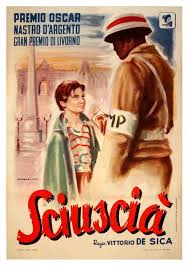
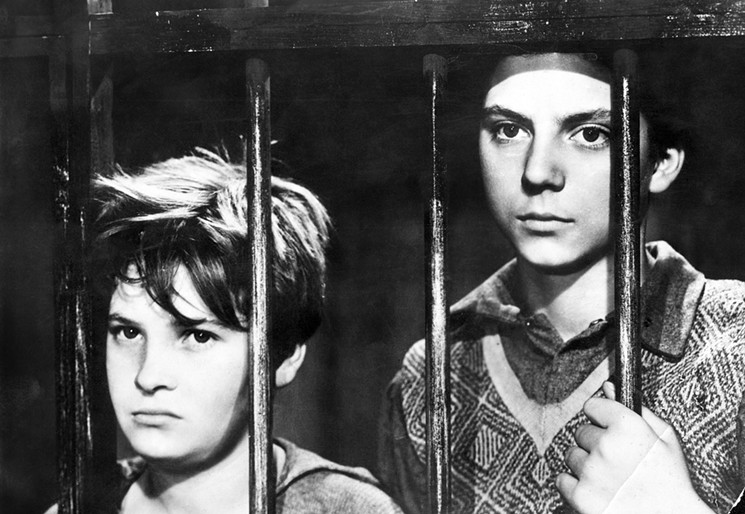
Vittorio de Sica’s 1948 drama Ladri di biciclette (The Bicycle Thief) is regarded by critics as one of the great masterpieces of the Italian neo-realist cinema. Two years earlier, he directed Sciuscià (Shoeshine), which focuses on the disintegration of a friendship between two Italian youths who fall victim to the state’s juvenile detention system. Shoeshine deals with a pair of children living on the street, best friends who shine shoes for a living and whose greatest dream is to buy a horse. Pasquale, the older boy, and Giuseppe, the younger, are drawn into a situation they don’t quite understand the weight of. One day Giuseppe’s older brother, Attilio, visits the two boys while they are shining shoes. Attilio tells Pasquale that Panza (a fence) has some work for them.
Panza gives them two fine American blankets to sell to an old lady. Attilio and Panza would come up later passing as cops to steal the poor woman. Given enough money to buy the horse, the kids live the happiest moments of their lives. Later the kids get arrested for stealing blankets. Surprisingly, despite their age and how non-serious their crime appeared to be, the two are dealt with very harshly and are sent to a juvenile prison.

shoeshine2

The bulk of Shoeshine takes place behind bars, where the boys have their friendship tested.  De Sica shows the juvenile detention system as a rough social order. The cells are overcrowded, five kids to a room, with each sphere becoming its own little gang. The film is considered one of the first Italian neorealist works which would leave a lasting mark on Italian cinema. The form contends with economic hardship and moral deprecation as a canvas.  Many times they would shoot in and around the streets of Italian cities and even hire non-professional actors to intensify the realism. With location shooting, long takes, fast black and white film stock, Desica demonstrates that Italian society and its social institutions—have no interest in the “common man.” As Orson Welles said “The camera disappeared, the screen disappeared, it was just life.”