Tarpan

Tarpan-film

Tarpan was a 1994 hindi dramatic film written and directed by K.Bikram.Singh. Joravar (Ravi Jhankal) and his wife (Mita Vasisht) live together in a small village of Rajasthan. Their first daughter inexplicably passed away , and both of them take special care of their second one.  Unfortunately, she too starts suffering inexplicably. The couple set out to speak to a village elder by the name of  Jasso (Om Puri). He guides them to Sukku baba (Veerendra Saxena) -a fakir who knows the cure. He tells them to travel to another village, and cleanse the well that the upper-caste thakurs used to draw their water from years ago. A village where no girl child survives beyond the age of seven. The well would have to be cleaned by the community as a whole, before its waters can be used. Nobody seems to know about the well. The village headman (Manohar Singh) and an old woman (Dina Pathak) help them to discover the well . An old well from which ghosts of the past emerge. A woman (Revathy) fighting for the rights of her child and taking revenge of her husband’s (Pavan Malhotra) murder even after her own death. A community confessing its crimes long forgotten. The film presents a series of inter-related events in the form of four stories, which initially appears as individual disputes between members of different communities. The four stories merge into the theme of caste conflict. The interesting film wonderfully depicts the reality of caste-ridden India, where humans are discriminated against on the basis of their birth. 

Quills

Quills

Quills is a 2000 period film directed by Philip Kaufman and adapted from the Obie award-winning play by Doug Wright, who also wrote the original screenplay. Inspired by the life and work of the Marquis de Sade, Quills re-imagines the last years of the Marquis’ incarceration in the insane asylum at Charenton. Quills is a delightfully unsettling account of the demise of the Marquis de Sade and those he brings down with him. The film presents viewers with all the evidence they need to identify the illusions of society’s separation of “good” from “evil” and “moralists” from “sinners”. A dark look at an insane erotic  writer named Marquis De Sade (Rush) and his stay an asylum run by religious priest Abbe Du Coulmier (Phoenix).  While there he befriends a laundrette named Madeleine ( Kate Winslet). The Marquis dips into the extensive world of the forbidden sexual taboos of the 18th and 19th centuries, writing extensively about them without a care in the world for decorum. There is a curious relationship between the Marquis and a physician named  Royer-Collard, played by Michael Caine, who is assigned to prevent him from writing anymore. Geoffrey Rush is hilariously charismatic as The Marquis de Sade, a man who lives by glorifying the raunchiest sex acts he can imagine, but is at a loss when he finds himself falling in love.  Rush goes to all necessary lengths and doesn’t hold back whatsoever in his brilliant portrayal. Kate Winslet is charmingly enchanting as Medeleine LeClerc, a woman who was raised to be proper and distinguished and is able to let out her darker side through The Marquis’ writing.  Joaquin Phoenix is convincing in his portrayal of The Abbe du Coulmier, a man of God who is forced to confront his own demons of wrath and sexual desire constantly throughout the picture. Caine does a brilliant job of making the audience become absolutely disgusted by every one of his actions. In terms of art direction, costume design and cinematography, the filmmakers do a fantastic job in recreating this strange world of the past. The writing of the film is very good in that the film remains interesting throughout. Kaufman succeeded not only in bringing the spirit of the time but also the essence of the Marquis de Sade to the screen and he did that splendidly.


Dobermann

Dobermann

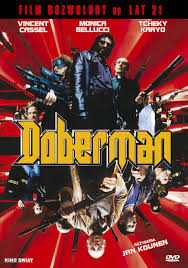
The charismatic criminal Dobermann (Vincent Cassel), who got his first gun when he was christened, leads a gang of brutal robbers with his deaf girlfriend Nat (Monica Bellucci). After a complex bank robbery, they are being hunted by the Paris police. The hunt is led by the sadistic cop Christini (Tchéky Karyo), who only has one goal: to catch Dobermann.  The cast is dominated by French superstars Cassel and Monica Bellucci (they married in 1999), playing the antihero and his ultra-loyal partner in crime, and they both manage to create a niche amidst the film’s visual excesses. But the film clearly belongs to Karyo as the deranged cop on Dobermann’s tail, an irredeemable psycho who’s prepared to break every rule – legal and moral – to bring his nemesis to book.  Dobermann not only set debut director Jan Kounen on the road to cinematic glory, it also helped to create an aggressive upsurge in ultra-commercial European cinema. This is 100 minutes of non-stop comic-book violence, a traditional cops and robbers scenario in which the police are no better than the crooks. All the thought behind this film was put into the style, and in that regard the film succeeds admirably for this is an incredibly stylish film made on a relatively small budget, the film was made for about 33 million Francs which is equivalent to about 5 million Euro’s. The directing was extremely fast paced and kinetic, full of stylish movements, rapid zooms to close ups and fast editing. The film consists of basically two sequences: a supposedly “genius” bank heist and a violent confrontation at a nightclub frequented by cross dressers.

Le scaphandre et le papillon (The Diving Bell and the Butterfly

The Diving Bell and The Butterfly

The Diving Bell and the Butterfly (French: Le scaphandre et le papillon) is a 2007 biographical drama film based on Jean-Dominique Bauby’s memoir of the same name. The film is based on a real man, and the book he somehow succeeded in writing although he could blink only his left eye. The man was Jean-Dominique Bauby (Mathieu Amalric), who was the editor of Elle, the French fashion magazine, when he had his paralyzing stroke.  A speech therapist (Marie-Josee Croze) suggests a mode of communication: They will arrange the alphabet in the order of most frequently used letters, and he will choose a letter by blinking. She passes the baton to Claude (Anne Consigny), who takes the dictation for his memoir. She makes the letters into sentences and paragraphs in a variety of different settings once Bauby is able to be moved around in a wheelchair.  The positive attitude of these women gives the patient the courage and confidence he needs to write his memoir. He also welcomes Laurent (Isaach de Bakole), a friend who reads books to him. He fondly remembers his last meeting with his forgetful father (Max Von Sydow), who loves him dearly. Later in a phone call, his dad breaks down when he realizes that he will never hear his son’s voice again. One of the most dramatic moments in the film occurs near the beginning when the first therapist thought Jean-Do communicates is that he wants to die.

the diving bell and the butterfly 1
Feeling rejected and angry, the therapist storms out of the room but apologizes and comes back shortly to resume the treatment. We do not actually see Jean-Do until about a third of the way through the film but we can hear his thoughts which are in turn angry, funny, and bitterly cynical. Much of the film vividly explores the editor’s imagination and the camera takes us on some wild rides that include images of Nijinsky, Empress Eugénie, Marlon Brando, and Jean-Do in his imagination skiing and surfing. Some of the most emotional moments occur when he greets his young children at the beach for the first time after his stroke, a telephone “conversation” with his 92-year old father (Max Von Sydow).  Mathieu Amalric has played the character of Jean with so authentication that it is hard to believe and separate his self from the real character. The most wonderful part that remains with you after the movie is the sense of humour with which Jean sees this world. He remains light hearted at times and thinks hilarious comments even in the most painful state of his being. I would also like to mention the two supporting characters who render Jean’s words on paper. Those roles are beautifully portrayed by two well known Canadian and French actresses – Marie Josee Croze (former writer) and Anne Consigny (latter writer) respectively. The Diving Bell and the Butterfly is a film of enormous power that shakes us and enables us to get in touch with the miracle of each moment.


New Delhi Times

New Delhi Times

New Delhi Times is 1986 Hindi film directed by Ramesh Sharma and written by Gulzar. The editor of the newspaper New Delhi Times, Vikas Pande (Shashi Kapoor) has to confront the politician Ajay Singh (Om Puri) who is associated with a powerful lobby of illegal liquor manufacturers.  Meanwhile, there is a power struggle going on between the existing chief minister Chaturvedi (Ram Gopal Bajaj) and the ambitious MLA Ajay Singh for the post of chief minister. On the other hand Vikas’s wife Nisha (Sharmila Tagore), who is a lawyer, is approached by an old man whose daughter is missing from her in-laws place.  Shashi Kapoor’s Pande is a man of the world, who nevertheless has not developed a cynical attitude despite the surrounding environment. Shashi has played the role with dignity and poise. Sharmila Tagore plays Pande’s supportive wife and though she does not get to do much in the film, her practical attitude comes across as a breath of fresh air after Pande’s burning idealism. The film also stars Om Puri, who is impeccable as ever,who becomes the focus of Vikas Pande’s investigations. Mk Raina, Kulbushan Kharbanda , Manohar Singh were convincing in their roles as well.

It is also one of the few movies made in India that looks at the difficulty and paradox inherent in a crime-journalist’s profession. New Delhi Times takes an in-depth look at the politically corrupt system that pervades the lives of ordinary people, who in many ways are unable to deal with it. But the film ran into all kinds of trouble. There was a lawsuit filed against it by someone who took offence to a dialogue where Vikas tells Nisha that all lawyers are liars; someone else tried to get the film banned for depicting a politician instigating communal riots. When New Delhi Times was scheduled to play on Doordarshan, it was pulled out at the last minute because of the legal battles that confronted it.  Over the years, New Delhi Times has gone on to receive largely positive reviews.

Pit and the Pendulum

Pit and the Pendulum


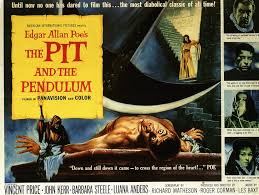
Following the sudden death of his sister, Francis Barnard (John Kerr) travels to Spain to question her husband, Don Nicholas Medina (Vincent Price), son of a notoriously barbaric Inquisitor. Medina openly mourns the death of his wife but Barnard is unconvinced by his story and is determined to discover the truth. “The Pit and the Pendulum” is the second of Roger Corman’s Edgar Allan Poe’s adaptations with a screenplay by Richard Matheson. Nicholas and his younger sister Catherine (Luana Anders) offer a vague explanation that Elizabeth died from a rare blood disorder six months earlier. During the dinner, the family’s friend Doctor Charles Leon (Antony Carbone) unexpectedly arrives and Francis discovers that his sister died of heart attack after visiting the torture chamber in the dungeons. Nicholas witnessed the murder of his uncle Bartolome (Charles Victor) and his adulterer mother Isabella (Mary Menzies) being tortured and killed by his father when he was a kid. Price himself is wonderful as usual as the tormented Don Medina. With ease he can go from melodrama to utter horror and his melancholic over-the-top melodrama was right at home in Poe’s adaptations. John Kerr makes a terrific counterpart and his performance is very believable. Steel’s aura of mystery suits perfectly the atmospheric horror of the film and Anders displays her talent for melodrama.
Pit and the Pendulum’ is a uniquely and profoundly visual experience. Richard Matheson’s screenplay is both intelligent and eloquent and Corman makes full use of what he is gifted here. The theme of being buried alive is something that appears to have fascinated Edgar Allen Poe as it appears in a number of his stories. It’s impossible to imagine the terror of being alone in an encircled space with nobody or nothing to help you escape and that’s what makes it so terrifying. Corman’s lavish, flavorful sets and unique use of color only add to the overall effect of the film.

La French

La French

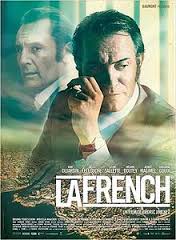
The Connection (French: La French) is a 2014 French-Belgian action crime thriller film directed by Cédric Jimenez and produced by Alain Goldman. The film was inspired by the events of the French Connection in the 1970s, starring Jean Dujardin as police magistrate Pierre Michel and Gilles Lellouche as “Tany” Zampa, a drug gang ringleader.  An energetic young magistrate Pierre Michel is given a tough job on the ins and outs of an out-of-control drug trade. Pierre’s wildly ambitious mission is to take on the French Connection, a highly organized operation that controls the city’s underground heroin act and is controlled by the notorious —and reputedly untouchable— Gaetan Zampa.  Michele is portrayed as a driven, obsessed man – it is implied that he had some gambling problems in the past – who seems to be actually trying to catch the ‘bad guys’. During the entirety of the film his determination is being shown as close to obsession as possible without too much cliché. Dujardin and Lellouche’s characters are more alike than they are different, with both being devoted family men and ultra-faithful husbands, and both having a close group of associates they treat like family.
Dujardin plays a full-on good guy, with his magistrate, Pierre Michel, being shown as one of the most incorruptible guys in France. It’s nice to see Dujardin play such virtuous part, which he does well. Lellouche’s Zampa is not your typical villain, in that he’s shown to have a compassionate streak, and is so anti-drug in his own life that when he discovers an associate of his is a drug-addict, he forces him to do a massive trail to try and teach him a potentially deadly lesson. Cédric Jimenez grew up himself in Marseille in the 1970s and says that the story of the Judge has run through his veins his whole life. He chose to shoot the whole film with a hand held camera, which gives the film it’s intimate and raw feeling. The opening scene showed a landscape filled with historical buildings, palm trees, straight roads and the sea that reflected blue from the sky. The vibrating and aggressive sound from the motorbike gave the picture a dramatic sound. To carry on, the visualisation had some glimpse shots, fast forwarding and an expression in chiaroscuro. The film looked like a production from the 1970s. Laurent Tangy as the cinematographer expressed the contrast between light and shade. There is some action here and there, but it’s neither flashy, nor heroic.

Naya Daur

Naya daur


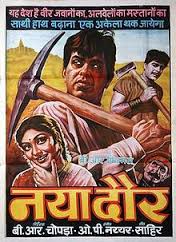
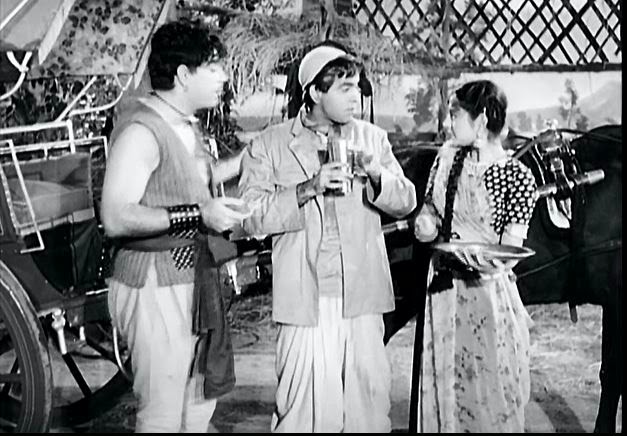
Naya Daur ( English: New Era) is a 1957 Indian drama film starring Dilip Kumar, Vyjayanthimala, Ajit and Jeevan. The film is set in post-independence India, where industrialization is slowly creeping in.  ‘Naya Daur’ literally meaning a New Road – is a fine story of a young village man Shankar (Dilip Kumar) who wants to challenge onslaught of machines in his daily life by building a new road in his village. Shankar (Dilip Kumar) and Kisna (Ajit) are the best of friends, village boys who grew up together. Shankar makes his living as a tonga driver. Kisna chops lumber for the local mill owner (Nazir Hussain), who treats his workers with tremendous compassion. The owner leaves for a pilgrimage, and his son Kundan (Jeevan), who takes over operations, doesn’t see things the same way – he brings in machines and fires all the woodworkers. Meanwhile, the bond of friendship between Shankar and Kisna is threatened when both fall in love with Rajni (Vijayantimala). The workers start to move to the cities leaving their homes behind. Frustrated with the dramatic change Shankar challenges the owner’s son & accepts Bus Vs. Tanga race. Thankfully, director B R Chopra takes pains to point out in his film that his characters are not anti progress. This was one of Dilip Kumar’s finest roles, and the irony lies in that he may never have done the film at all. When BR Chopra first came to him, Dilip Kumar refused because of date issues. It was then offered to Ashok Kumar, who felt he was too urban to fit into a rural character.


naya daur 1
He liked the story, though, and convinced Dilip Kumar to at least hear it. Dilip slipped into the character of Shankar very believably. He was the sociable, cheeky taangewala to life, without falling into the trap of being annoyingly cheerful. Similarly, in his dramatic scenes with Ajit, or even the scene where he breaks off his sister’s engagement, you see a principled man, and a honest one. As the parallel lead, Ajit not only had almost-equal screen time as the ‘hero’, but he also had a very nuanced character arc – from the faithful friend to the man who seeks vengeance because he has been betrayed, or so he thinks, by his dearest friend. Vyjayanthimala’s  Rajni is strong, self-respecting, and knows her own mind. She has no qualms in admitting to Shankar that she loves him. This was OP Nayyar’s year – both Tumsa Nahin Dekha and Naya Daur released in 1957, cementing his place in the ranks of successful music directors. Naya Daur’s message is neither a derogation of modernity, nor a plea for consensus. I think what BR Chopra (and Akhtar Mirza his screenplay writer) was conscious of the particular reality of India in the 1950s: a country where Independence under Nehru meant development, power and influence, but at the same time where the human and rural dimension was still very much a key factor.

Celda 211

Celda 211

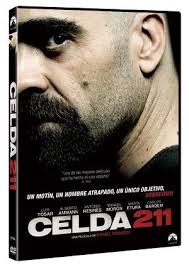
Cell 211 is a 2009 Spanish-French prison film directed by Daniel Monzon, starring Luis Tosar, Alberto Ammann. This is a story of a prison guard, Juan Oliver (Alberto Ammann) who decided to go to work one day before he actually begins to make an impression.  What awaits him later is a riot, which forced him to be locked in Cell 211 after suffering an injury to his head. He knows the only way to live is to be one of them, and so he acted as an inmate. He has to make peace with the rest and gain the trust of their ‘leader’ Malamadre (played by Luis Tosar) as they take hostage of high profile, terrorist-prisoners.   Directed by Daniel Monzon, the film offers relentless action as the rioters demand to be recognized, a long losing battle make the men confront the cruel authorities imposing the prison rules. The screenplay was based on a novel by Francisco Perez Gandul, with a screen adaptation by Mr. Monzon and Jorge Guerricaechevarria. The action never decreases as it builds momentum to the unpredicted climax when all hell breaks loose.
When a film takes only ten minutes to establish its premise and get the ball rolling, it’s usually a sign of absolute confidence in the long game. The acting is solid throughout, and the characters are finely shaded even when larger than life. Juan has a cruel curve to take, and he conveys this with an unsophisticated presence of a regular guy.  Malamadre lives up to his name. Cell 211 is pure entertainment, and exploits the emotions of the audience by the oldest method available – characters that are well-developed and relatable.  There is a point to the story, and clearly Daniel Monzon has an axe to grind against the criminal justice system of Spain, but this is to the benefit of a fine story.

Thalapathy

Thalapathy

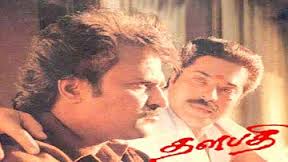
Thalapathi is a 1991 Indian Tamil-language crime-drama film written and directed by Mani Ratnam and produced by G. Venkateswaran. The film is an adapted version of the mighty king and warrior Karna from the great indian epic Mahabharata.  Surya (Rajinikanth) born as an illegitimate child is abandoned by his mom (Srividya) and left on a basket in a goods train. He is then raised by lower caste people living by a river side. He grows up to become a loyal friend and right hand for gangster Devaraj (Mammootty).  Deva is a kind of Robin Hood figure, whom the slum dwellers admire, as he takes care of their needs in a way neither the officials nor the government officers do. Surya is in love with a Brahmin girl, Shubalakshmi ( Shobana), who also loves him in return, but does not like his violent ways. In the mean while, Surya’s real mother Kalyani( Sri Vidya) is now married to a Government officer, and her son Arjun( Arvind Swamy), is in the Civil Services. Kalyani herself is a doctor and soon Arjun is posted to Chennai as collector. In the meantime, a gang war breaks out between Deva and Kalivardhan( Amrish Puri), another gangster, and Deva’s arch rival. The attacks come to the notice of Arjun, who vows to take action against Deva. 

Thalapathy 2

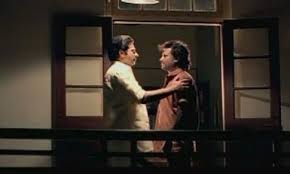
The strong point in Thalapathy was the relationship between Deva and Surya, which was based on the Duryodhan-Karna friendship. The scenes between both of them are brilliantly shot. The first scene where Deva and Surya confront each other on the bridge, in a rainy night, is brilliantly captured.  Another great scene is when Deva points to the wounds he received, while beaten up in the police station, and asks Surya to take revenge.
Rajinikanth as Surya is one of the best character oriented roles donned by the superstar in last two decades or so. His effortless style and rough looks sums up a role tailor made for him.  Mammoty as Deva has given weight to the role and reacted well to the dialogue delivery. His calm and composed presence as a leader worked well. Shobana as Surya’s love interest did a good job. The likes of Jaishankar, Srividya, Arvind Saamy, Amrish Puri and other stars justified their roles though had limited screen space. The screenplay is woven tightly and disclosed with an exemplary narration made surrounding the protagonist. Maverick cinematographer Santhosh Sivan also delivers behind the lens for his first film with Mani Ratnam.  His opulence and aerial shots are well etched and the experimental lightings give the feel of nostalgia.