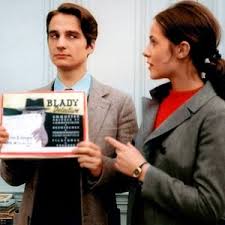
Stolen Kisses ( Baisers volés)

stolen kisses 1

Baisers volés is the third installment in François Truffaut’s wonderful cycle of films concerning his cinematic alter ego, Antoine Doinel. Played memorably by Jean-Pierre Léaud, Antoine remains one of film history’s most enduring characters, a hopeless romantic who longs for perfection in his affairs with women and work, while finding it difficult to balance both.  Here, he gets discharged from the army, and then he takes a few other jobs before finally getting settled in as a private detective. The character of Antoine Doinel is an autobiographical extension of Truffaut. When Antoine Doinel gets discharged from the army, he laughs in the face of the commanding officers. It is based on Truffaut’s own disastrous military experiences in the 1950s when he was jailed as a deserter and eventually thrown out of the army.  Doinel celebrates his freedom by running immediately to a bordello. He tries to woo a young woman (Jade) who is initially indifferent to him but warms up when he shows signs of losing interest. He takes the job as a private detective of Blady’s, which puts him as a planted spy in Monsieur Tobard’s Shoe Shop. He gets attracted to his wife, Mrs Tobard (Delphine Seyrig). When Antoine loves Fabienne (the shoe shop’s owner’s wife), Christine is in love with Antoine. Every character is immersed in a love triangle.  Mrs Tobard also gets attracted to Antoine as well, but for a very short period. She finds her husband unromantic and boring, yet she has sympathy for him.   Antoine likes to fall in love, but he feels awkward in relationships. Like his previous work, this film has remarkable fluid camera movements as he gives us a breathtaking view of the eternal city and the journey Antoine is on in hopes of discovering his place. Léaud is always brilliant, playing the director’s alter ego. He’s very funny, charming, very good-looking.  Delphine Seyrig is brilliant in a short but very important role. She has a beautiful, deep voice. During this period, the May 68 revolution took place in Paris. In that situation, Antoine was trying to find his own feet. It is charming in its carefree tempo and disarming in its frankness about whimsical triviality.



In the Fade (Aus dem Nichts )

In the Fade 1

In a prologue, we see blonde Katja (Diane Kruger) marrying jailed drug dealer Nuri Şekerci (Numan Acar). After returning from jail, Nuri corrected himself and he did set up a business. They had a happy family with a son. One day, Katja goes to a spa with her friend. While returning, she finds police barricades and learns that a bomb killed her loved ones. She is devastated totally. She tries to get back to her normal life but she couldn’t.  From the investigation, it is learned that a neo-nazi group is involved in this murder. Since last few years, neo-nazi groups are creating terror in Germany. They are mostly violent towards Muslims. Katja’s friend Danilo Fava (Denis Moschitto) is prosecuting attorney, pitted against nasty defense lawyer Haberbeck (Johannes Krisch). Kruger convincingly conveys Katja’s anguish, fragility and fierce determination as a woman who has lost everything yet single-minded in a pursuit of justice that eventually turns to vengeance. The first half of the film deals with the tragedy of Katja. 2nd half deals with the court procedures. In the 3rd half, we witness the rage of a woman. The film just doesn’t focus on the terrorism issue. It also deals with the rage of a woman. Beside that, it deals with the grief of survivors. Court scenes were cleverly shot. We felt bored while watching that part. But that is how justice system works. The film cleverly used silence in crucial moments. One might hope for some action, but that is not going to happen.

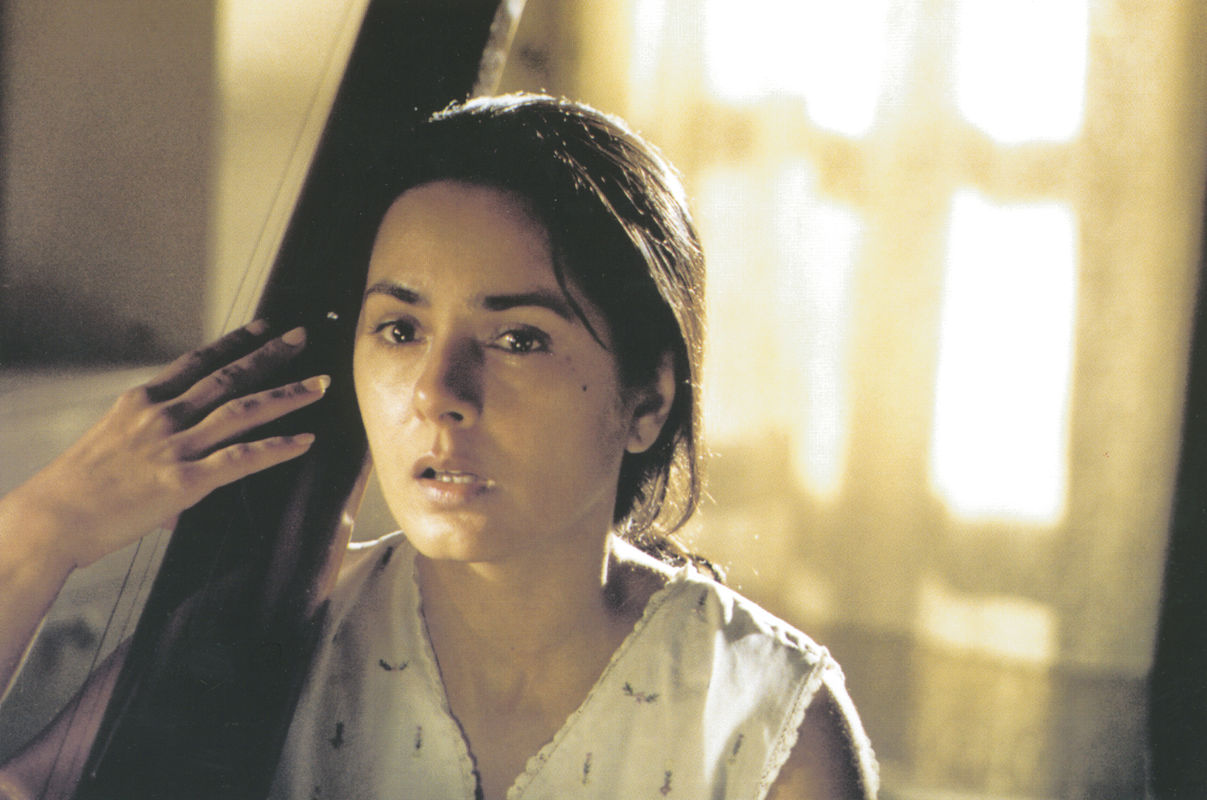
Dance Of The Wind

dance of the wind 1

Pallavi (Kitu Gidwani) , a successful classical singer trains with her mother to carry forward the Hindustani musical tradition. She is good but not as much skilled as her mother is.  Her mother Karuna took training from an old man. He never performed on stage but used to give lessons to his students. When Karuna started to perform on stage , he cut off all contacts with her.  He detested glamour world. The trauma of Karuna’s death, announced by the appearance of the old man and a little girl, causes  Pallavi’s voice to disappear. Slowly her relationship with her husband (Bhaveen Gosain) becomes strained.  She slowly loses her students and her career takes a backseat.  Retreating into solitude, she finds the little girl Tara (Roshan Bano) again. Much of the music was composed by Shubha Mudgal, a classical singer who studied in the guru-disciple tradition.  Director Rajan Khosa used music in crucial points to capture the essence and mood of the film. The film is spiritual but it is extremely honest in it’s approach. In other words,it located in Indian culture.  Khosa didn’t opt for any dishonest trick to make it global.
Yet, it has an universal appeal. He is aided by fine technical work all around,  from Piyush Shah’s soft-hued lensing to Amardeep Behl’s quietly refined production design. I always liked to watch KItu Gidwani.  She has been an extremely talented actress. Instinct affects her acting more than anything else.  Bhaveen Gosain is known in theatre circuits. He just did this film only.  Here, he gives a very convincing performance as a caring husband.  Vinod Nagpal shines in a very short role.