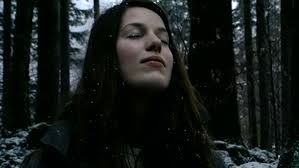
Un lac

Un Lac


Philippe Grandrieux’s “Un lac” takes place in a country unknown to us. We know nothing about the place apart from that it is full of snow and dense forests. But before discussing the film, I will like to explain a few things first –
1) The id:- It is the most primitive component of personality. It is not affected by reality, logic, or the external world. It doesn’t change with time or experience. It operates within the unconscious mind.
2) Ego:- It is the decision-making portion of personality. Ideally, it works by reason whereas id is most unreasonable. Similar to id, the ego seeks pleasure and pain but unlike the id, it wants to develop a realistic strategy to achieve it.
3)Superego- It operates as a moral conscience. It develops during childhood. It is learned through parents and society. Superego tries to control id’s impulses.

Deep in the middle of nowhere, a young man lives with his sister, a brother, his blind mother, and father. The young man suffers from epileptic disorders. He has an incestuous relationship with his sister but it seems that his sister doesn’t quite enjoy the intercourse process.  One day, a stranger arrives but do things really change?. Grandrieux’s film has a minimal plot but it deals with too many things- the id, ego, superego (as explained above). It shows a bleak world. Most of the cinephiles have seen films depicting the world with hopelessness. However, Grandrieux is different. U will rarely see bodies in their entirety. When u see them arriving, they are usually out of focus. Sometimes, the characters are appearing from the dark. It is shot on an unnerving handheld camera, regularly capturing claustrophobic close-ups of the actors. U will hear every breathing of the characters. They live in such isolation that incest is not a taboo for them. Grandriuex aims to involve all the senses of the viewer, not only his sight. That is why the focus is on the heavy breathing of the characters. You aren’t going to feel for any character. None of them appears as good or bad or grey. We are watching a bleak world but we aren’t feeling the pain. The film is made in French but most of the actors are from Czech or Russia. This is the cinema of the highest order.

Le charme discret de la bourgeoisie ( The Discreet Charm of the Bourgeoisie )

discreet charme


“The Discreet Charm of the Bourgeoisie” remains Bunuel’s most successful film. It made more money than his famous “Belle de Jour” and it did manage to win Oscar as best Foreign language film. It was released in a year when Vietnam war was going in full form and the upper middle class was an obvious target of disdain.  Bunuel worked in Mexico,Hollywood,Spain before again returning to Spain. He spent years in political, financial and artistic exile, and many of his Mexican films were done for hire, but he always managed to make them his own. His characters are often selfish and self-centered, willing to compromise any principle to get their job done.
From the first shots of “Discreet Charm,” we are aware of the way his characters carry themselves. Fernando Rey stars as Don Rafael, the drug-dealing ambassador of a fictional Latin American country who lives in constant fear that one day he will be kidnapped and murdered by the guerilla terrorists outside his embassy. His friends repeatedly convene at the home of Monsieur Senechal (Jean-Pierre Cassel) and his wife, Alice (Stéphan Audran), whose dinners are constantly interrupted. The most amusing thing is that they never manage to dine properly. When the guests arrive for the dinner party, the hosts were having sex backyard. When the guests arrive at a restora to have dinner,they do hear that the owner is dead. Hearing this, they refuse to dine there and soon they leave the place. Elegant ladies sit down for an afternoon tea, only to be told by their waiter that the restaurant has run out of water.

Much of the film takes place in the nightmares of its characters. The protagonists seem to know what they want but they never reach their goal. They have all kinds of knowledge about manners and gestures, but they cannot sit down and eat. In Bunuel’s films, the clothes not only make the man, but are the man. Consider the bishop (Julien Bertheau), who arrives at the door in gardener’s clothes and is scornfully turned away, only to reappear in his clerical avatar to “explain himself,” and be accepted. Meanwhile, the narrative cuts in and out of dream sequences; at one point, one character’s dream turns out to be embedded in another’s. The text falls apart, so we find ourselves focused on the subtext. For all it’s symbols and destructing narrative, it is never a difficult film. Buñuel’s emphasis on the implacable dream logic that drives the film’s forking-paths storyline isn’t what you would call unprecedented. His films have often incorporated dream imagery, leaving even the most melodramatic material with outbursts of oneiric intensity. For the first-time Bunuel was provided with a video-playback monitor. The film employs meandering, unobtrusive camerawork and odd crane shots. There’s an elaborate tracking shot that follows one of the persons across the living room, up the staircase, and along the hallway. All of the performances were wonderful.
Even in the most dramatic scenes,they were never out of line. Special mention goes to Fernando Rey who was effortless throughout.

The Handmaiden

The Handmaiden 2

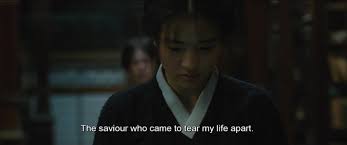
Loosely based on the 2002 English novel “Fingersmith,” “The Handmaiden” begins in colonial Korea, where a young woman named Tamako ( Kim Tae-ri ) arrives to the marvellous home of wealthy book collector Kouzuki ( Cho Jin-woong ). She comes here to work as a maid of extraordinarily beautiful and sheltered Lady Hideko ( Kim Min-hee ), niece of Kouzuki’s late wife.  Hideko tells her that she can do anything except lying to her. Tamako is actually named Sookee—master pickpocket, expert appraiser of stolen goods, protégée of the Fagin-like figure ( Lee Yong-nyeo ) who raised the girl after her mother was hanged. Count Fujiwara (Ha Jung-woo), a con man scheming to marry her, who instructs Hideko in art, wants to steal her fortune and have her submitted in an asylum. Her uncle, a pervert and Japanophile, is intending to do much the same thing. Count hires Sookee to get the job done. The count was fake, originally raised by Korean fisherman but claims to be Japanese and calls himself Fujiwara. He says “Frankly, I’m not that interested in money itself. What I desire is—how shall I put it?—the manner of ordering wine without looking at the price.”
The plan is complicated, but it gets awkward when Sookee/Tamako starts falling in love with Hideko. When uncle Kozuki leaves on business for a week, Hideko and Fujiwara elope. After stealing Hideko’s inheritance, Sookee, Hideko, and Fujiwara travel to the asylum, where Hideko and Fujiwara pass Sookee off as the “Countess”. Any further details will ruin the film experience for the audiences. In this film, everyone lies to everyone and things start to get more complicated as the story progresses. Nothing is what it seems in this movie, and the things that aren’t what they seem aren’t quite what they don’t seem to be. Most of the film takes place in and around the book collector’s country estate, a masterful creation which is one of the best mansions in film history.
It seems to change size and shape depending on a visitor’s angle of approach. After a few more scenes, you realize that you only saw a part of the house. There are secret doors and hidden passageways that only certain characters know about, leading to places where they can make love. One of many show-stopping setpieces is a reading of perverse erotica from the library, accompanied by one of the weirdest sex shows in mainstream cinema. Powerful cross-cut sequences feel like self-contained short stories of their own. “The Handmaiden” is neatly divided into three parts, each approximately 45 minutes long, each narrated by a different major character with incidental mini-narratives embedded within each one.