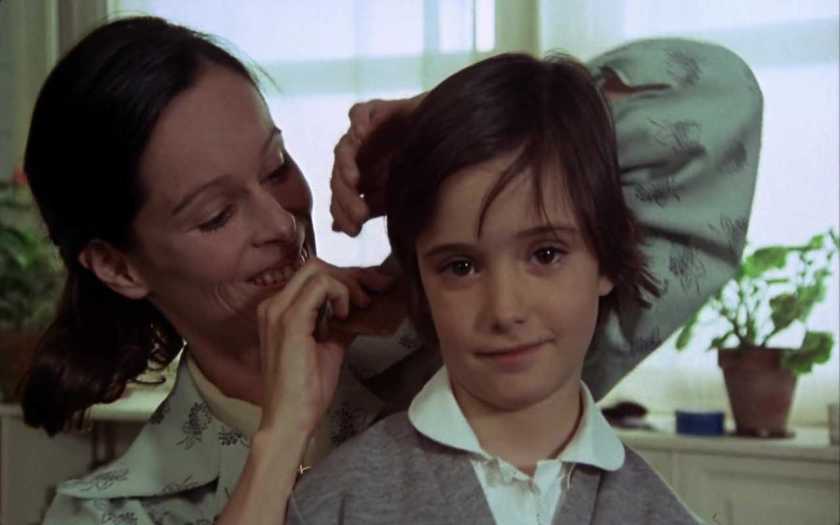
Ana (Ana Torrent) is convinced she poisoned her own father and keeps getting strange visits from the ghost of her mom (Geraldine Chaplin). She holds her father responsible for the illness and painful death of her mother. Her aunt arrives to take care of the girls, but unlike her sisters, Ana doesn’t subscribe to her aunt’s disciplinarian ways and begins to imagine her death as well. The all-female household is completed by the children’s grandmother, mute and unmoving in a wheelchair, and the weird housekeeper Rosa. As Cria Cuervos’s uneventful narrative unfolds, the dead parents continue to appear unpredictably in the present. Raised under their aunt Paulina, Ana, and her sisters retreat into make-believe, dressing up as soldiers and lovers, and dancing to a song called past Porque te vas. The film is all about children and their loss of innocence by being corrupted by the adults around them, yet it is also about how their innocence causes them to not understand the concepts such as infidelity or death. Ana does not understand the difference between death and mere absence. She attempts to murder her aunt. She washes her father’s glass of poison (or at least what she believes is poison) without a hint of remorse.
As an allegorical drama, Cría Cuervos serves as a chilling yet beautiful counter to the repressive Franco regime, which director Carlos Saura was in opposition to. The Franco regime had implemented strict censors on anything that would cause Spain to be seen in a bad light. The only way these expressions would be able to get Franco’s censorship was through the use of careful metaphors and symbols.
 debarshithecinemaniac