The Lobster

The LObster

The Lobster, the first English-language feature by the daring Greek director Yorgos Lanthimos.  Absurd and surreal don’t seem sufficient words to describe what transpires in The Lobster.  In the new world, citizens can’t be single. There’s a law against it.  Security will harass you and demand to see your license of coupledom.
If you don’t have it, you’re off to a strange hotel, where singles have 45 days to search around for a suitable bachelor.  Failing that, one has the option of being transformed into the animal of his/her choice. It stars Colin Farell as a newly-single man trying to find someone so he can remain human. The dog accompanying David is his brother.
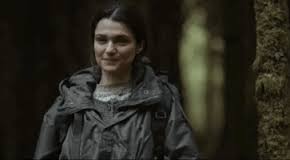
David chooses to become a lobster, due to their life cycle.  David makes friendships with Robert(John C Reilly), a man with a lisp and John, a man with a limp.  David’s day-to-day activities at the hotel – meals, seminars, and dances, are narrated by a nameless woman, played by Rachel Weisz.  She is a loner living in the forest. In the film’s second half, she and David start a romantic relationship. But Lanthimos keeps the audience guessing about their ultimate ends right up to the final shot, and beyond.  The Lobster deals with extremes of human emotion by factoring most of the emotion out of the equation. Through that premise and Farrell’s deadpan performance, Lanthimos dissects the superficial things we do for love. Rachel Weisz was spectacular.  The Lobster remains strangely romantic throughout, an absurdist take on the notion that great love stories don’t always end in a positive note.

Sairat

Sairat

Sairat means zeal, passion or ardor.  A guy from lower strata of the caste system falls for a rich upper-class girl.  It is a story about their love, resistance, struggle, and survival. In the first part of the film love blossoms between Archana and Parshya and romantic chemistry is portrayed.  The second half of the movie gives a radical departure from the first part where the love story takes an ugly turn leading to a social drama.  The second part of this film is more important. The lead characters, the hero (Akash) and the heroine (Rinku) stand out among the whole cast.  Even the supporting characters like the friends’ circle of the leads like Salya, Balya, Mangya convey a lot of finesse and depth to the film.  Suraj Pawar as Prince has a brief  but significant role.  He played the most cruel character in this film.  Which Indian film showed the love between castes? One needs to go back to Bimal Roy’s Sujata where Nutan played a Dalit woman character.   But in Sairat, caste equations are woven into a love story.   Director Nagraj Manjule does a commendable job. The director has touched upon gender roles reversal. He is well-versed with the household chores, she isn’t.  She can’t cook or clean and he happily does it for her till she learns. The film’s only fault is that it borders on too-much social-realism in 2nd half.

Nayagan

nayagan

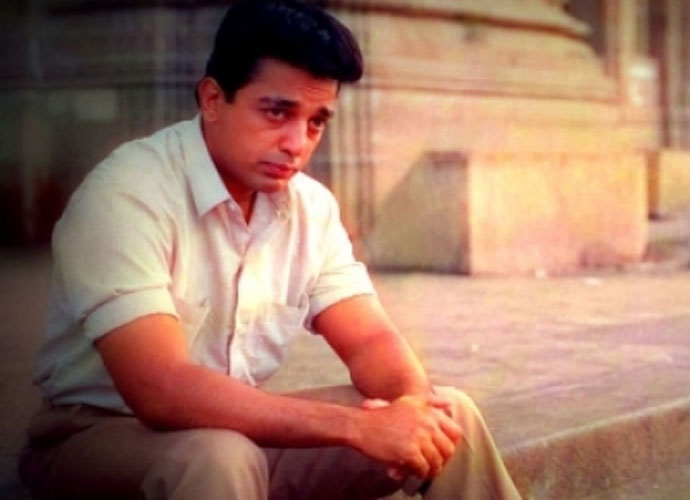
Earlier I watched the Hindi version of this film. But one has to watch the Tamil version to understand the beauty of this film. The film starring Kamal Hassan as Sakthivelu Naiker is loosely based on the life of famed gangster ‘Varadarajan Mudaliar.’  The film starts with a scene where a union leader’s son Sakthivel was captured by the police in order to find him.  They play a trick on him by making them believe that they are on his side. The police kill his father.  Sakthivel stabs the inspector and runs to Mumbai. In Mumbai, he was raised by a smuggler named Hussain, who treated him like a son. Later Hussain was arrested by police where the inspector ended up killing him.  Knowing the truth he kills the inspector but being a kind-hearted soul he takes care of the inspector’s son. Instantly becoming the hero protector of his poor Mumbai neighborhood, he becomes known as Velu Nayakan.  Hassan portrays the roughness, emotions, power and all those things needed in his character of Sakthivel.  Apart from the marvelous performance of Kamal Hassan, other supporting cast did a commendable job. The complex relationships between the various characters are brilliantly depicted like the relationship between Velu and his daughter or the relation between Tinnu Anand and Velu.
The most noteworthy subplot is that of the bond shared between Velu and his daughter. Cinematographer P C Sriram rightly captures the gritty tone of this film, the way it was intended to be by Mani Ratnam. Art director Thota Tharani has done a wonderful job of creating the slums of Mumbai which looks straight out of life.

wolf

Director Christophe Gans has given us an exhilarating ride with this stylish period thriller. The story involves the Beast of Gevaudan, which in 1764, terrorized a remote district of France, killing more than 100 people and tearing out their hearts and vitals.
As the film opens, the king has dispatched eminent scientist Gregoire de Fronsac (played by Samuel le Bihan), along with a muscle-bound Iroquois blood brother named Mani ( Mark Dacascos), to investigate. The creature responsible is reportedly a monstrous wolf, but as the pair investigate, they discover that several of the locals may know more about the affair than they’re admitting.  Why is aristocrat Jean-Francois de Morangias ( Vincent Cassel) so indecisive towards the duo and is the prostitute Sylvia ( Monica Bellucci) just a little too savvy and sophisticated for someone who earns their living from dusk till dawn?  There’s also the small matter of Marianne (Dequenne), Jean-Francois’ virginal sister who fascinates Grégoire and then drives him into the arms of Sylvia.

Brotherhood of the Wolf encompasses every genre of film; martial arts, action, romance, thriller, horror, drama, everything.  There is the strikingly elegant and almost hypnotic courtesan Monica Bellucci, playing her role of seductress with ice-cold professionalism.  In complete contrast, there is the innocent, fragile, and astonishingly beautiful, Emilie Dequenne, younger sister to the protective Jean Francois.
The two leads are fantastic and share a chemistry reminiscent of the relationship between Butch and Sundance.  Then there is Vincent Cassel who is suitably creepy as the immoral ‘Morangias”.  Atmosphere and suspense are strong throughout, and definite care is taken with the sound editing, whether it be the ceaseless patter of the driving rainfall or the heaving atmosphere of a noisy brothel.  The horror or ‘attack’ sequences are artfully played out, quietly refusing to reveal the identity of the creature; but when at last it is shown, the special effects do not disappoint.

Othello

OTHELLO

Shakespeare wrote the 3 hour-long originals but Welles cut and pasted it together to create a 90-minute pastiche that is barbed, claustrophobic, and hallucinatory. Film was shot in bits and pieces between 1948 and 1951, with the actors sometimes languishing on location while Welles went to raise more money.   In his last completed feature, “Filming Othello,” from 1978, Welles unravels the strange story of the shoot, which involved an actor, say, entering a doorway filmed in Morocco in 1949 and emerging in the same scene from a doorway filmed in Italy in 1951.   The fragmentation of the shoot is reflected in the fragmentation of the images, which is no mere convenience but an aesthetic, a fragmentation as complex as that of an  expeditious montage by Eisenstein.  In the course of his production, he employed five cinematographers, but few films sustain such uncanny visual consistency.  If by “auteur” we mean a director who takes not just the filmmaking process but all the alternations of fate and finances as his medium, then Welles easily qualifies.  From the opening scene the sublime strangeness takes over; it is like entering a Cubist painting. The dead Othello’s face, upside down, fills the screen, with strange chanting on the soundtrack.  Beginning with the ending, the narrative then follows that of the original, but so curtailed and suddenly pieced together that it takes on an alien quality.  His “Othello” (Orson Welles) boils down to the title character, his wife( Suzanne Cloutier), Iago(Micheál MacLiammóir) and bit players (and impressive numbers of extras). Welles the actor gives an impassioned performance as the titular character, while MacLiammoir is equally stunning as his jealous adversary.