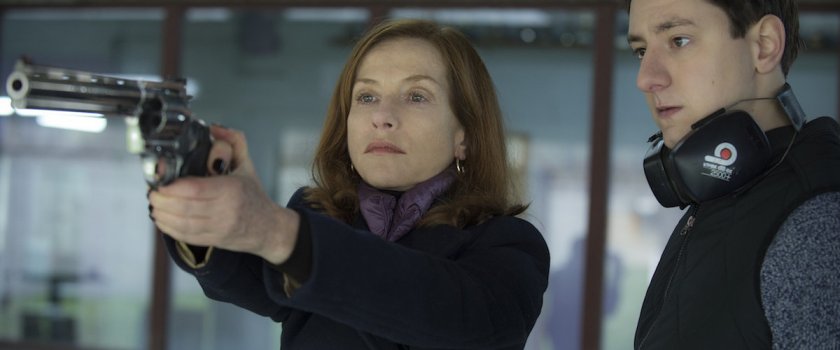
Michèle Leblanc (Isabelle Huppert) is raped in her home by an assailant in a mask, then promptly cleans up the mess and resumes her life. The only witness to the attack is a black cat, which sits watching silently. This is the first image, the cat’s stare, a touch that’s grotesque and mysterious, like everything that follows in this subversive black humor. Later, at dinner with friends, she offhandedly remarks, “I suppose I was raped.” Michèle is the CEO of a video game company. Her ex-husband, Richard (Charles Berling), is an obscure novelist who is trying to pitch her an idea for a game about a post-apocalyptic revolt of cyborg dog slaves. Her mother lives with a gigolo. And there are the violent fantasies that Michèle initially entertains about getting back at her rapist, whose identity she discovers later. Elle is at least three films at once: First, there’s the comedy of manners involving Michele’s adult son, mother, ex-husband and their respective other halves. At other moments, Elle plays like a sophisticated thriller. But it’s the third film, a complex psychological portrait of an unusual woman, that might be the most alluring (and these are the things u can never find in Indian cinema). As it progresses, Elle takes a deep dive into dangerous territory that could be misinterpreted as misogyny. Huppert gives a performance of imperious fury, holding the audience at bay, almost provoking us to disown her. Paul Verhoeven’s long-awaited return to genre filmmaking pulls off a breathtaking film.

 debarshithecinemaniac