Kids Return

kids-return

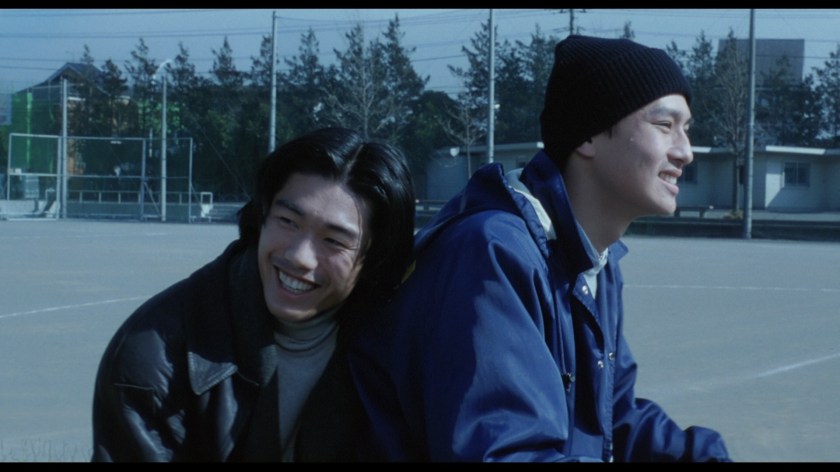
Kids Return is a 1996 Japanese film written, edited and directed by Takeshi Kitano. The film was made directly after Kitano recovered from a motorcycle accident that left one side of his body paralyzed. After extensive surgery and physical therapy he quickly went on making Kids Return. The film focuses on a group of high school students as they prepare to enter into the adult world. The two lead characters are Shinji and Masaru, delinquent losers who are looked down upon by their teachers, and feared by their classmates. After they’re thrown out of school, they fall into amateur boxing and go into different paths. Unfortunately, Shinji is the only one who shows any talent for boxing. Masura, on the other hand, gives up and joins a menacing Yazuka gang. The relationship between the two friends really works. We see their dynamic and when they drift apart, you believe it. You also grow to like the characters, and kinda root for one. Kids Return’ is seen as  Kitano’s most autobiographical work, set in the part of Tokyo where he grew up and featuring events and job roles that he himself experienced while growing up. The two friends, Masaru and Shinji drift through school, seen as the ultimate prodigal sons by their teachers. Even at it’s darkest, Kids Return remains optimistic for Shinji and Masaru’s future. For Kitano, life is not an unbroken journey towards an inevitable conclusion, but a series of moments, each significant in their own right. Kitano interweaves different narrative levels combining flash backs with snippets of the past and present and placing high demands on the audience.
Chokh (The Eyes)

chokh1

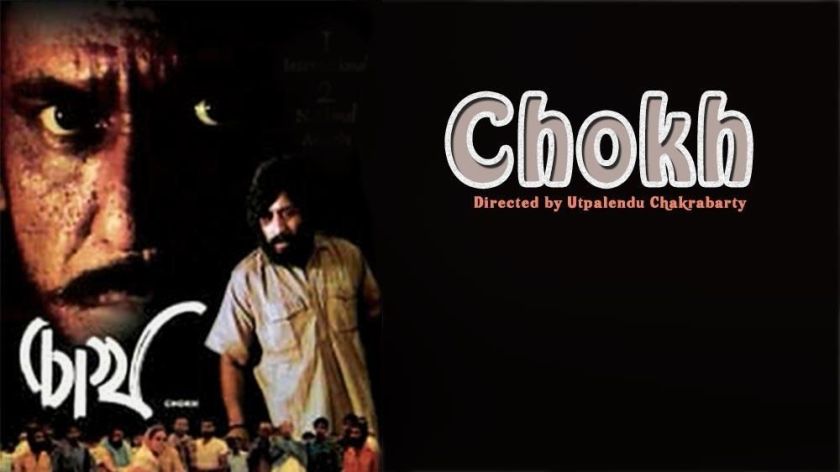
Chokh (The Eyes) is a 1982 Indian Bengali film directed by Utpalendu Chakrabarty. The film was set in during the Emergency period in December 1975. Jadunath (Om Puri) a labour union leader, of Jethia Jute Mill in Kolkata has been given death sentence, for the murders of Jethia’s (Shyamanand Jalan) brother and another worker even though Jadunath was innocent. He wants that his eyes should be given to a worker who has never seen the world. Jethia influenced the government to get the eyes for his son who lost his eyes due to an accident. But Ghanshyam, the hospital driver and few other workers demand that eyes be given to a blind worker.  When Dr. Mukherjee (Anil Chatterjee) before the operation tries to trace the papers recording  Jadunath’s donation, the superintendent orders Dr. Mukherjee to carry out his duty as there are instructions from the highest quarters. Dr. Mukherjee sticks to his point and is ready to face the consequences. Om Puri and Anil chatterjee both did justice to their parts though  Chatterjee was bit mannered. Shyamanand  Jalan was convincing as villain. Set in the era of mid  70s, depicting the exploitive state of Calcutta (Kolkata) mill workers, it’s the story of an honest union leader, who is being hanged for getting wrongly framed in the cold blooded murder of the mill owner’s brother. With an use of the ‘Eye Donation’ plot, Chokh showcases an accepted truth that eyes are in fact the mirror of a man’s real inner personality .

The Long Memory

the-long-memory

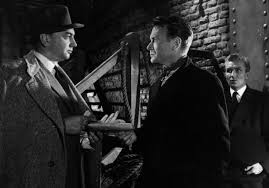
The Long Memory is a black and white 1953 British noir film directed by Robert Hamer. John Mills plays Philip Davidson, just released from an eight-year stretch in prison for murder. But Philip has a mission. He wants to track down the people responsible for his imprisonment—Captain Driver (Fred Johnson), his daughter Fay (Elizabeth Sellers), and Tim Pewsie (John Slater)—who stitched him up for the murder of the criminal Boyd (John Chandos) to hide their own involvement in Boyd’s crimes. Boyd had actually clubbed one of his customers over the head in a fight over payment, and then seemed to drown when Driver’s boat caught fire and sank. After his release, Phillip finds that Captain Driver drank himself to death, Fay has married the detective on the case, Bob Lowther (John McCallum), and become a middle-class housewife, and Pewsey, a middle-aged man, has recently left his own wife (Thora Hird) for a younger mistress (Mary Mackenzie).

Mills is excellent as an ordinary, decent man who’s life is turned upside down and because of that becomes frustrated and obsessed. Eva Bergh is excellent as a young waitress at a café who befriends Davidson and ends up falling in love with him. Sellars is good as the woman who only cares about herself and doesn’t realise until much later just what her accusations cost Davidson. The great works of British film noir are far less well known than the American, but it was one of the few genres that thrived for the British film industry after World war 2. Like many true noir films, The Long Memory is about people trying to cling to existence and their humanity; crime is a negative expression of their desires. The Long Memory portrays Britain as it was then—depressed, hungry, worn out by war, and full of the poor, deprived, transient, and criminal.

Sieranevada

sieranevada-1

Fundamentally, it is a conventional family drama in which emotions and secrets boil to the surface in the usual way. Forty days after the death of his father, Lary (Mimu Branescu), a doctor in his forties, is about to spend the Saturday at a family gathering to pay tribute to his father. He turns up for the party after having a huge row with his wife Laura about getting his daughter the wrong  disney costume for her school play. Laura is super-informed about everything and thinks a lot before she decides, while her other half, who relies more on gut feelings and improvisation, is the kind of person who listens to her with a bewildered smirk if he disagrees but then still wants to win the argument. The dialogue is sharp, funny and full of unexpected twists that are logical yet often turn things on their heads. Relatives and spouses are gathered, tensely. But through a strange series of events, they are prevented from eating. The event takes place just around the Charlie  Hebdo shooting, which sets the stage for a prolonged conspiracy theory discussion about 9/11. But seemingly countless topics are brought in, whether in the bedroom (the story of an abusive husband), in the kitchen (communism versus monarchy ), in the small office (the memorial service traditions), the dining room or even the tight hallway, from where we constantly revolve.  Cristi Puiu creates a claustrophobic atmosphere within an oppressive, environment, whether inside or outside the apartment. The proceedings are intense and alienated – often brilliant, sometimes slightly redundant. There are many long shots of 20-25 minutes where we are observing actions within two-rooms from outside. Here camera creates a third-person audience.