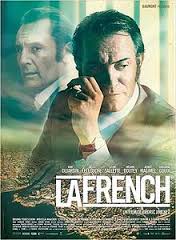
La French

La French

The Connection (French: La French) is a 2014 French-Belgian action crime thriller film directed by Cédric Jimenez and produced by Alain Goldman. The film was inspired by the events of the French Connection in the 1970s, starring Jean Dujardin as police magistrate Pierre Michel and Gilles Lellouche as “Tany” Zampa, a drug gang ringleader.  An energetic young magistrate Pierre Michel is given a tough job on the ins and outs of an out-of-control drug trade. Pierre’s wildly ambitious mission is to take on the French Connection, a highly organized operation that controls the city’s underground heroin act and is controlled by the notorious —and reputedly untouchable— Gaetan Zampa.  Michele is portrayed as a driven, obsessed man – it is implied that he had some gambling problems in the past – who seems to be actually trying to catch the ‘bad guys’. During the entirety of the film his determination is being shown as close to obsession as possible without too much cliché. Dujardin and Lellouche’s characters are more alike than they are different, with both being devoted family men and ultra-faithful husbands, and both having a close group of associates they treat like family.
Dujardin plays a full-on good guy, with his magistrate, Pierre Michel, being shown as one of the most incorruptible guys in France. It’s nice to see Dujardin play such virtuous part, which he does well. Lellouche’s Zampa is not your typical villain, in that he’s shown to have a compassionate streak, and is so anti-drug in his own life that when he discovers an associate of his is a drug-addict, he forces him to do a massive trail to try and teach him a potentially deadly lesson. Cédric Jimenez grew up himself in Marseille in the 1970s and says that the story of the Judge has run through his veins his whole life. He chose to shoot the whole film with a hand held camera, which gives the film it’s intimate and raw feeling. The opening scene showed a landscape filled with historical buildings, palm trees, straight roads and the sea that reflected blue from the sky. The vibrating and aggressive sound from the motorbike gave the picture a dramatic sound. To carry on, the visualisation had some glimpse shots, fast forwarding and an expression in chiaroscuro. The film looked like a production from the 1970s. Laurent Tangy as the cinematographer expressed the contrast between light and shade. There is some action here and there, but it’s neither flashy, nor heroic.
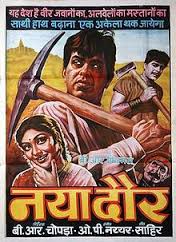
Naya Daur

Naya daur


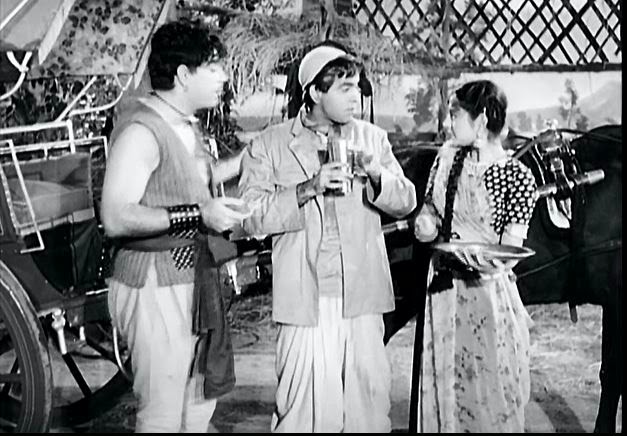
Naya Daur ( English: New Era) is a 1957 Indian drama film starring Dilip Kumar, Vyjayanthimala, Ajit and Jeevan. The film is set in post-independence India, where industrialization is slowly creeping in.  ‘Naya Daur’ literally meaning a New Road – is a fine story of a young village man Shankar (Dilip Kumar) who wants to challenge onslaught of machines in his daily life by building a new road in his village. Shankar (Dilip Kumar) and Kisna (Ajit) are the best of friends, village boys who grew up together. Shankar makes his living as a tonga driver. Kisna chops lumber for the local mill owner (Nazir Hussain), who treats his workers with tremendous compassion. The owner leaves for a pilgrimage, and his son Kundan (Jeevan), who takes over operations, doesn’t see things the same way – he brings in machines and fires all the woodworkers. Meanwhile, the bond of friendship between Shankar and Kisna is threatened when both fall in love with Rajni (Vijayantimala). The workers start to move to the cities leaving their homes behind. Frustrated with the dramatic change Shankar challenges the owner’s son & accepts Bus Vs. Tanga race. Thankfully, director B R Chopra takes pains to point out in his film that his characters are not anti progress. This was one of Dilip Kumar’s finest roles, and the irony lies in that he may never have done the film at all. When BR Chopra first came to him, Dilip Kumar refused because of date issues. It was then offered to Ashok Kumar, who felt he was too urban to fit into a rural character.


naya daur 1
He liked the story, though, and convinced Dilip Kumar to at least hear it. Dilip slipped into the character of Shankar very believably. He was the sociable, cheeky taangewala to life, without falling into the trap of being annoyingly cheerful. Similarly, in his dramatic scenes with Ajit, or even the scene where he breaks off his sister’s engagement, you see a principled man, and a honest one. As the parallel lead, Ajit not only had almost-equal screen time as the ‘hero’, but he also had a very nuanced character arc – from the faithful friend to the man who seeks vengeance because he has been betrayed, or so he thinks, by his dearest friend. Vyjayanthimala’s  Rajni is strong, self-respecting, and knows her own mind. She has no qualms in admitting to Shankar that she loves him. This was OP Nayyar’s year – both Tumsa Nahin Dekha and Naya Daur released in 1957, cementing his place in the ranks of successful music directors. Naya Daur’s message is neither a derogation of modernity, nor a plea for consensus. I think what BR Chopra (and Akhtar Mirza his screenplay writer) was conscious of the particular reality of India in the 1950s: a country where Independence under Nehru meant development, power and influence, but at the same time where the human and rural dimension was still very much a key factor.

Celda 211

Celda 211

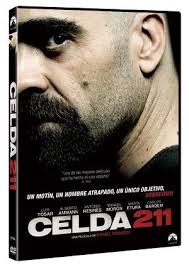
Cell 211 is a 2009 Spanish-French prison film directed by Daniel Monzon, starring Luis Tosar, Alberto Ammann. This is a story of a prison guard, Juan Oliver (Alberto Ammann) who decided to go to work one day before he actually begins to make an impression.  What awaits him later is a riot, which forced him to be locked in Cell 211 after suffering an injury to his head. He knows the only way to live is to be one of them, and so he acted as an inmate. He has to make peace with the rest and gain the trust of their ‘leader’ Malamadre (played by Luis Tosar) as they take hostage of high profile, terrorist-prisoners.   Directed by Daniel Monzon, the film offers relentless action as the rioters demand to be recognized, a long losing battle make the men confront the cruel authorities imposing the prison rules. The screenplay was based on a novel by Francisco Perez Gandul, with a screen adaptation by Mr. Monzon and Jorge Guerricaechevarria. The action never decreases as it builds momentum to the unpredicted climax when all hell breaks loose.
When a film takes only ten minutes to establish its premise and get the ball rolling, it’s usually a sign of absolute confidence in the long game. The acting is solid throughout, and the characters are finely shaded even when larger than life. Juan has a cruel curve to take, and he conveys this with an unsophisticated presence of a regular guy.  Malamadre lives up to his name. Cell 211 is pure entertainment, and exploits the emotions of the audience by the oldest method available – characters that are well-developed and relatable.  There is a point to the story, and clearly Daniel Monzon has an axe to grind against the criminal justice system of Spain, but this is to the benefit of a fine story.

Thalapathy

Thalapathy

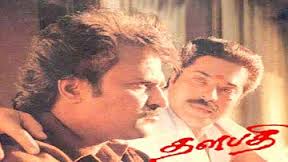
Thalapathi is a 1991 Indian Tamil-language crime-drama film written and directed by Mani Ratnam and produced by G. Venkateswaran. The film is an adapted version of the mighty king and warrior Karna from the great indian epic Mahabharata.  Surya (Rajinikanth) born as an illegitimate child is abandoned by his mom (Srividya) and left on a basket in a goods train. He is then raised by lower caste people living by a river side. He grows up to become a loyal friend and right hand for gangster Devaraj (Mammootty).  Deva is a kind of Robin Hood figure, whom the slum dwellers admire, as he takes care of their needs in a way neither the officials nor the government officers do. Surya is in love with a Brahmin girl, Shubalakshmi ( Shobana), who also loves him in return, but does not like his violent ways. In the mean while, Surya’s real mother Kalyani( Sri Vidya) is now married to a Government officer, and her son Arjun( Arvind Swamy), is in the Civil Services. Kalyani herself is a doctor and soon Arjun is posted to Chennai as collector. In the meantime, a gang war breaks out between Deva and Kalivardhan( Amrish Puri), another gangster, and Deva’s arch rival. The attacks come to the notice of Arjun, who vows to take action against Deva. 

Thalapathy 2

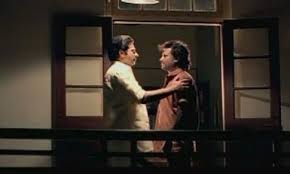
The strong point in Thalapathy was the relationship between Deva and Surya, which was based on the Duryodhan-Karna friendship. The scenes between both of them are brilliantly shot. The first scene where Deva and Surya confront each other on the bridge, in a rainy night, is brilliantly captured.  Another great scene is when Deva points to the wounds he received, while beaten up in the police station, and asks Surya to take revenge.
Rajinikanth as Surya is one of the best character oriented roles donned by the superstar in last two decades or so. His effortless style and rough looks sums up a role tailor made for him.  Mammoty as Deva has given weight to the role and reacted well to the dialogue delivery. His calm and composed presence as a leader worked well. Shobana as Surya’s love interest did a good job. The likes of Jaishankar, Srividya, Arvind Saamy, Amrish Puri and other stars justified their roles though had limited screen space. The screenplay is woven tightly and disclosed with an exemplary narration made surrounding the protagonist. Maverick cinematographer Santhosh Sivan also delivers behind the lens for his first film with Mani Ratnam.  His opulence and aerial shots are well etched and the experimental lightings give the feel of nostalgia.

Trumbo

TRUMBO

The film covers nearly three decades in the life of American screenwriter and noted Communist Dalton Trumbo (the 1940s-70s), with the title character played impeccably by Bryan Cranston. But three decades of such a richly lived life is a bigger bite than most 2-hour movies can chew.  Trumbo was one of the Hollywood Ten, artists (mostly writers) connected with the Communist Party in 1947 refused to betray other comrades during the hearings of the Committee on Un-American Activities led by Senator Joseph McCarthy so they had to purge several months in prison and were prevented from working in the industry.   Trumbo’s friend Edward G. Robinson (Michael Stuhlbarg), who supports the cause, sells the Portrait of Père Tanguy to raise money for their legal defense fund. The unexpected death of Justice Wiley Rutledge ruins Trumbo’s plan to appeal to the Supreme Court. In 1950, Trumbo serves 11 months in Texarkana prison, where he meets former HUAC chairman J. Parnell Thomas, who was convicted of tax evasion.
An old-school Hollywood screenwriter who did a fair amount of his best work in the bath, typing with a glass of Scotch in one hand and a lit cigarette in the other, Trumbo (Bryan Cranston) was what they call a “card-carrying member of the Communist Party,” unafraid about his political views — which had earned him acclaim in the literary world as the author of “Johnny Got His Gun.” Trumbo attracted the attention of Los Angeles Times columnist Hedda Hopper, whose idea of patriotism involved abolishing the threat of communism in the industry. On the personal front, there’s wife Cleo (Diane Lane) and three kids — the oldest of whom we watch grow into a confident young woman (Elle Fanning). Then, in the ’50s, we are privileged with scenes of Trumbo’s professional relationship with Frank (John Goodman) and Herman King (Stephen Root), producers of hilariously titled B-movies that provided Dalton with a living undercover. And there are even more characters who come and go, including some famous faces like David James Elliott‘s John Wayne and Christian Berkel‘s Otto Preminger, who are more caricatures than characters, but still undoubtedly memorable.
The film shows the screenwriter’s professional evolution, from blacklisted Hollywood writer and face of the notorious “Hollywood 10,” to a thankless life of writing under fictional names and winning Academy Awards on the couch. McNamara’s screenplay is filled with mighty one-liners, which everyone’s clearly having fun with. Gems like “I’m a screenwriter; if I couldn’t write shit, I’d starve,” or Louis C.K.’s one-of-a-kind delivery of beauts like, “he’s trying to sell his soul, but he can’t find it.” At times, it almost becomes too many good lines too fast (like in most every scene featuring Goodman), which halts the film’s rhythm and leaves little breathing room.  Director Jay Roach knows a thing or three about entertaining audiences. He’s directed “Meet The Parents,” and the “Austin Powers” movies, but “Trumbo” is probably his best film, by virtue of association to the strongest ensemble he’s worked with, and an impeccable script. The film becomes particularly good once we enter the blacklisted segment of Trumbo’s career, when theatricality starts to take a backseat to a deeper insight into the egocentrical and self-righteous side of this man. He’s no longer just a cartoonish figure, chain-smoking in his bathtub, but a father screaming at his daughter on her birthday, a friend ignorant to the pain of others around him, and a husband bullying his wife out of arguments.
 

Iruvar

Iruvar

Iruvar is based on the life of MGR and it focuses on the friendship between MGR (played by Mohanlal) and Karunanidhi (played by Prakash Raj) also. Marudur Gopalamenon Ramachandran, betterknown as MGR greatly influenced the Tamil Film Industry in 1960s and 1970s when he became a popular hero and TN politics in 1980s when he became the Chief Minister of Tamil Nadu.  Anandan(Mohanlal) is an ambitious young actor who wants to make it big in the film industry. He had to face a lot of failures and insults though before getting the much needed breakthrough. He happens to meet Selvam (Prakash Raj) who is a writer. It so happens that Selvam is the dialogue writer for the film in which Anandan is the hero. They become close friends.  Anandan is introduced to Selvam’s political party which is led by Velu Annachi (Nassar). He grows to the party’s ideology as time passes by.  Anandan then marries a village belle Pushpavalli (Aishwarya Rai) while Selvam marries another village girl, Marathagam (Revathy) under the supervision of the party leader. Anandan is a simplistic man who just wants a good paying job so that he can look after his mother, while Selvam is more idealistic and wants to use his words to change the world.

Despite their unpromising beginnings, Anandan rapidly falls in love with Pushpa’s lively innocence and charm, although he leaves her with his mother when he goes back to work. Selvam on the other hand pontificates speeches about equality in marriage on his wedding night while Maragatham is more traditional and superstitious which doesn’t go well for their future together. As their careers progress, Anandan becomes a star, able to draw crowds although he doesn’t appreciate his popularity until it is forcibly shown to him by Selvam . This is demonstrated in an excellent scene where Selvam takes Anandan up onto the roof to show him the hundreds of people waiting for a chance to catch a glimpse of the film star.  Anandan also joins  Selvam’s  political party, although he is looked on with suspicion by the other party members who feel that Anandan is using the party to further his film career, while Anandan feels that his film fame is being exploited by the party to pull crowds. The relationship between these two contrasting protagonists is so unique, so complicated that it defies conventional definition. Poles apart with respect to ideologies, they go beyond that to work together professionally and also become close friends. They view each other with suspicion even when they are partners and then became overt enemies in politics. But throughout their lives, they never lose admiration and respect for each other. The film captures all the dimensions of this complex relationship beautifully.

iruvar 2

Mohanlal has a difficult role as he plays a man still revered by millions. Considering that his character arc makes it clear who he is playing, he doesn’t have to overplay it and employs MGR’s well-known movements – the lift of the hand, the unique skipping run, the shake of the head – only in the song sequences. The rest of the time, he delivers a lesson on how much can be conveyed with downplayed ‘acting’. Whether as the frustrated actor or as the star loved by the people or the politician battling his best friend, he combines his eyes, expressions and body language to play the complicated personality in pitch-perfect fashion.  Prakashraj’s character doesn’t have quite as many nuances but he fits the role perfectly, from the firebrand young politician to the more matured statesman. Aishwarya, in her debut, overdoes the coy, timid bit in her first role (just as she did a few years later in Jeans). She is more at home as the bold, self-assured actress though. Revathi (as Prakashraj’s first wife), Tabu (as Prakashraj’s second wife) and Gauthami (as Mohanlal’s second wife) are underused. The music and songs by A.R. Rahman are of a high quality and vary in style to illustrate the different cinematic eras encompassed by the film, although the time frame is never explicitly stated. These range from the jazzy and more upbeat songs pictured on Kalpana to the more traditional and classically driven song Narumugayie.  At a time when theatres boasted of their colossal cinemascope screens, Ratnam shot his film in a classical 4:3 aspect ratio. Iruvar may not be perfect or even Manirathnam’s finest film but as a chronicle of one of the most important and influential periods in TamilNadu politics, its place in Tamil cinema history is assured.


Salmer fra kjøkkenet (Kitchen Stories)

kitchen stories

In the 1950’s the Swedish government became involved in social engineering as a means of improving the lot in life for its citizens. Bent Hamer was amused after following post-war research books on the efficiency of the Swedish housewife, and pondered on the idea of research being done on men. This led to him making the film Kitchen Stories.  Swedish efficiency researchers come to Norway for a study of Norwegian men, to optimize their use of their kitchen. Folke Nilsson (Tomas Norström) is assigned to study the habits of Isak Bjørvik (Joachim Calmeyer). Folke dutifully rests on his chair in the kitchen and begins his watcher duties, recording Isak’s every move.  Isak, however, is a bit of a rebel and begins to silently do things to annoy his unwanted guest, turning out the lights and, most importantly, cooking in his bedroom to avoid Folke’s watchful eye. Early on, Kitchen Stories is filled with little sight gags and well-timed reaction shots, as Calmeyer keeps checking Norström for small signs of approval of his cooking and cleaning methods.
Later, the film becomes the story of the friendship that develops, as the two begin doing little favors for each other: lending tobacco or salt or coffee, and even doing each other’s work. A film without much dialog and virtually no action, in the traditional sense, should be, by all rights, boring. But, from the start, “Kitchen Stories” captures your attention with its tongue in cheek humor, amusing wit and an amazing amount of chemistry between the main characters, Isak and Folke. The rhythm of their day-to-day existence is slow and relaxed and, as the ice breaks between them, a warm, caring friendship builds. Hamer and his cinematographer Philip Øgaard (“Aberdeen”) have a terrific sense of mise en scene. Colors and shapes are all carefully composed within the frame. Composer Hans Mathisen’s simple, sweet music is the perfect complement to this gently told tale.

Imdb link : http://www.imdb.com/title/tt0323872/ 

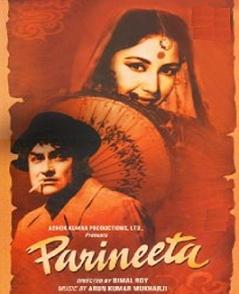
Parineeta

PARINEETA

Parineeta is a 1953 Hindi film starring Ashok Kumar and Meena Kumari, based upon the 1914 Bengali novel of the same name by Sharat Chandra Chattopadhyay. The film was directed by Bimal Roy.  Shekhar (Ashok Kumar), the son of a wealthy Brahmin family, discovers that he’s fallen in love with Lalita (Meena Kumari).  Shekhar has known Lalita since she was eight years old and came to live with her uncle Gurucharan and his wife after the death of her parents. The two families live in connecting houses, and Lalita spends as much time in Shekhar’s household as in her own. Shekhar’r father Navin (Badriprasad) has other plans for Shekhar.  He wants to arrange his marriage with the daughter of Choudhary,  another wealthy Brahmin who has promised Navin a huge amount of dowry. The relation between the two families gets affected when Gurucharan is forced to repay his debt and he decides to marry off  Lalita to Girin Babu (Asit Baran).  Meena Kumari and Ashok Kumar are wonderful together.  Ashok’s character is indulged and a bit spoiled, yet he never comes across as impolite. Ashok’s Shekhar is just sheltered from real-life consequences and has an idealistic view of things. A very young and lovely Meena Kumari plays Lalita.  Lalita’s part in the story involves much silent despair. The other characters – Lalita’s uncle played by Nazir Hussain, the rich guest who drops in enacted by Bengal’s Ashit Baran,  Lalita’s cousin – gave solid support to the principal characters.
The most striking element of Bimal Roy’s films, including Parineeta, was his ability to project the Bengali family in a language like Hindi, without losing out on the essence and spirit of the ethnic moods the story and the characters belong to. Lighting has always been an extremely important element in Bimal Roy’s works. Whenever the narration grows nostalgic or reasonates with inner crisis, whether in anguish or in ecstasy, the mood is captured most ably in delicate shadowy patterns of black, grey and dove white by cinematographer Kamal Bose.

Death Wish

Death Wish

Charles Bronson is Paul Kersey, a New York architect whose wife is killed by a group of muggers ransacking their apartment, an attack that also leaves his daughter unconscious. He takes a job working for a land developer in New Mexico to get his mind off his troubles, and while there his long fascination with guns is revived when his client Ames Jainchill (Stuart Margolin) shows off his personal collection and lets him crack some shots off.  He also witnesses a mock gunfight at Old Tucson, a reconstructed Western frontier town used as a movie set. Kersey soon arrives back in New York. But the streets are still filled with thugs, and Kersey knows that Manhattan is not the best place to be at night. He discovers that Jainchill has given him a .32 revolver as a present, and subsequently uses it to kill a man trying to mug him. He begins deliberately to tempt muggers, whether in an alley, on a subway train, or in a park and that he mechanically guns them down.
This made him the ‘avenging angel,’ a true phantom ‘one-man crusade.’ In the eyes of the public, Bronson became a national figure—the vigilante. “Death Wish” was a highly controversial film when initially released. At the time, major cities were facing a deadly crime epidemic, and this film tapped into the fears and unspoken desires of many viewers, giving them a chance to live out their secret fantasies. Yet, it is undeniably compelling; one of these movies that makes you wonder, “what if this happened to me?”  Bronson is highly effective here; while not one of the great actors, he has a very strong screen presence. Vincent Gardenia is effective as the police detective assigned to his case. He unwillingly admires Kersey’s resolve, although he is sworn to put a stop to the killings. Rather than Bronson’s performance Death Wish has its significant themes and screenplay components which were used at almost every action/crime movie later on, thus became clichés of their genre.

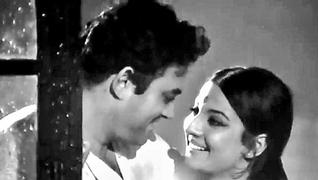
Anubhav

anubhav 1971

Anubhav is a 1971 hindi film directed by Basu Bhattacharya, which stars Sanjeev Kumar , Tanuja and Dinesh Thakur as leads. The film was the first part of Basu Battacharya’s introspective trilogy on marital discord in an urban setting, which included Avishkaar (1973) and Griha Pravesh (1979); and went on to win the 1972 National Film Award for Second Best Feature Film . The film centres on the relationship between Amar (played by Sanjeev Kumar) and Mita (Tanuja), a well-to-do Mumbai couple, who, after six years together, find themselves in a dry and sexless track. “Anubhav” is about Meeta, who leads a lonely life in a mansion. Her husband Amar Sen (Sanjeev Kumar) pursues a career of an ambitious editor, a workaholic who is dedicated to his profession at the cost of ignoring his responsibilities at home. Her craving to start a family is conveyed in the opening frames through a child left to fend for itself in a party that strictly involves grown-ups. Meeta’s concern for the weeping child, begging attention, rouses the mother within her to the fore. It is her journey to rediscover herself that makes this a well-crafted film.

tanuja_sanjeev
Kumar and Tanuja make a great couple with a believable and nuanced on-screen rapport. This film is about Tanuja despite the presence of the gigantic Sanjeev Kumar.  Anubhav” was marked by some exceptional songs from Geeta Dutt (“Meri Jaan Na Kaho Meri Jaan” and “Koi Chupke Se Aake) and a soulful solo by Manna Dey (“Phir Kahin Koi Phool Khila”). Music was secondary to the narrative that grows on you in a matured style that was Bhattacharya’s forte. The urban landscape of Bombay is captured stunningly in black and white, the slums and skyscrapers co-existing.   For Meeta, however, the world revolves around the servants at home, her husband leaving home in a rush and returning in an amble, tired from the demands of the office. . Bhattacharya uses simple props as a symbol (e.g. the ticking clock, the radio). Moreover he stays focused on the main story.