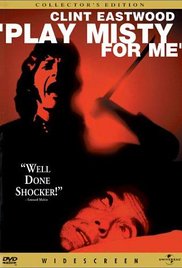
Play Misty For Me

PLay  Misty For me
Play Misty for Me is a 1971 American psychological thriller film, directed by and starring Clint Eastwood, in his directorial debut with Jessica Walter and Donna Mills  as co-stars. The story-line was originally set in Los Angeles, but at Eastwood’s insistence, the film was shot in the more comfortable surroundings of the actual  Carmel-by-the-Sea, California.
The girl (Jessica Walter) calls up every night at about the same time and asks the disc jockey to play “Misty” for her. Some nights he does. He’s (Clint Eastwood) the all-night man on a small station in Carmel who plays records, reads poems, and hopes to make it someday in the big city. ” Later, he meets the woman at a bar he goes to often, and they go back to her house together and make love.   The next morning, he leaves, figuring it was just a one-night stand, but when he gets home, the woman, Evelyn Draper (Jessica Walter) shows up with groceries and starts to make herself at home. Dave decides to go with it, and later sees that his old girlfriend, Tobie Williams (Donna Mills), is back in town, and the two become close again. Evelyn begins stalking him through the middle part of the movie but don’t let that keep you away; she pops out when you least expect it. Even Eastwood’s friends and workers are not unsusceptible from her violence. Things get even worse when she damages his house and attacks his cleaning lady with a butcher’s knife. Evelyn’s admitted to a psychiatric hospital and this enables Dave to re-establish his relationship with Tobie Williams (Donna Mills). Tobie, who has recently returned to the Carmel area, is the woman he loves and their relationship develops well until further complications follow when Dave is told that Evelyn has been released from hospital. 


misty 2

 
The acting performances are consistently very good in this movie but Jessica Walter is outstanding in a role that requires her to be ultra scary. Her capacity to fly into a rage at the flick of a switch is astonishingly good and the way in which she portrays the manipulative side of Evelyn’s character also works well. Clint’s smooth, late-night D.J. is powerless in the face of Jessica Walter’s stalker, as she sets out to turn their one night stand into a lasting, meaningful relationship. Eastwood is quoted as saying that he was unsure of how his directing debut would be received. He disguised himself and went to a theatre showing Play Misty For Me, where he was pleased at the audience’s frightened reactions.  With this film, he began a pattern of bringing his pictures in under budget and ahead of schedule. Departing from tradition Eastwood opts out using a musical score in keeping with traditional suspense thrillers. Play Misty for Me’ may feel more dated than the 70’s fashion in some areas, markedly the violent sequences which seem amateur in this day and age, but the excellent foundations in plot, script and acting mean the film remains a good watch some 40 years on.

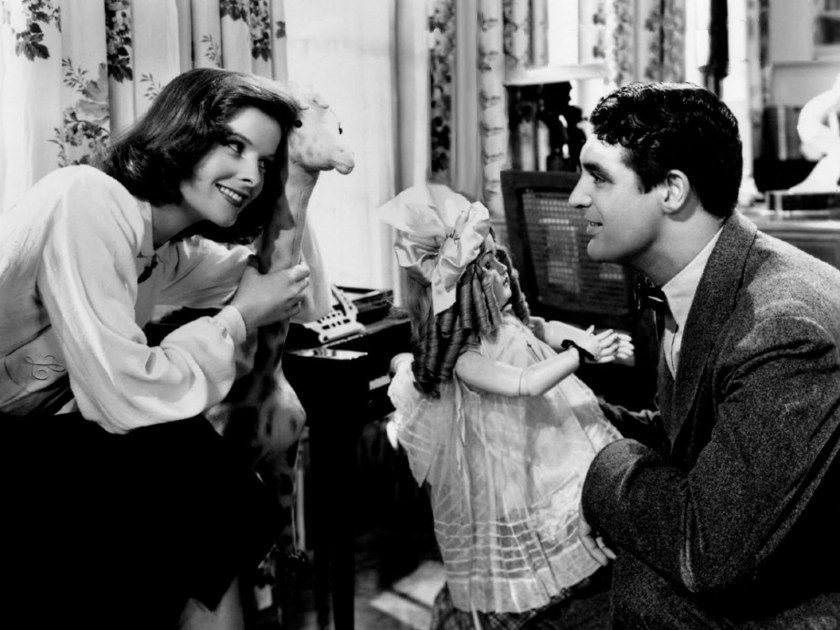
Holiday

Holiday 1938

Holiday is a 1938 film directed by George Cukor, a remake of the 1930 film of the same name. Set in New York, it stars Cary Grant as Johnny Case, an emerging businessman who is more concerned about making a career out of something he wants to do, and not what he should do in order to make money.  While he takes a holiday, he meets Julia Seton ( Doris Nolan), the two fall in love and go back to New York to tell Julia’s father. What he doesn’t know is that Julia comes from an extremely rich family, and while he is shocked and amused by the fact, he finds himself taken with the other members of Julia’s family; Linda Seton (Hepburn), Julia’s free-thinking and dramatic sister, and brother Ned Seton (Ayres) a kind but stern alcoholic.   He has a plan: save up a little money then retire young, experience the world and then, when he’s run out of money and has an idea of what he wants to do with his life, come back and go to work doing what he wants to do. Now all he has to do is explain it all to Julia. And to her father. And all while trying to deny the fact that he’s attracted to Linda.  Cukor takes a lighthearted approach to this story, which keeps it cheerful and entertaining, and he laces it with warmth and  humor that’ll give you some laughs and put a smile on your face.


Holiday-3

But beyond all that, Cukor shows some real insight into human nature and the ways of the world. But what really makes this one special are the performances of Grant and Hepburn. Grant is as charming as ever, but just a bit looser and slightly less stylish than he is in most of his later roles. He bestows Johnny with youthful enthusiasm, good looks and personality, as well as a carefree yet responsible attitude that makes him someone you can’t help but like. And Hepburn fairly sparkles as Linda, a role she was born to play; this young woman filled with a zest for life and an indomitable spirit.
Like certain other comedies of its time, Holiday stands out due to its noteworthy serious streak in the midst of the comic funniness and silliness. The film’s underlying themes of rebelling against claustrophobic conformity and convention, the rejection of materialistic lifestyles and class struggles are particularly poignant in a current day context, as it becomes extremely clear how ahead of its time such messages and the film in general were.


When Willie Comes Marching Home

When Willie Comes marching home

When Willie Comes Marching Home is a 1950 World War II comedy film directed by John Ford and starring Dan Dailey and Corinne Calvet. The film begins in Punxsutawney, West Virginia.  Dan Dailey (William ‘Bill’ Kluggs) plays a brave guy who is the first in town to volunteer to go to war when WWII breaks out in America. The whole town sees him off. Willie tries to become a pilot but washes out. Although he proves to be so efficient at aerial gunnery that, he is made an instructor and assigned to a base near his hometown. While other boys go off to war, Kluggs becomes the local laughingstock. However, when a bomber pilot falls ill, Kluggs replaces him on a secret mission that will become his once-in-a-lifetime chance at a heroic destiny. Dailey is here at the top of his comic form. Mr. Dailey plays through this picture in a way that will make him everyone’s friend. Colleen Townsend and William Demarest are also good as his parents .Though it’s certainly a minor entry in the Ford oeuvre, it shows off his underestimated capacity for humor and warmth. During a fertile period of great westerns, John Ford also focused on war films, from a distance with dramatic comedy of manners.  It is this sub-genre in USA called “Small-Town Comedy. It mocks the stupid desire for heroism as assertiveness and social and family recognition in a small town.


Sciuscià( Shoeshine)

shoeshine
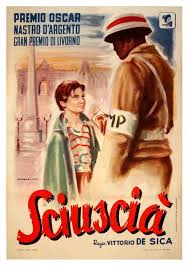
Vittorio de Sica’s 1948 drama Ladri di biciclette (The Bicycle Thief) is regarded by critics as one of the great masterpieces of the Italian neo-realist cinema. Two years earlier, he directed Sciuscià (Shoeshine), which focuses on the disintegration of a friendship between two Italian youths who fall victim to the state’s juvenile detention system. Shoeshine deals with a pair of children living on the street, best friends who shine shoes for a living and whose greatest dream is to buy a horse. Pasquale, the older boy, and Giuseppe, the younger, are drawn into a situation they don’t quite understand the weight of. One day Giuseppe’s older brother, Attilio, visits the two boys while they are shining shoes. Attilio tells Pasquale that Panza (a fence) has some work for them.
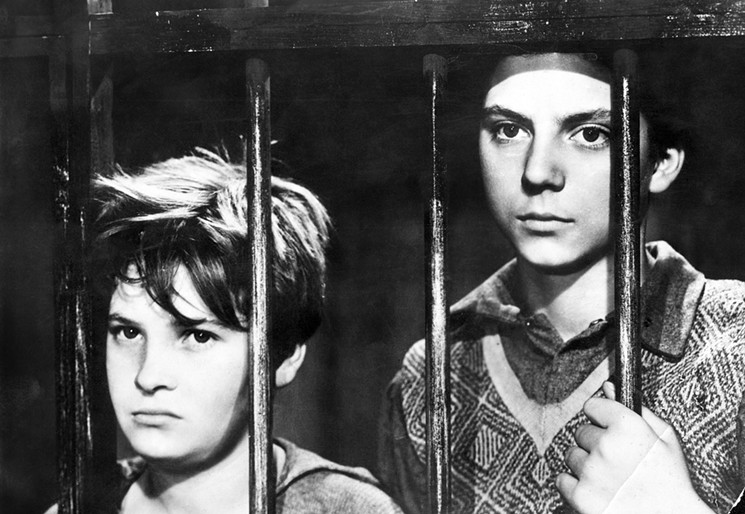
Panza gives them two fine American blankets to sell to an old lady. Attilio and Panza would come up later passing as cops to steal the poor woman. Given enough money to buy the horse, the kids live the happiest moments of their lives. Later the kids get arrested for stealing blankets. Surprisingly, despite their age and how non-serious their crime appeared to be, the two are dealt with very harshly and are sent to a juvenile prison.

shoeshine2

The bulk of Shoeshine takes place behind bars, where the boys have their friendship tested.  De Sica shows the juvenile detention system as a rough social order. The cells are overcrowded, five kids to a room, with each sphere becoming its own little gang. The film is considered one of the first Italian neorealist works which would leave a lasting mark on Italian cinema. The form contends with economic hardship and moral deprecation as a canvas.  Many times they would shoot in and around the streets of Italian cities and even hire non-professional actors to intensify the realism. With location shooting, long takes, fast black and white film stock, Desica demonstrates that Italian society and its social institutions—have no interest in the “common man.” As Orson Welles said “The camera disappeared, the screen disappeared, it was just life.” 


Ganga Jamuna

Ganga Jamuna

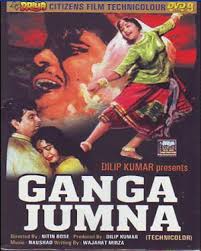
Ganga Jamuna released in 1961 was one of the first films to popularize the theme of two brothers on opposite side of law . It was produced by Dilip Kumar and directed by Nitin Bose.  A religious, principled widow (Leela Chitnis) struggles to raise her two sons Ganga and Jamuna. Devastated when she is framed for a theft, the frail woman passes away. Ganga pledges himself to support his younger brother as they grow to adulthood. He enjoys the endless squabbles with his childhood friend Dhanno (Vyjayanthimala). The sombre Jamuna (Nasir Khan), is in love with the zamindar’s daughter (Azra). Meanwhile, the zamindar’s brother-in-law (Anwar Hussain) has his eyes on Dhanno.  Ganga saves her from the zamindar’s lecherous assault. The zamindar (Anwar Hussain) gets his revenge by upstaging a robbery charge against Ganga. The supreme irony is that his best intentions for his loved ones are ill-fated. Ganga gets an empty jewel box home probably for his beloved mother but this gets her framed. 

Ganga jamuna 1

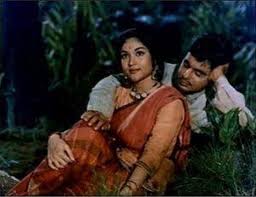
The money he steals doesn’t reach Jamuna. Of all the human relationships that Ganga Jamuna explores, the most affecting is the one between Ganga and Dhanno- an outstanding love story between two ordinary people handled with great care. Dilip kumar is too good and plays the role of Ganga very convincingly. Vyjayanthimala is a revelation as Dhanno.  Nasir Khan (real life brother of Dilip Kumar) manages to lend a quiet dignity to his role. Directed by New Theatres old-timer Nitin Bose, Ganga Jamuna is a well-structured and briskly paced film and was notable of the use of Bhojpuri dialect. This former cinematographer also frames some excellent shots even while keeping a tight check on the narrative.

The Ballad of Cable Hogue

The Ballad of Cable Hogue

Sam Peckinpah’s “The Ballad of Cable Hogue” is a splendid example of the New Western. The New Western is usually set at the moment when civilization reached the West. Largely ignored upon its release, The Ballad of Cable Hogue has been rediscovered in recent years and is often held by critics as an example of the breadth of Peckinpah’s talent.

Betrayed by his partners Bowen (Strother Martin) and Taggart (L.Q. Jones), Cable Hogue (Jason Robards) is left for dead in the desert. Miraculously, he finds water.
It turns out that the hole is 40 yards from the stage coach route between the towns of Deaddog and Lizard. Cable obtains claim to the land and convinces the stage-line to sign a contract with him to set up a way station for travellers. On his occasional trips to the closet town, he meets cheerful prostitute  Hildy (Stella Stevens), who joins him in his oasis. He meets Joshua (David Warner), a wandering preacher who applies a liberal interpretation of the bible to suit his own needs.  The old fellow’s project prospers; the sympathetic prostitute pays him a brief but fulfilling visit; he eventually gets revenge on one of the partners who left him to die. The cast are great, Jason Robards is wonderful in the title role, Stella Stevens as Hildy shows a fine actress at work.  David Warner is particularly fine as the raunchy priest and in his relationship to Jason Robards strike real sparks.

It contains an emotive score by the master Jerry Goldsmith, adding various sensitive country-western songs. The film is filled with scenes to cherish . Hildy takes a bath and Cable rubs her in one of the tenderest of moments, and the preacher conducts over one of the sincerest of funerals you can imagine. It’s a stunningly different and more positive film from the director of the nihilistic “Wild Bunch”. At the same time, it works as a reverse examination of his earlier film’s major themes. If “Bunch” is about damnation, “Cable Hogue” is about preservation, and redemption.  A twilight story ,¨Ballad of Cable Hogue¨ is a director Sam Peckinpah’s lovely effort, feeling look at the world of the Western.  


Imdb link :-   http://www.imdb.com/title/tt0065446/